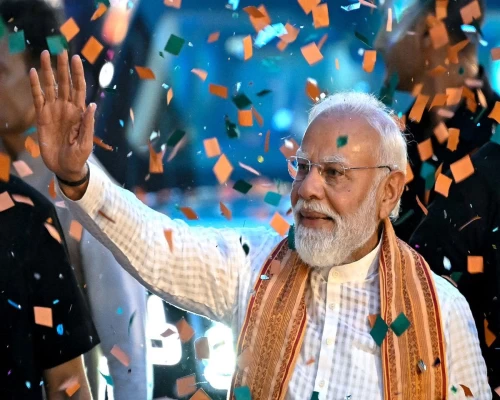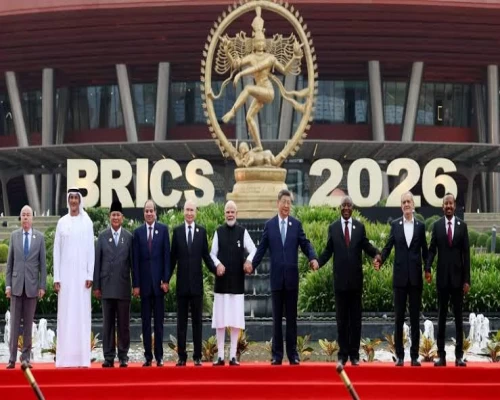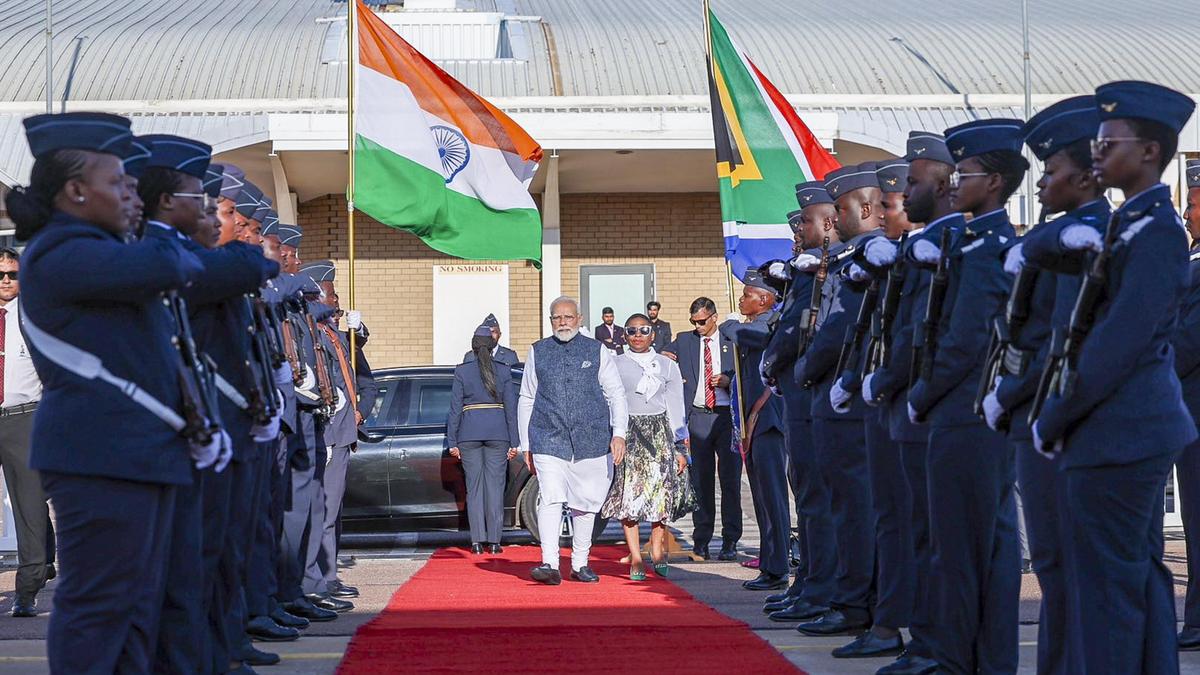
New Delhi: Prime Minister Narendra Modi returned to Delhi on Monday after a three-day visit to Johannesburg, where he once again emerged as one of the most proactive voices at the G20 Leaders’ Summit, pushing India’s agenda on technology, development, and Global South cooperation.
During the summit, Modi repeatedly stressed the need for technology that “serves people, not capital,” calling for a global AI framework to curb misuse in deepfakes, crime, and terrorism. He highlighted India’s own AI Mission and announced that India will host the AI Impact Summit in February 2026, themed on “Sarvajana Hitaya, Sarvajana Sukhaya” — focusing on the welfare and happiness of all.
His vision at the summit united into a six-point proposal aimed at making global governance more inclusive and future-ready. This included calls for a Global Traditional Knowledge Repository, wider access to open satellite data, a rapid-response global healthcare team, and a major skills initiative for Africa that could train one million certified trainers over the next decade. He also pitched for collective action against the drug–terror nexus and emphasised sustainable practices in critical minerals and battery recycling.
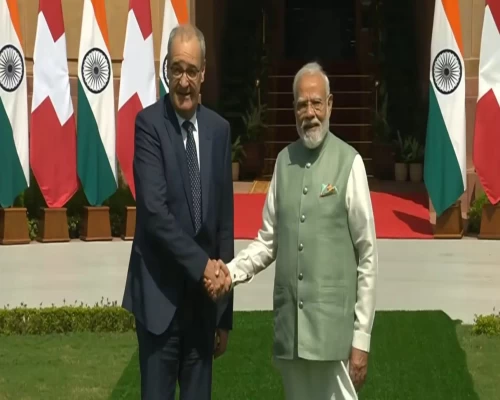
On the sidelines, Modi held a series of high-level bilateral meetings with leaders including Italian PM Giorgia Meloni, Japanese PM Sanae Takaichi, Brazilian President Lula da Silva, and senior Canadian officials. His meeting with Meloni led to an India–Italy joint initiative to counter terror financing, while talks with Japan and Canada focused on innovation, mobility, and deeper economic links.
At the IBSA leaders’ meeting, Modi made a strong push for UN Security Council reforms, calling them “a necessity, not an option,” reiterating India’s long-standing demand for a more representative multilateral system.
Even as the summit witnessed the absence of the United States, leaders adopted a 122-point G20 declaration, which Modi welcomed as a reaffirmation of shared commitment to global development and stability.
Modi’s engagements in Johannesburg showcased India’s positioning as a bridge between developed nations and the Global South - combining soft power, strategic diplomacy, and a forward-looking technology agenda aimed at shaping global conversations in the years ahead.
BI Bureau