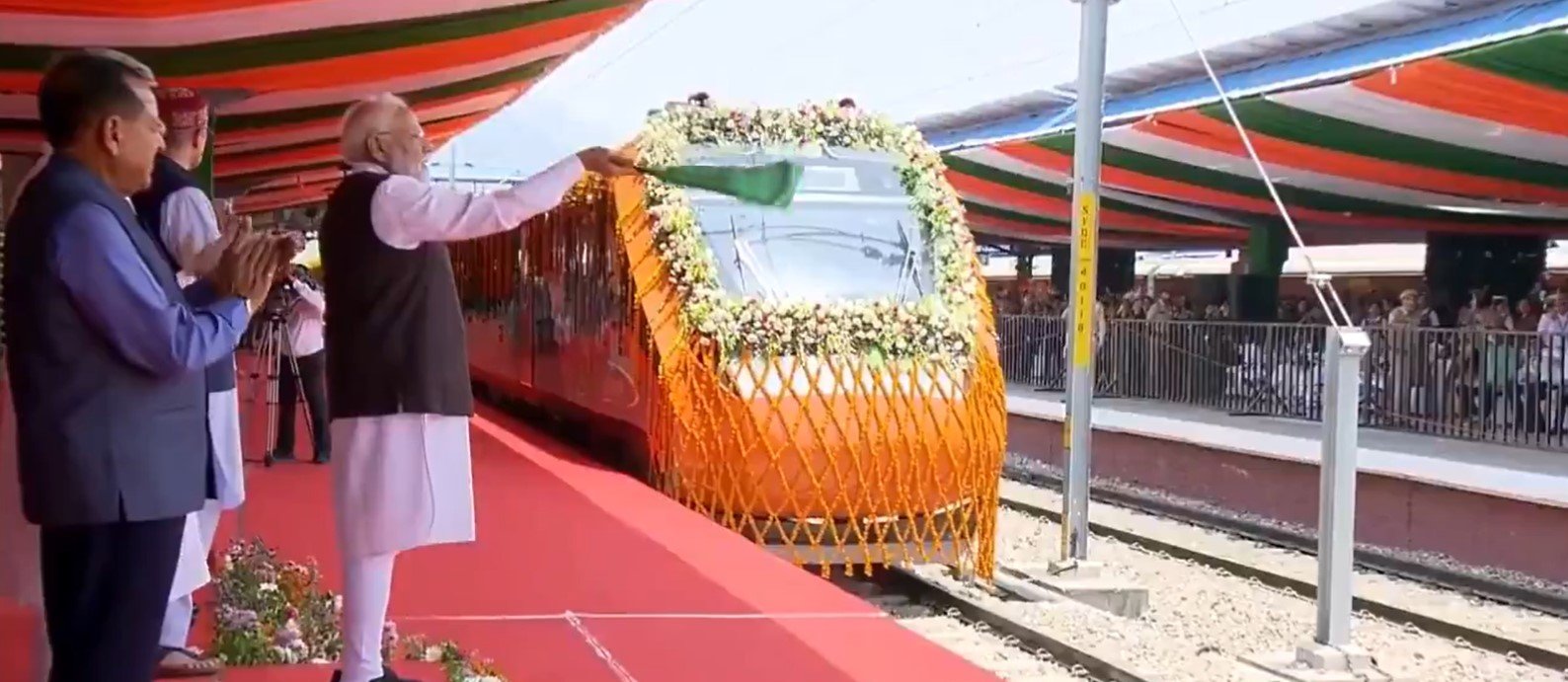
New Delhi: Prime Minister Narendra Modi flagged off four new Vande Bharat Express trains from Varanasi, expanding India’s growing network of high-speed semi-bullet trains. The new services will operate on the Banaras–Khajuraho, Lucknow–Saharanpur, Firozpur–Delhi, and Ernakulam–Bengaluru routes, connecting key cultural, economic, and technological hubs across the country. The Banaras–Khajuraho train will link major pilgrimage and heritage destinations such as Varanasi, Prayagraj, Chitrakoot, and Khajuraho, reducing travel time by about 2 hours 40 minutes. The Lucknow–Saharanpur train will complete its journey in around 7 hours 45 minutes, improving access to Haridwar via Roorkee. The Firozpur–Delhi service will be the fastest on its route, covering the distance in just 6 hours 40 minutes, while the Ernakulam–Bengaluru train will connect key IT and business centres in southern India in 8 hours 40 minutes.
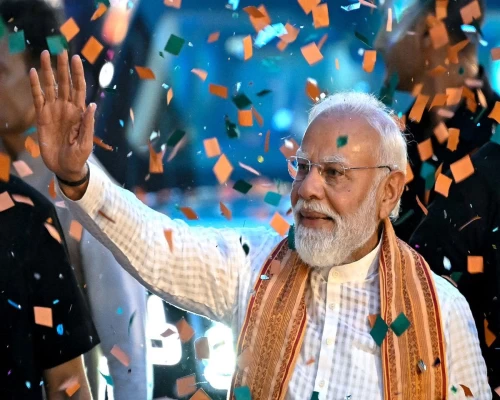
Addressing the gathering, the Prime Minister greeted the people of Varanasi and described the day as a “festival of development.” He said that countries that have achieved high levels of growth have done so through strong infrastructure and that India too is moving rapidly in the same direction.
Announcing the launch of the new trains, he said, “Trains like Vande Bharat, Namo Bharat, and Amrit Bharat are laying the foundation for the next generation of Indian Railways.” Calling it a movement to transform Indian Railways, he said that Vande Bharat is “a train made by Indians, for Indians, and of Indians—one that fills every Indian with pride.”
With these four additions, the total number of operational Vande Bharat trains has crossed 160. Modi congratulated the people of India and said, “India has embarked on a mission to enhance its resources for a developed India, and these trains are poised to become milestones in that journey.”
He further said, “These holy sites are now being connected through the Vande Bharat network; it marks a convergence of India’s culture, faith, and development journey. This is a significant step towards transforming heritage cities into symbols of national progress.”
The Prime Minister also spoke about how pilgrimages have become a driver of economic growth. “Last year alone, 11 crore devotees visited Varanasi for darshan of Baba Vishwanath. Since the construction of the Ram Temple in Ayodhya, over 6 crore people have visited the temple of Ram Lalla,” he said. The rise in spiritual tourism, he added, has boosted local economies and created opportunities for youth, traders, and artisans.
He highlighted the rapid pace of infrastructure development in Varanasi, from new hospitals and gas pipelines to roads, internet connectivity, and the ongoing ropeway project. “The goal is to make visiting, living in, and experiencing Banaras a special experience for everyone,” he said.
Recalling the healthcare challenges faced by the city a decade ago, the Prime Minister said, “For diseases like cancer, people had to sell land and farms to seek treatment in Mumbai.” He noted that facilities like Mahamana Cancer Hospital, Shankar Netralaya, and new hospitals at BHU and Pandeypur have turned Varanasi into the “health capital” of the region.
He urged that the momentum of Varanasi’s development must continue so that the city’s spiritual heritage and modern aspirations grow together. “Every visitor from across the world should experience a unique energy, enthusiasm, and joy in the sacred city of Baba Vishwanath,” he said.
Modi also interacted with students who participated in competitions held during the event. He praised Railways Minister Ashwini Vaishnaw for promoting such activities and appreciated the students’ creative work on themes like Viksit Bharat, Viksit Kashi, and Surakshit Bharat. He proposed organising a children’s literary meet and said winners could be taken to different parts of India for future events.
Uttar Pradesh Chief Minister Yogi Adityanath and Union Minister Ashwini Vaishnaw attended the event, while Kerala Governor Rajendra Arlekar and other Union Ministers joined via videoconference.
BI Bureau