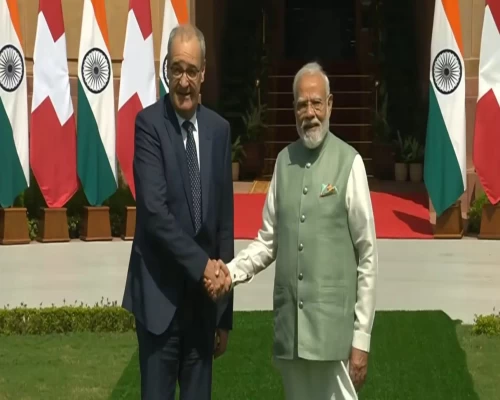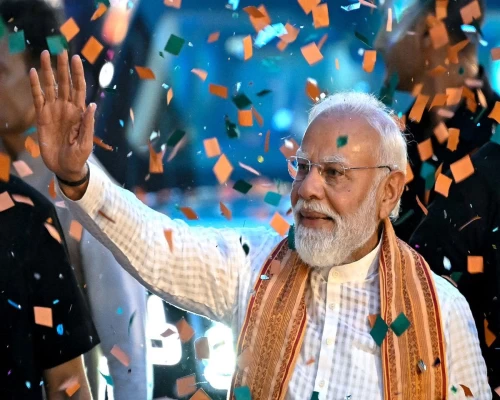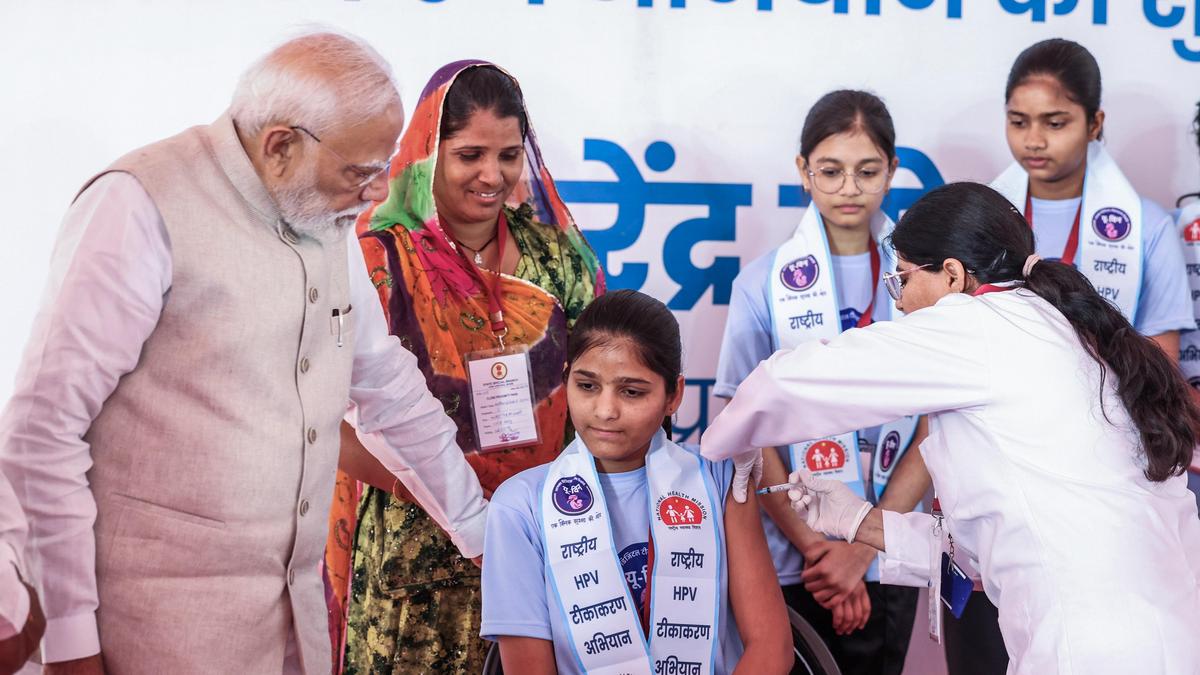
New Delhi: In what health experts are calling one of the most significant preventive health moves in recent Indian history, Prime Minister Narendra Modi on February 28, 2026 inaugurated a nationwide Human Papillomavirus (HPV) vaccination programme targeting girls aged 14 years across all States and Union Territories. The campaign, launched from Ajmer, Rajasthan, aims to curb the incidence of cervical cancer — one of the most common and preventable cancers affecting women in India.
The initiative will cover an estimated 1.15 crore girls annually, with eligible adolescents receiving a single dose of the quadrivalent Gardasil 4 vaccine at designated government health facilities — including Ayushman Arogya Mandirs, Primary and Community Health Centres, sub-district and district hospitals, and government medical colleges — entirely free of cost. Vaccination sessions are staffed by trained medical officers and health teams, with cold-chain logistics and 24×7 support to manage rare adverse events, underscoring a well-planned public-health infrastructure.
In urging families to participate, the Union Health Ministry stressed that HPV vaccination is voluntary, and informed consent from parents or guardians is a prerequisite before administration. Officials emphasised that the initial national rollout will be undertaken in a mission mode over a three-month period, after which the vaccine will continue to be available on routine immunisation days.
Cervical cancer is caused by certain strains of the sexually transmitted HPV virus, notably types 16 and 18, which are responsible for a majority of invasive cases worldwide. The Gardasil 4 vaccine used in the programme protects against these high-risk strains as well as types 6 and 11. The World Health Organization and independent studies show that HPV vaccines can reduce the risk of cervical cancer by more than 90 percent if administered before the onset of infection. Experts believe that broad immunisation among adolescents could sharply reduce new cases in decades to come.
For India, where cervical cancer has historically been the second most common cancer among women, with tens of thousands of lives lost annually, the nationwide vaccine drive represents a major shift toward preventive care. Health authorities have long pointed to barriers such as high private-sector costs, limited public awareness, and misconceptions around vaccine safety as obstacles to wider coverage. With doses that typically cost several thousand rupees now being provided free through the public system, advocates say this scheme could be transformational.
The drive - aligned with the Government’s broader vision of “Swastha Nari” - also reflects a strategic public-health push that dovetails with global goals. The WHO, in its cervical cancer elimination strategy, aims for 90 per cent of girls to be fully vaccinated by age 15, 70 per cent of women screened by ages 35 and 45, and 90 per cent of women with cervical disease to receive care by 2030. India’s move is seen as a critical contribution toward those targets.
Despite strong scientific backing, public health communicators acknowledge challenges ahead. Vaccine hesitancy remains an issue in some communities, rooted in historical mistrust, misinformation, and safety concerns. Transparent communication, robust monitoring, and community engagement are likely to be key determinants of success as states embark on local rollout efforts.
State governments have already signalled support. In states such as Nagaland, free HPV vaccination clinics began operating in tandem with the national launch, with officials highlighting both the health threat and the promise of prevention. Similar programmes are expected to roll out in multiple regions as part of synchronized state-level campaigns.
In his remarks at the launch event, the Prime Minister framed the campaign as a commitment to women’s health and empowerment, saying that protecting girls from preventable diseases strengthens families and society at large. Health ministry officials echoed that sentiment, describing the initiative not merely as a vaccination programme but as a critical step in securing a healthier, cancer-free future for India’s daughters.
BI Bureau