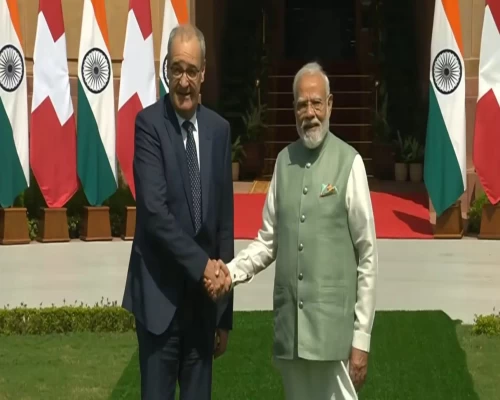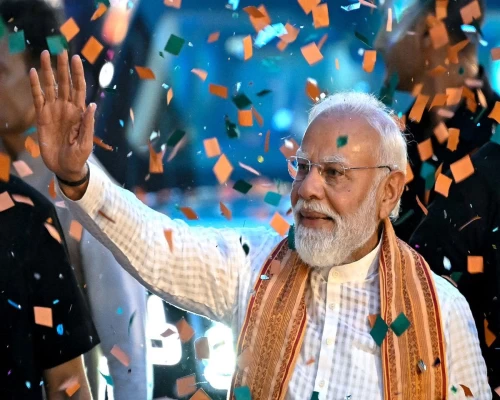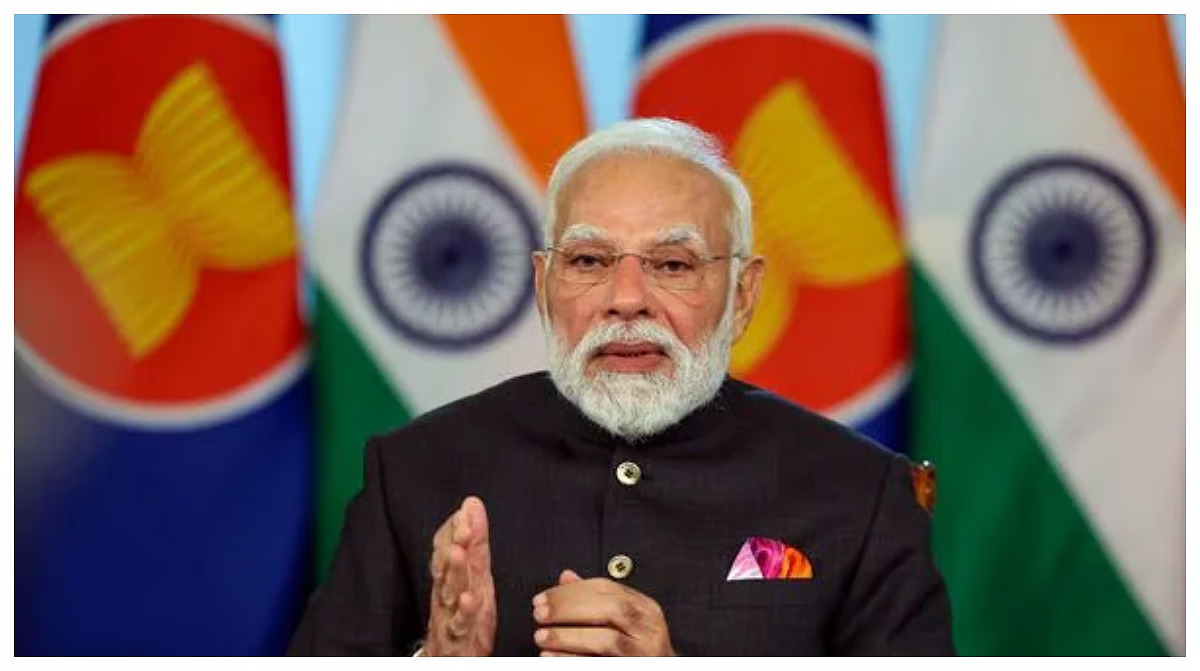
New Delhi: Prime Minister Narendra Modi addressed the Emerging Science, Technology and Innovation Conclave (ESTIC) 2025 at Bharat Mandapam in New Delhi, announcing a landmark ₹1 lakh crore Research, Development and Innovation (RDI) Scheme aimed at building a private sector–driven research ecosystem in India.
Speaking to scientists, innovators, academicians and global experts, Modi welcomed participants from across the world and congratulated the Indian women’s cricket team on winning their first ICC Women’s World Cup. “The nation is proud of them,” he said, adding that their victory would inspire millions of young Indians.
He lauded Indian scientists for successfully launching the country’s heaviest communication satellite, calling it a moment of pride for ISRO and the nation’s scientific community. “India is working to build a modern innovation ecosystem and is focusing on improving the ease of doing research,” Modi said, noting the government’s reforms in financial rules, procurement, and incentives to help prototypes move swiftly from lab to market.
The Prime Minister pointed out that India’s R&D expenditure has doubled in the last decade and patent registrations have increased 17 times. “India has become the world’s third-largest startup ecosystem,” he said, adding that more than 6,000 deep-tech startups are working in clean energy, advanced materials and other frontier areas. He also cited the exponential rise of the bio-economy—from $10 billion in 2014 to nearly $140 billion today—and the takeoff of India’s semiconductor sector.
“India is no longer just a consumer of technology, it has become a pioneer of transformation through technology,” Modi said. Reflecting on the country’s achievements, he noted that during the pandemic India created an indigenous vaccine in record time and executed the world’s largest vaccination drive.
“Today, India has the world’s most successful digital public infrastructure,” Modi said, crediting it for enabling large-scale delivery of government services. He mentioned that more than two lakh gram panchayats are now connected through optical fibre, ensuring affordable access to mobile data and digital inclusion.
The Prime Minister highlighted women’s growing role in science and innovation. “A decade ago, fewer than 100 patents were filed annually by women in India. Today, the number exceeds 5,000 per year,” he said, adding that women now make up around 43 percent of STEM enrolments, surpassing the global average.
Calling for deeper engagement with young minds, Modi announced the establishment of 25,000 new Atal Tinkering Labs, in addition to the 10,000 already operational. These labs, he said, have enabled over one crore students to experiment with curiosity and creativity. He also announced that 10,000 Prime Minister’s Research Fellowships will be awarded over the next five years to support young researchers.
The Prime Minister stressed the need to ensure that emerging technologies remain ethical and inclusive. “Today, India is shaping the global framework for ethical and human-centric AI,” he said, adding that the upcoming AI Governance Framework would aim to balance innovation with safety. Under the India AI Mission, he said, the government has invested over ₹10,000 crore. Modi also announced that India will host the Global AI Summit in February 2026.
He urged the scientific community to focus on challenges that can shape India’s future—nutrition security, soil health, clean energy storage and genomic research. “Can India develop next-generation biofortified crops to help combat malnutrition globally? Can innovations in low-cost soil health enhancers and bio-fertilisers improve soil health? Can new and affordable innovations be developed in clean energy storage, such as batteries?” he asked, calling for ideas that promote self-reliance in critical technologies.
Modi expressed confidence that the conclave would chart a new roadmap for innovation. “When science meets scale, when innovation becomes inclusive, when technology drives transformation, the foundation for great achievements is laid,” he said. He concluded by invoking the spirit of “Jai Vigyan, Jai Anusandhan.”
The three-day ESTIC 2025 is hosting over 3,000 participants from academia, research institutions, industry and government, including Nobel Laureates, eminent scientists and policymakers. Discussions are focused on 11 thematic areas such as advanced materials, AI, bio-manufacturing, emerging agriculture technologies, clean energy, quantum science and space technology. The conclave aims to build new collaborations and strengthen India’s position as a global innovation leader.
BI Bureau