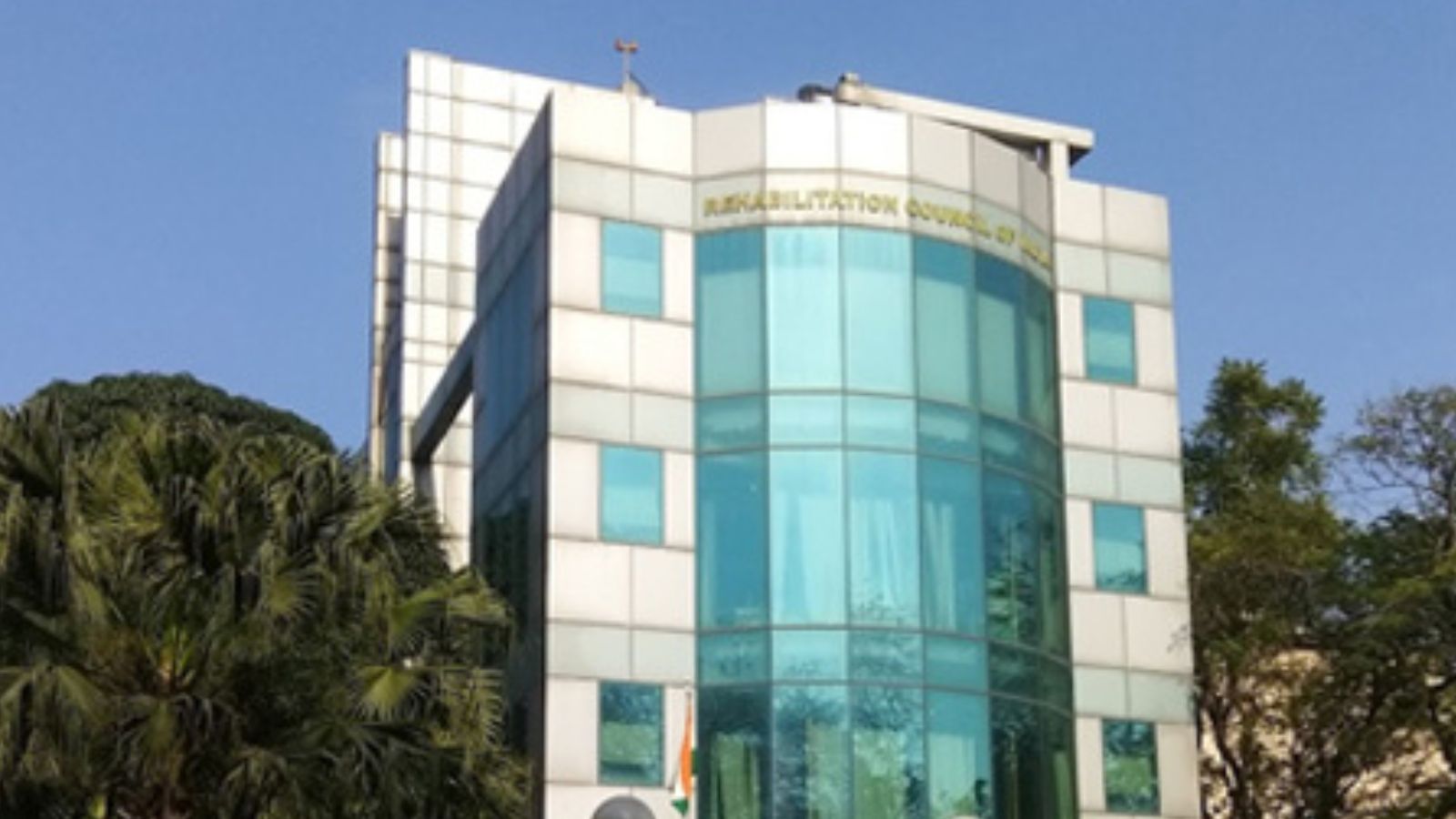
New Delhi: The Rehabilitation Council of India (RCI) has introduced a comprehensive set of reforms aimed at transforming rehabilitation education and professional regulation in the country. The move seeks to promote transparency, efficiency, and inclusivity across the sector, aligning with the Government of India’s vision of Jan Vishwas, trust-based governance, and Ease of Doing Business. Through these initiatives, RCI aims to empower students, professionals, and institutions with innovation and digital transformation at the core of its operations.
In a major relief to students and professionals, RCI has waived all fees for the issuance, renewal, and qualification addition of the Central Rehabilitation Register (CRR), making the entire process completely free of cost. The validity of CRR registration has been extended from five to seven years, and an automatic renewal system has been put in place for those earning 100 or more Continuing Rehabilitation Education (CRE) points. A new digital dashboard now allows professionals to make online corrections without any charge, while institutions will no longer need to pay processing fees for CRE programmes. Centres of Excellence (CoEs) have been granted full autonomy to conduct State, National, and International-level CRE programmes.
In a first-of-its-kind initiative, RCI has designated 144 top-performing institutions and universities as Centres of Excellence, a recognition intended to raise academic standards and encourage healthy competition in rehabilitation education. These include National Institutes, Composite Regional Centres, Central and State Universities, and other organisations that meet RCI’s criteria for excellence. The CoEs will have an extended seven-year approval tenure, automatic extensions for existing approvals, and the opportunity to participate in expert recognition panels and examination processes, ensuring integrity and quality in academic evaluation.
To simplify regulatory procedures, RCI has reduced approval fees and introduced a common No Objection Certificate (NOC) system, eliminating repetitive steps. A new Improvement Notice mechanism will give institutions the opportunity to address minor deficiencies before re-inspection, while video-based inspections will bring greater transparency and efficiency to the process.
The examination reforms aim to create a fairer and more student-friendly system. Question setters, moderators, and examiners will be drawn exclusively from Centres of Excellence to ensure higher academic quality. Supplementary examinations will be conducted within 75 days of result declaration, allowing students to avoid losing an academic year. A uniform grace mark policy will be implemented for students who narrowly miss the passing marks. Both online and offline random inspections will further ensure transparency and adherence to examination standards.
To strengthen local scholarship and inclusivity, RCI will promote the inclusion of books authored by Indian writers and learning materials in regional languages. A dedicated link has been launched on the Council’s website for Indian authors and publishers to submit their work. The Council will also encourage the use of diagnostic tools developed in India, reflecting the country’s cultural and linguistic diversity.
Through these reforms, the Rehabilitation Council of India has set a new direction for trust-based and technology-enabled governance in education. The initiatives aim to build an inclusive, world-class, and self-reliant rehabilitation education system that equips professionals to serve persons with disabilities with greater skill, compassion, and confidence—truly reflecting the spirit of Sabka Vikas, Sabka Vishwas.
BI Bureau