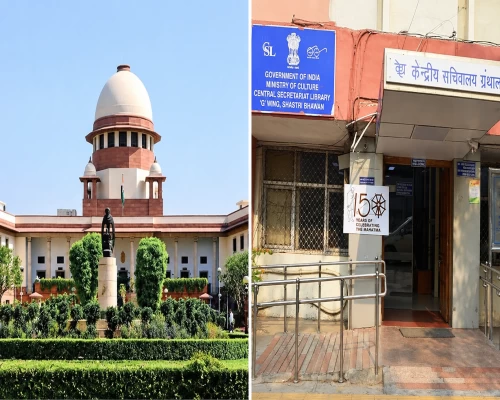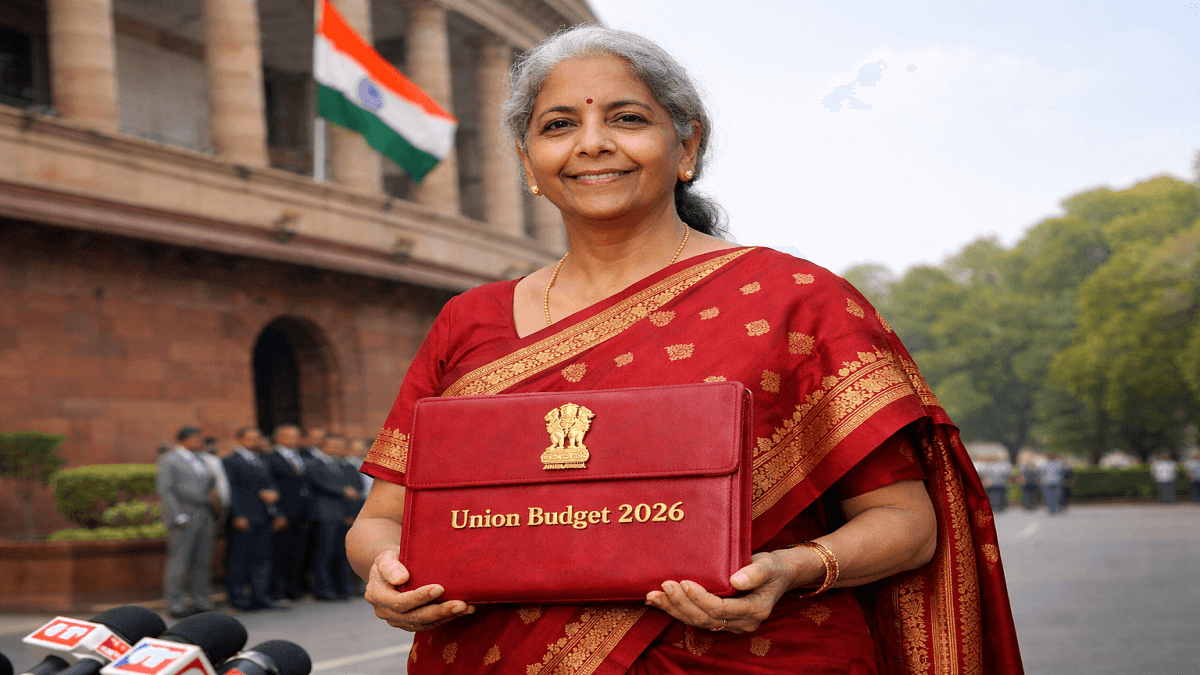
New Delhi: The Union Budget 2026–27 was tabled in Parliament on Saturday, outlining a comprehensive roadmap to accelerate economic growth, strengthen skills and ensure balanced regional development. Presented from Kartavya Bhawan for the first time, the budget is structured around three kartavyas focused on sustaining growth, building people’s capacities and ensuring inclusive access to opportunities.
Fiscal outlook and budget estimates
Non-debt receipts are estimated at ₹36.5 lakh crore, while total expenditure is pegged at ₹53.5 lakh crore. The Centre’s net tax receipts are projected at ₹28.7 lakh crore. Gross market borrowings are estimated at ₹17.2 lakh crore, with net market borrowings at ₹11.7 lakh crore. The fiscal deficit for 2026–27 is estimated at 4.3 percent of GDP, compared to 4.4 percent in 2025–26. The debt-to-GDP ratio is projected to decline to 55.6 percent.
First kartavya, accelerating economic growth
The first kartavya focuses on accelerating and sustaining economic growth through a strong push to manufacturing, infrastructure and energy security. Key announcements include the launch of Biopharma SHAKTI with an outlay of ₹10,000 crore over five years, expansion of pharmaceutical education and clinical trial networks, and the rollout of India Semiconductor Mission 2.0. The outlay for electronics component manufacturing has been increased to ₹40,000 crore, alongside the creation of dedicated Rare Earth Corridors in mineral-rich states.
Manufacturing, textiles and legacy industries
Capital goods manufacturing will be strengthened through new hi-tech tool rooms, a scheme for construction and infrastructure equipment, and a ₹10,000 crore programme to build a globally competitive container manufacturing ecosystem. The textile sector will see an integrated programme covering fibre self-reliance, cluster modernisation, mega textile parks and support for khadi, handloom and handicrafts. A separate scheme has been announced to revive 200 legacy industrial clusters through technology and infrastructure upgrades.
Support for SMEs and micro enterprises
Support for small businesses includes the creation of a ₹10,000 crore SME Growth Fund to nurture future champions, additional allocation to the Self-Reliant India Fund for micro enterprises, and the development of ‘Corporate Mitras’ through short-term professional courses, particularly in Tier II and Tier III towns.
Infrastructure and logistics push
Public capital expenditure is set to increase to ₹12.2 lakh crore, supported by the establishment of an Infrastructure Risk Guarantee Fund to boost private sector participation. The budget proposes new dedicated freight corridors, expansion of national waterways, ship repair hubs at Varanasi and Patna, incentives for coastal cargo movement and support for seaplane operations. Seven high-speed rail corridors have also been proposed to connect key urban and economic centres across regions.
Second kartavya, building skills and human capacity
The second kartavya centres on fulfilling aspirations and building human capacity. A high-powered standing committee on education to employment and enterprise will be set up with a focus on the services sector. The health sector will see the expansion of allied health education, addition of 100,000 professionals, establishment of five regional medical hubs and new institutions for Ayurveda. Measures have also been announced to scale up veterinary education and services.
Education, tourism and sports
In education, five university townships will be created near major industrial and logistics corridors, while every district will see the establishment of a girls’ hostel through capital support. Tourism initiatives include upgrading hospitality education, training tourist guides and creating a national digital grid of cultural, spiritual and heritage destinations. The development of key archaeological sites and the launch of the Khelo India Mission aim to strengthen the sports and cultural ecosystem.
Third kartavya, inclusive and regional development
The third kartavya aligns with the vision of Sabka Sath, Sabka Vikas and focuses on inclusive growth. Measures to increase farmer incomes include the integrated development of reservoirs and Amrit Sarovars, promotion of high-value crops and the launch of Bharat-VISTAAR, a multilingual AI platform integrating agricultural resources and advisory systems. New initiatives have been announced for Divyangjan skilling, mental health infrastructure, development of eastern and northeastern states, and Buddhist tourism circuits.
Tax reforms and ease of doing business
States will receive ₹1.4 lakh crore as Finance Commission grants for 2026–27. A new Income Tax Act will come into effect from April 2026, supported by simplified rules, rationalised TDS and TCS provisions, reduced litigation and easier compliance. The budget also includes measures to support the IT sector, attract global investment, streamline customs processes and simplify indirect taxes.
Overall, the Union Budget 2026–27 lays out a broad policy framework aimed at boosting growth, strengthening skills, improving competitiveness and ensuring more balanced regional development.
BI Bureau