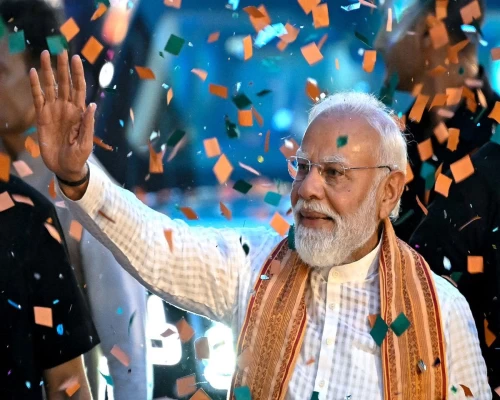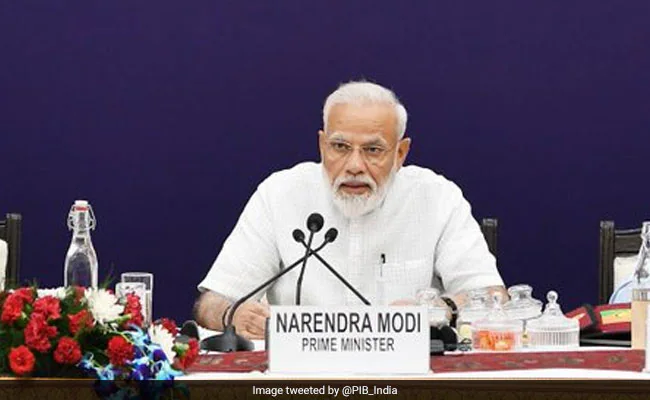
New Delhi: Prime Minister Narendra Modi on Tuesday highlighted that India’s ambition of becoming a developed nation by 2047 has evolved into a mass aspiration, and said that every policy decision and budgetary priority must be firmly anchored to this long-term vision. Interacting with a group of eminent economists and sector experts at the NITI Aayog headquarters, Modi called for mission-mode reforms across sectors to sustain high growth and strengthen India’s global competitiveness.
The meeting, held ahead of the Union Budget exercise, focused on the theme “Aatmanirbharta and Structural Transformation: Agenda for Viksit Bharat” and saw wide-ranging discussions on the reforms needed to drive productivity, investment and inclusive development over the coming decades. The Prime Minister noted that India is witnessing a generational shift in aspirations, reflected in changing education choices, consumption patterns and global mobility, and said institutions and governance systems must be equipped to respond to these evolving expectations.
Emphasising long-term thinking, Modi said policymaking should go beyond short-term considerations and remain aligned with the 2047 horizon.
He underlined the need to build world-class capabilities, strengthen infrastructure and ensure that India remains an attractive destination for global talent and capital. The Prime Minister also highlighted that sustained economic expansion will depend on the country’s ability to integrate more deeply with global markets while building strong domestic capacities.
Economists and experts at the interaction shared suggestions on accelerating structural transformation in both manufacturing and services. Key issues flagged included the need to boost private investment, enhance household savings, improve tax clarity, and ensure uniform and predictable regulatory frameworks.
Participants also stressed the importance of large-scale infrastructure creation and productivity-enhancing reforms to support long-term growth.
The role of technology featured prominently in the discussions, with experts pointing to artificial intelligence as a potential catalyst for productivity gains across sectors. India’s digital public infrastructure was highlighted as a critical enabler for innovation, efficient service delivery and economic inclusion. Several participants noted that the flurry of reforms undertaken in recent years, particularly during 2025, has created a strong foundation, and that consolidating these measures will be key to unlocking the next phase of growth.
Those present at the meeting included noted economists and industry leaders such as Shankar Acharya, Ashok K Bhattacharya, N R Bhanumurthy, Amita Batra, Janmejaya Sinha, Amit Chandra, Rajani Sinha and Dinesh Kanabar, among others, reflecting a broad spectrum of academic, policy and market perspectives.
The interaction comes at a time when India is among the world’s fastest-growing major economies and is seeking to balance near-term economic priorities with its long-term development goals. With the vision of Viksit Bharat 2047 increasingly shaping policy discourse, the government appears keen to ensure that today’s reforms and budgetary choices lay the groundwork for a more productive, competitive and inclusive India over the next two decades.
BU Bureau