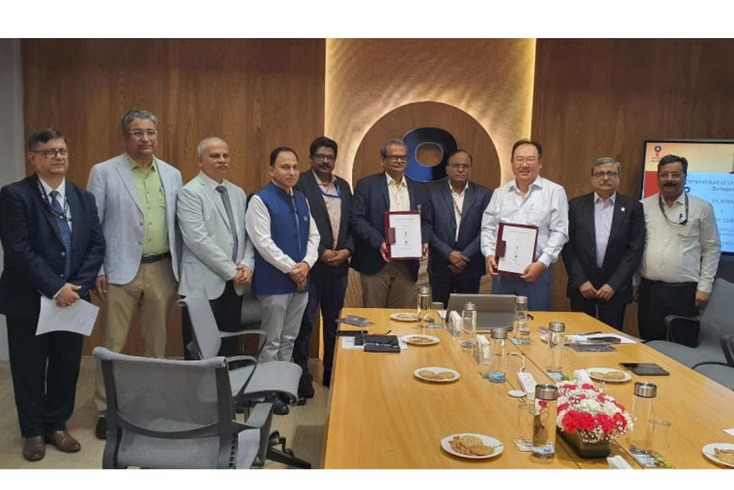
New Delhi: In a strategic push to strengthen India’s mineral security and reduce import dependence, Oil India Limited has signed a Memorandum of Understanding (MoU) with CSIR-Institute of Minerals and Materials Technology to jointly undertake research and development (R&D) in critical minerals under the National Critical Mineral Mission (NCMM).
The agreement marks a significant step in aligning India’s energy ambitions with its growing need for strategic minerals such as lithium, cobalt, nickel, graphite and rare earth elements. These minerals are crucial for sectors including electric mobility, renewable energy, electronics and defence manufacturing.
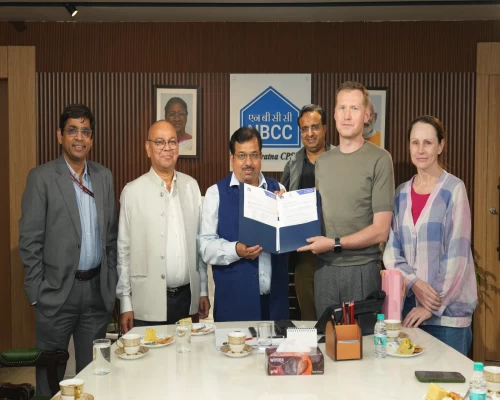
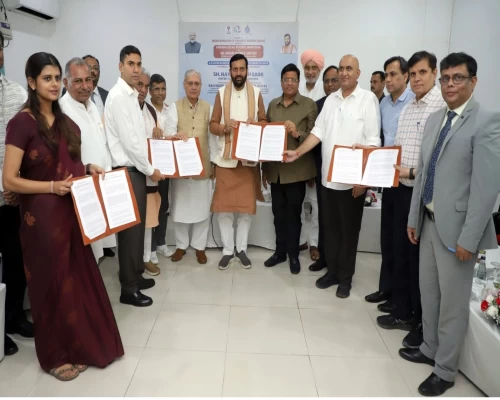
The MoU was formalised by senior leadership from both organisations, including Saloma Yomdo, Director (Exploration & Development) at Oil India, and Dr Ramanuj Narayan, Director of CSIR-IMMT, in the presence of top officials and scientists.
The collaboration will focus on advanced exploration and extraction technologies, mineral processing, and sustainable mining practices. It will also explore cutting-edge material development and beneficiation techniques to improve efficiency and environmental compliance in the mining sector.
CSIR-IMMT, designated as a Centre of Excellence for critical minerals under the NCMM, will bring its specialised expertise in mineral processing and materials technology, while Oil India will contribute its experience in exploration and resource development.
The partnership is expected to accelerate indigenous capabilities across the value chain—from exploration to processing and value addition—supporting the government’s broader push for self-reliance under the Atmanirbhar Bharat vision. India currently depends heavily on imports for several critical minerals, making such collaborations vital for long-term energy and industrial security.
Notably, this move also reflects Oil India’s ongoing diversification beyond its traditional oil and gas business into the emerging critical minerals and new energy domain. The company has already begun acquiring mineral assets, including graphite-vanadium and potash blocks, signalling a long-term strategic shift.
The MoU is non-commercial in nature and serves as a framework for joint research initiatives, with potential to scale up into commercial applications in the future.
With global supply chains for critical minerals increasingly vulnerable to geopolitical disruptions, such institutional collaborations are expected to play a key role in building a resilient domestic ecosystem and advancing India’s clean energy transition goals.
BI Bureau