New Delhi:
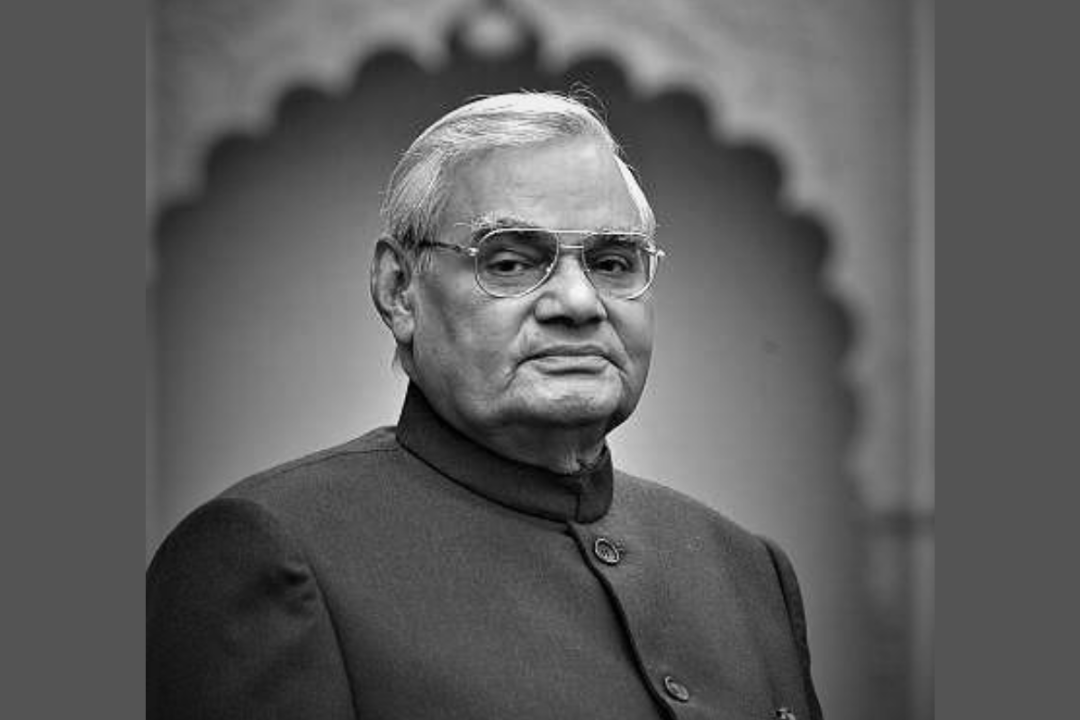
Governance in India is increasingly assessed not only by intent, but by outcomes. Good Governance Day, observed on December 25, brings this shift into focus by linking administrative performance with measurable indicators, while commemorating the birth anniversary of former Prime Minister Atal Bihari Vajpayee, whose leadership emphasised accountability, transparency and citizen-centric public administration.
Vajpayee’s approach to governance was rooted in democratic values, consensus-building and long-term institutional reform. Over a four-decade parliamentary career, including three terms as Prime Minister, he prioritised infrastructure development, economic reforms and administrative stability. National highway expansion, rural road connectivity, telecom reforms and improvements in public infrastructure during his tenure laid the foundation for systematic governance reforms that continue to influence policy frameworks today.
Paying tribute to Vajpayee on his birth anniversary, Prime Minister Narendra Modi noted that he had dedicated his entire life to good governance and nation-building, describing him as an eloquent orator, a spirited poet and a leader whose personality, work and leadership continue to guide India’s all-round development.
देशवासियों के हृदय में बसे पूर्व प्रधानमंत्री भारत रत्न अटल बिहारी वाजपेयी जी को उनकी जयंती पर सादर नमन। उन्होंने अपना संपूर्ण जीवन सुशासन और राष्ट्र निर्माण को समर्पित कर दिया। वे एक प्रखर वक्ता के साथ-साथ ओजस्वी कवि के रूप में भी सदैव स्मरणीय रहेंगे। उनका व्यक्तित्व, कृतित्व और… pic.twitter.com/lFUdCnm7cf
— Narendra Modi (@narendramodi) December 25, 2025
To institutionalise the principles Vajpayee stood for, the Department of Administrative Reforms and Public Grievances (DARPG) introduced the Good Governance Index (GGI) on December 25, 2019. The Index serves as a diagnostic and benchmarking tool to assess governance performance across States and Union Territories, supporting evidence-based reforms and peer learning.
The GGI evaluates governance across 10 sectors using 58 indicators, designed with a strong focus on citizen outcomes. These sectors include agriculture and allied activities, commerce and industry, public health, social welfare, infrastructure and utilities, human resource development, economic governance, judiciary and public safety, environment, and citizen-centric governance.
Data from successive editions of the Index indicate measurable progress across several sectors. In agriculture and allied activities, improvements have been recorded in food grain and horticulture production, milk and poultry output, crop insurance coverage and the enrolment of agricultural mandis on the e-NAM platform, reflecting both productivity gains and institutional support for farmers.
In the commerce and industry sector, progress has been observed in ease of doing business parameters, industrial growth, MSME registrations through online Udyog Aadhaar, GST enrolments and the strengthening of the start-up ecosystem. These indicators point to improvements in regulatory processes, formalisation of enterprises and business facilitation.
Good Governance Day is marked by week-long activities from December 19 to 25, extending discussions on governance reforms from states to districts and villages. These engagements aim to strengthen administrative accountability, improve awareness of public service mechanisms and encourage citizen participation in governance processes.
The principles underpinning the Good Governance Index align with internationally recognised governance norms, including participation, transparency, responsiveness, efficiency, equity and adherence to the rule of law. In the Indian context, these principles are reflected in initiatives such as Direct Benefit Transfer, Digital India, the Right to Information framework, MyGov and PRAGATI 2.0, which focus on improving service delivery, reducing leakages and strengthening monitoring of public programmes.
As India advances towards the objective of Viksit Bharat 2047, Good Governance Day 2025 reinforces the importance of institutional measurement, administrative reform and citizen-centric governance. The Good Governance Index remains a key instrument in assessing how effectively policies translate into outcomes on the ground, carrying forward the governance ethos associated with Atal Bihari Vajpayee’s leadership.
BI Bureau