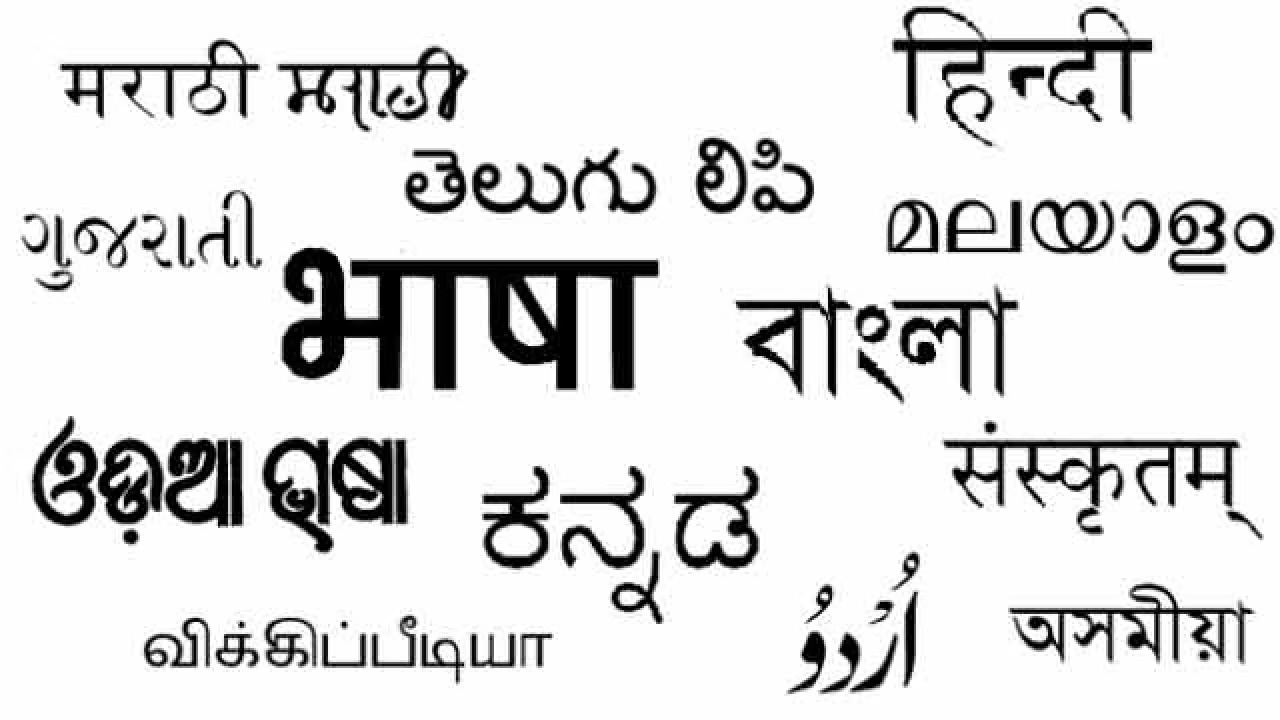
New Delhi: India’s languages have always been more than words—they are carriers of culture, history, and identity. With 22 Scheduled Languages and hundreds of tribal dialects spoken across the country, the challenge has long been how to ensure that this rich linguistic heritage keeps pace with the digital era. Now, technology is giving India’s languages a new life.
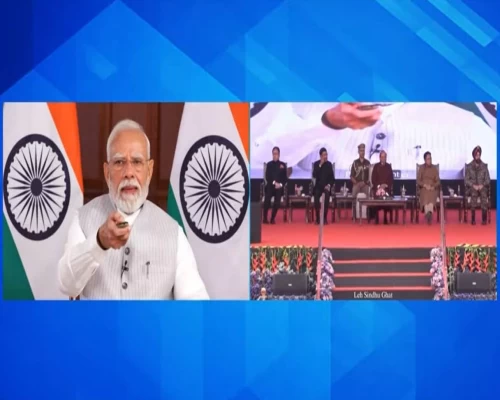
Prime Minister Narendra Modi captures the sentiment perfectly: “A language is simply not just a mode of communication, it is the soul of a civilization, it’s culture, it’s heritage.” That soul, long preserved in oral traditions and manuscripts, is now being digitized, analysed, and translated through artificial intelligence.
Platforms such as Bhashini and BharatGen are creating AI systems capable of real-time translation, text-to-speech, and speech recognition for all 22 Scheduled Languages. Meanwhile, Adi-Vaani, India’s first AI-driven platform dedicated to tribal languages like Santali, Bhili, Mundari, and Gondi, is bridging a long-standing gap, bringing oral traditions into the digital fold and making them usable in education, governance, and cultural documentation.
The government’s Scheme for Protection and Preservation of Endangered Languages (SPPEL), launched in 2013, and Sanchika, the Central Institute of Indian Languages’ digital repository, are feeding these AI systems with rich text, audio, and video data. BharatGen leverages these datasets to create multilingual AI tools, while GeMAI, integrated into the Government e-Marketplace, helps users navigate government procurement in multiple Indian languages, reducing language barriers.
Education, too, is being reshaped. The AICTE’s Anuvadini app and e-KUMBH portal allow technical books to be accessed in multiple Indian languages, supporting the National Education Policy 2020’s focus on mother tongue instruction. Platforms like SWAYAM have already delivered courses to over five crore learners, with plans to make all textbooks digitally available in Indian languages over the next three years.
Behind the scenes, a sophisticated technological framework is at work. Automatic Speech Recognition converts spoken words into text, Text-to-Speech synthesizes natural voice outputs, and Neural Machine Translation provides real-time, context-aware translations. Advanced models such as IndicBERT and mBART, trained on vast multilingual corpora, ensure accuracy across a variety of languages and dialects.
Through these efforts, India is creating a digital ecosystem where language is no longer a barrier but a bridge. By blending heritage with innovation, platforms like Bhashini, BharatGen, and Adi-Vaani are not only preserving India’s linguistic diversity—they are turning it into a tool for inclusion, education, and participation in the digital economy.
From classrooms in rural villages to government offices in metropolitan centres, India’s languages are now finding a new voice—one that is modern, accessible, and ready to carry the country’s cultural richness into the future.
BI Bureau