New Delhi: Amid a growing political and environmental debate over the future of the Aravalli hills, the Centre on Sunday asserted that there has been no dilution of protection norms for one of India’s oldest and most fragile mountain systems, rejecting allegations that a revised definition could open the door to large-scale mining. Union environment, forest and climate change minister Bhupender Yadav said the new, uniform definition of the Aravalli hills and ranges, approved by the Supreme Court, was meant to remove ambiguity and strengthen regulatory oversight, not weaken it.
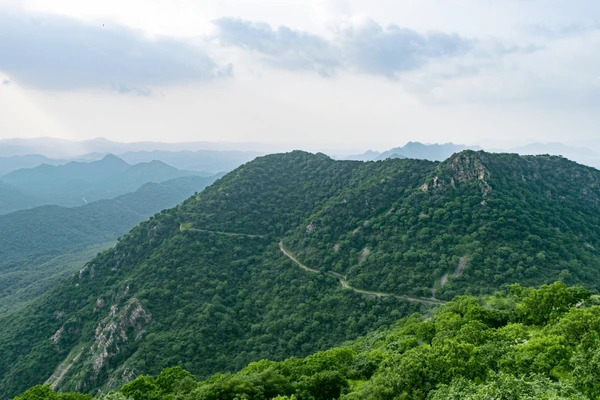
At the heart of the controversy is a scientific definition finalised after consultations with states and technical experts, and subsequently accepted by the apex court. According to a factsheet issued by the Press Information Bureau, an “Aravalli hill” is defined as any landform in notified Aravalli districts that rises 100 metres or more above the local relief, while an “Aravalli range” consists of two or more such hills located within 500 metres of each other. The government says this benchmark ensures uniform application of environmental and mining regulations across states that fall within the Aravalli landscape.
Addressing concerns raised by environmental groups and opposition leaders, Yadav said it was “wrong and misleading” to suggest that areas below 100 metres would automatically become open for mining. “There is no relaxation in protection,” the minister said, underlining that over 90% of the nearly 1.44 lakh sq km Aravalli region continues to remain protected, and that mining eligibility applies only to a very small fraction of the area under existing laws.
The Centre has argued that the lack of a clear, standard definition in the past led to inconsistent interpretations by different states, sometimes allowing mining activities dangerously close to hill bases and ecologically sensitive zones. The new definition, officials say, brings clarity and makes enforcement more robust, while continuing to be governed by existing environmental clearances, forest laws and court orders.
Environmentalists, however, remain sceptical. They argue that the Aravallis are not just a collection of high peaks but a complex system of low ridges, hillocks and forested tracts that play a critical role in groundwater recharge, biodiversity conservation and checking desertification in north and northwest India. Activists fear that excluding lower formations from the core definition could weaken ground-level protection, particularly in Rajasthan, Haryana and the Delhi-NCR region, where mining and real estate pressures are intense.
The issue has brought renewed attention to the 2-billion-year-old Aravalli range, one of the oldest mountain systems in the world and a natural barrier against the eastward spread of the Thar desert. The Supreme Court itself has repeatedly acknowledged the ecological importance of the Aravallis, calling for strict regulation to prevent irreversible damage.
As the #SaveAravalli campaign gains traction and political sparring intensifies, the Centre insists that scientific clarity and ecological protection are not at odds. Whether the new definition reassures conservationists or deepens distrust is likely to be tested on the ground, where the balance between development, mining regulation and environmental preservation remains a sensitive and closely watched fault line.
BI Bureau