Guwahati: In a significant ruling with wider implications for public discourse and institutional integrity, a civil court in Kamrup (Metro) has restrained Trinamool Congress leader Dulu Ahmed from publishing or circulating any further defamatory material against the Vice Chancellor of Gauhati University Prof Nani Gopal Mahanta, while ordering the immediate removal of all existing posts and videos from social media platforms.
The Court has also taken cognisance of a civil claim seeking Rs 100 crore in damages, granting both mandatory and permanent injunctions to prevent further dissemination of the impugned content. Social media intermediaries have been directed to disable access to the material and ensure that no similar content is uploaded in future.
In its order, the Court rejected allegations of financial impropriety linked to university contracts that were levelled against Prof Mahanta through a series of online posts. It observed that documentary records placed before it clearly showed that the tenders and works cited by Ahmed were awarded in 2023, while Prof Mahanta assumed office only in August 2024. The Court held that there was no prima facie material to support allegations of corruption, nepotism, or misuse of office, terming the imputations reckless and unfounded.
The Court further noted that Ahmed had used multiple social media handles to repeatedly name the Vice-Chancellor, often accompanied by photographs, amplifying the reach and impact of the allegations. It observed that the posts attracted significant engagement in the form of comments, shares, and views, thereby magnifying their defamatory effect.
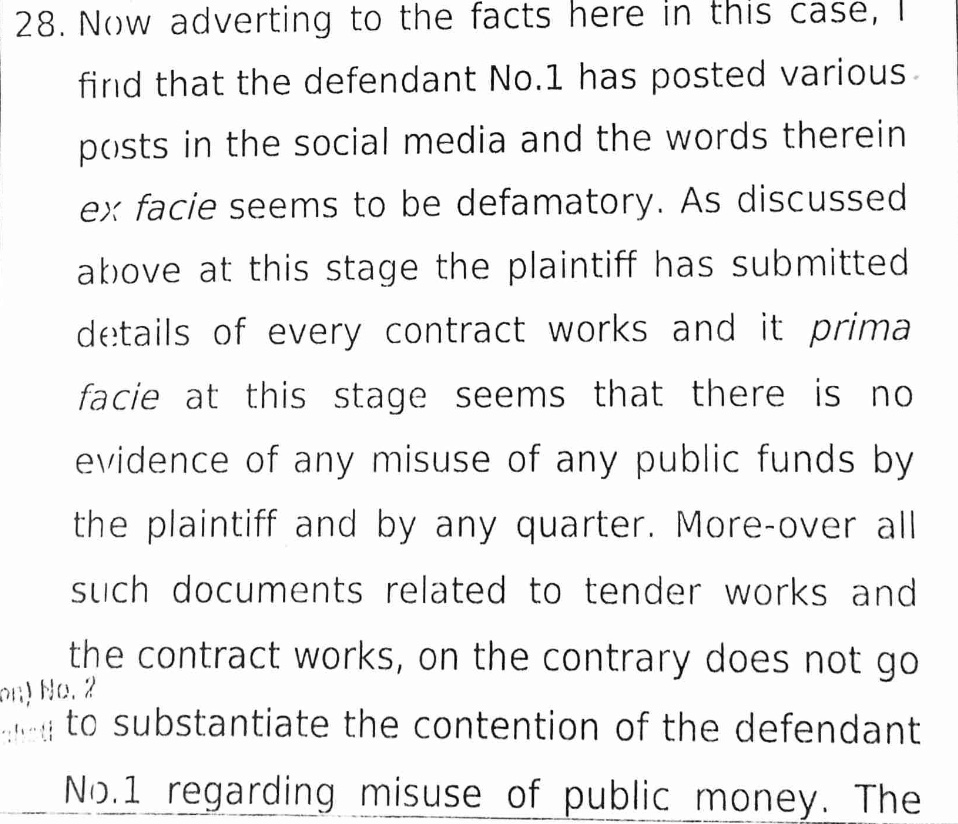
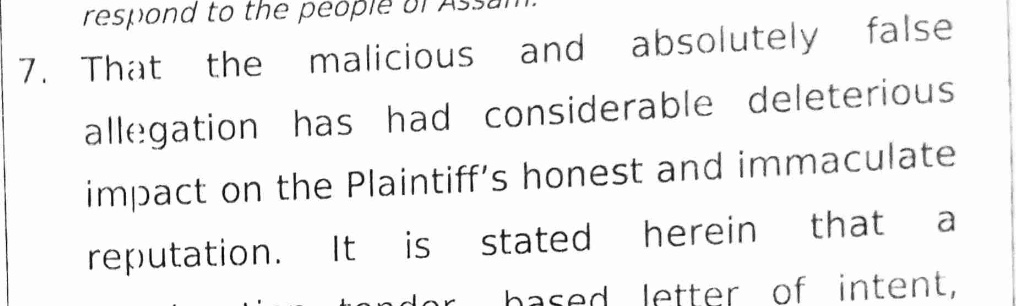
Analysing the language and tenor of the posts, the Court held that the statements were defamatory per se, observing that the words used were such that, in the opinion of any prudent person, they would seriously harm the reputation of an individual in public life. The allegations were described as false, fabricated, ill-founded and unsupported by any verifiable public record.
The order records that the repeated publication of such content across dates and platforms demonstrated a deliberate and sustained attempt to lower the dignity, integrity, and moral standing of the Vice-Chancellor in the eyes of students, colleagues, and the general public. The Court held that the conduct clearly crossed the boundary of permissible criticism and entered the realm of malicious defamation.
Referring to settled legal principles and judicial precedents, the Court observed that ex-parte injunctions are warranted in cases where continued circulation of defamatory material would cause irreparable harm, noting that reputational injury caused by viral social media content cannot be adequately remedied at a later stage.
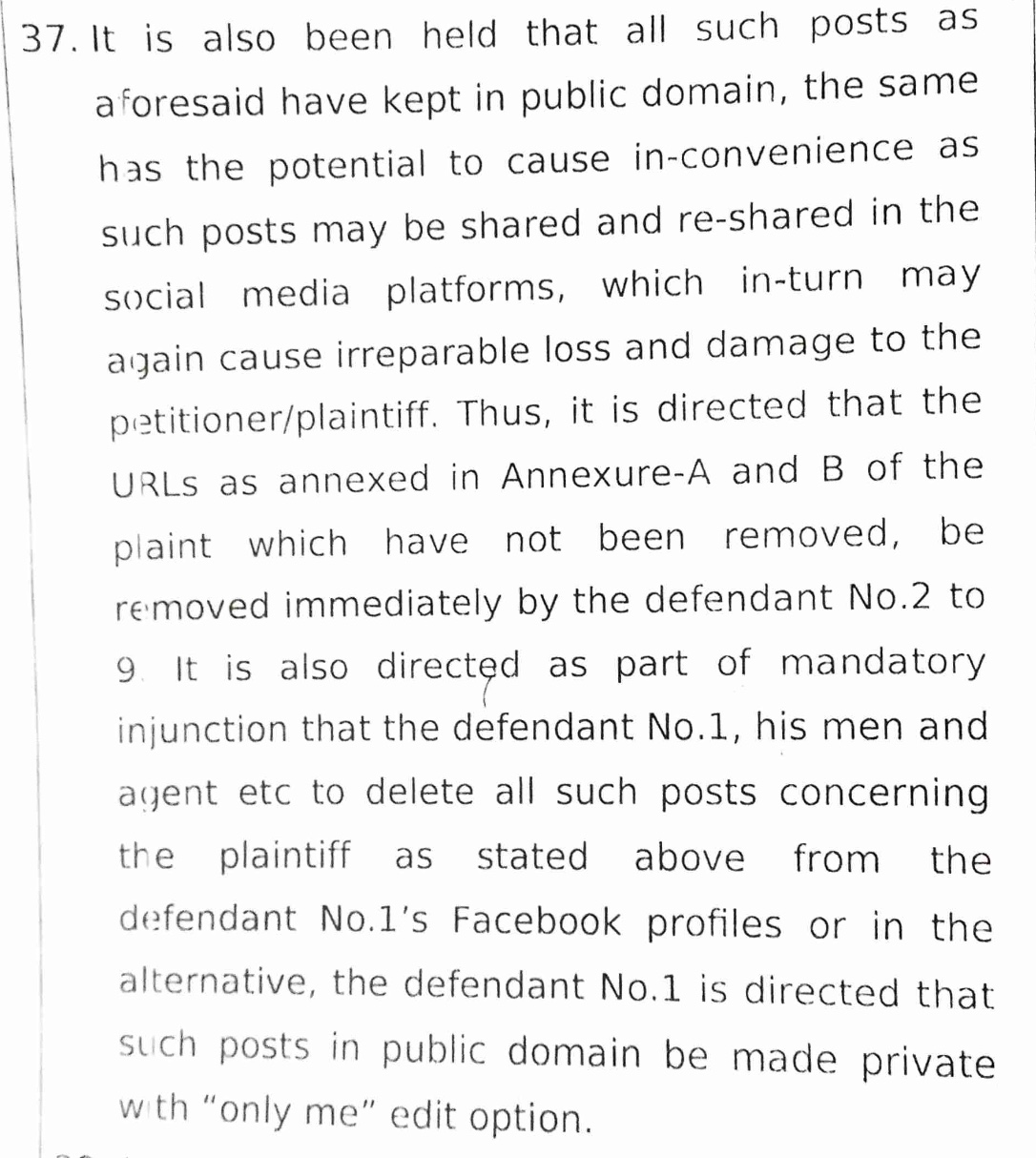
The Court concluded that the plaintiff had established a strong prima facie case, that the balance of convenience lay in his favour, and that denial of interim relief would result in irreparable injury to reputation, professional standing, and mental well-being — injuries not compensable merely through monetary damages.
Reacting to the order, Vice Chancellor Prof Mahanta said the judgment reaffirmed that academic institutions and their leadership cannot be subjected to sustained misinformation campaigns under the guise of political speech. While democratic dissent and scrutiny are legitimate, he noted, “falsehoods deliberately circulated to malign an individual or undermine an institution strike at the core of public trust and academic integrity.”
ENDS