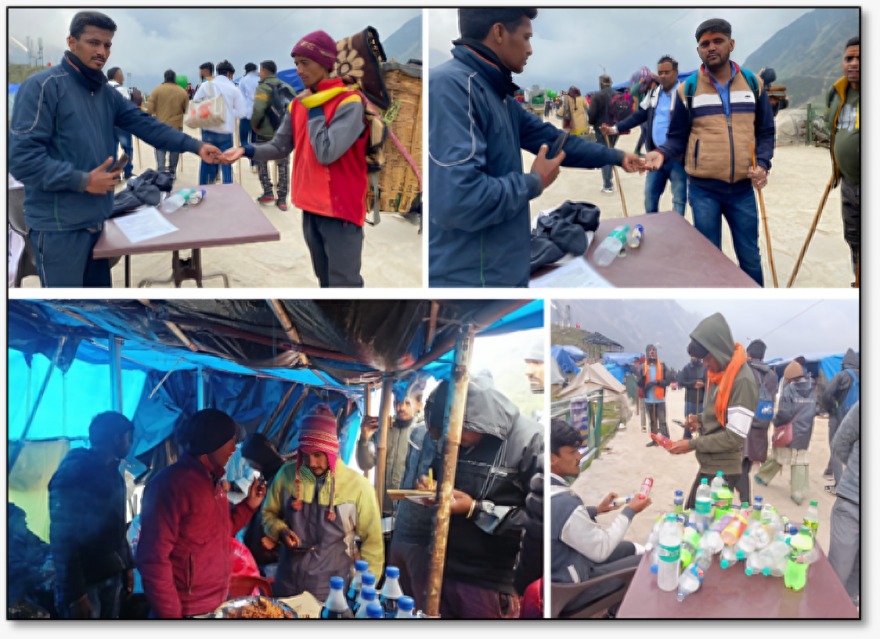
New Delhi: As day breaks over the Himalayas, waste management begins early and quietly. Sanitation workers move through steep lanes, students sort waste in school corridors, and pilgrims deposit used bottles at designated points. Across Himalayan states, waste handling is no longer confined to municipal backyards, it is becoming part of daily life, shaped by terrain, climate, tourism, and limited land availability.
Seasonal surges from tourism and pilgrimage place added pressure on fragile ecosystems, pushing local administrations to adopt decentralised and locally suited systems. Under Swachh Bharat Mission, Urban 2.0, states have focused on source segregation, scientific processing, remediation of legacy dumpsites, and stronger citizen participation, adapting national goals to mountain realities.
Kedarnath links plastic returns with digital refunds
In Uttarakhand’s Kedarnath, managing plastic waste during the pilgrimage season has led to the use of technology-driven solutions. Since May 2022, the state government, in collaboration with Recykal, has implemented a Digital Deposit Refund System to regulate plastic bottle and multilayered plastic waste.
Plastic bottles and MLP items are issued with Unique Serialised Identification QR codes, against which a refundable deposit of ₹10 is charged. Pilgrims return the used items at collection points or at Reverse Vending Machines installed at Gaurikund and near the Kedarnath temple. The deposit is refunded digitally through UPI.
The collected waste is sent to Material Recovery Facilities for recycling. The system, first used in Kedarnath, has now been extended to other Chardham sites including Gangotri, Yamunotri, and Badrinath. More than 20 lakh bottles have been recycled, an estimated 66 metric tonnes of CO₂ emissions have been avoided, and over 110 jobs have been created through the initiative.
Green campuses take shape across Jammu and Kashmir
In Jammu and Kashmir, waste management is increasingly being integrated into institutional routines. Schools, hospitals, offices, and public buildings are adopting practices such as waste segregation, on-site composting, and reduced use of single-use plastics as part of everyday functioning.
Led by the Housing and Urban Development Department, 1,093 campuses across 20 districts have been brought under a structured Green Campus certification process, supported by 80 Urban Local Bodies. Institutions progressed through identification, preparation, and declaration stages, focusing on infrastructure improvements and behavioural change among students, staff, and visitors.
Initiatives such as ‘Waste to Art’ spaces, green corners, and improved sanitation facilities added a creative dimension to the effort. Anantnag emerged as the first urban local body in the region to declare all its campuses Green.
Dharamshala blends community action with institutional innovation
In Himachal Pradesh, Dharamshala’s Municipal Corporation has been strengthening its waste systems since 2021 through coordinated programmes involving businesses, residents, and institutions. Responding to urban growth and tourism, the city introduced initiatives that combine training, community participation, and infrastructure support.
The Clean Business Programme works with local establishments through regular training and certification, while the Model Ward Programme supports neighbourhood-level improvements in segregation and cleanliness. A dedicated Material Recovery Facility strengthens recycling operations across the city.
One of the city’s distinctive initiatives is “Waste Under Arrest” at the Lala Lajpat Rai District Correctional Home, where inmates participate in waste processing and skill-building activities. Together, these efforts show how hill cities are building practical, locally grounded systems to manage waste while involving communities at every level.
BI Bureau