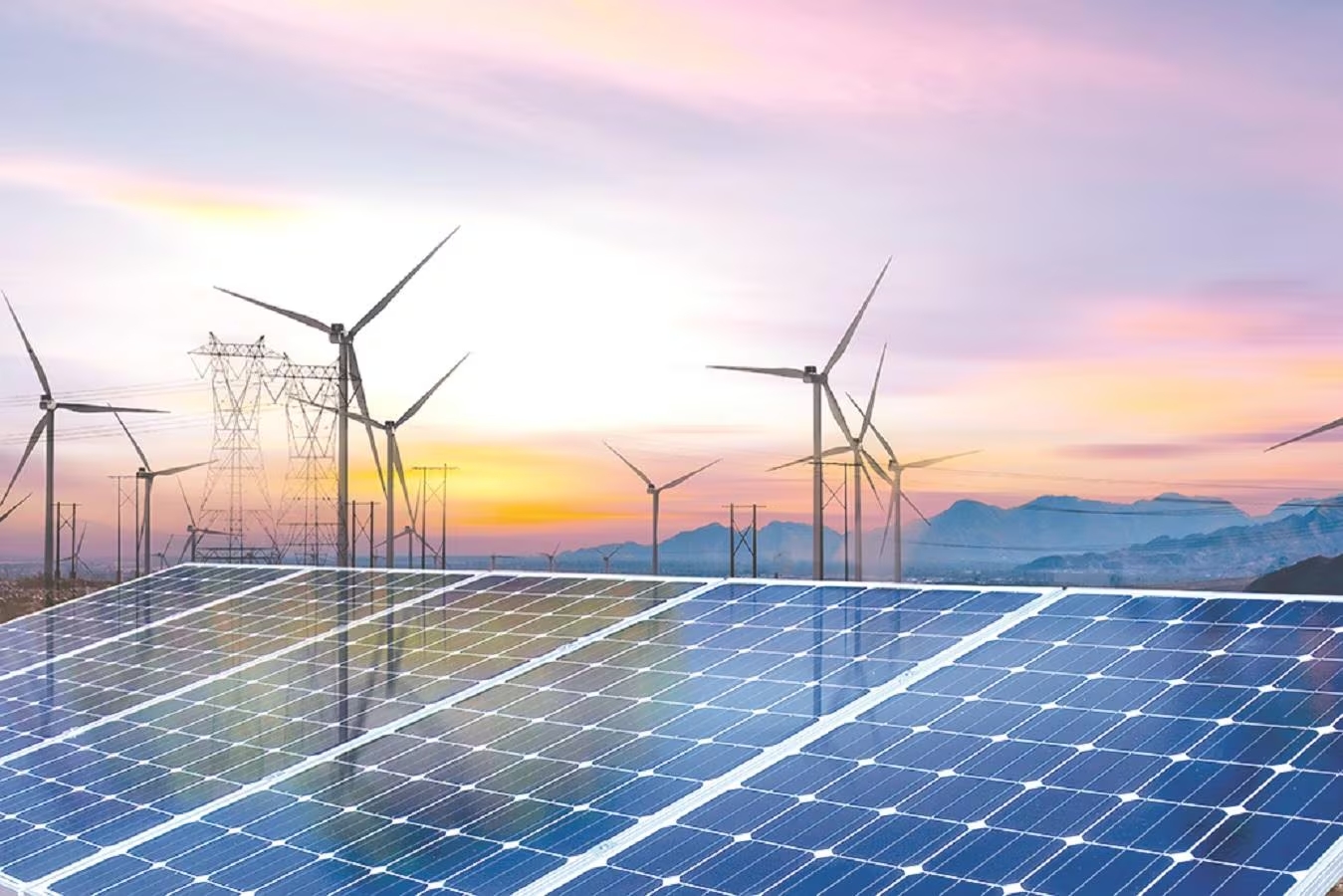
New Delhi: India could attract USD 4.1 trillion in cumulative green investments and generate 48 million full-time equivalent jobs by 2047, according to a new national assessment by the Council on Energy, Environment and Water (CEEW). The study also suggests that India could unlock a USD 1.1 trillion annual green market by the same year, signalling the scale of opportunity in the country’s shift towards a low-carbon economy.
The assessment identifies 36 green value chains across energy transition, the circular economy, the bio-economy and nature-based solutions. Together, these areas form what the study describes as a major economic opportunity for India’s journey towards Viksit Bharat.
While conversations around the green economy often centre on solar power and electric mobility, the analysis highlights a much broader landscape. It points to bio-based materials, agroforestry, sustainable construction, tourism driven by ecological preservation, circular manufacturing, waste-to-value industries and nature-linked livelihoods. Each of these, the study notes, could grow into billion-dollar sectors over the next two decades while strengthening resource security and climate resilience.
"India's green transition is fundamentally net positive: it can create millions of jobs, accelerate growth, improve public health and strengthen national security by shifting to domestic energy sources. The value chains identified in this CEEW study point to where this trillion-dollar opportunity lies," said Jayant Sinha, president, Everstone Group and Eversource Capital and former Union minister of state.
He added that policy stability and tools such as blended finance will be essential to de-risk investments. "With a whole-of-government approach, India can mobilise the capital required to drive a green frontier development model," he said.
Amitabh Kant, former G20 Sherpa and former CEO, NITI Aayog, said India must not replicate the development trajectories of Western economies as it grows beyond USD 3 trillion.
"With much of our infrastructure yet to be built, we have a unique chance to design cities, industries and supply chains around circularity, clean energy and the bioeconomy. Just as digital public infrastructure enabled India to leapfrog technologically, achieving in seven years what would have taken decades, we must now pole-vault into a green economy.
"While much of the world remains locked into legacy systems, a Viksit Bharat built on circular and resource-efficient value chains can define a new development pathway and set a global benchmark for green growth," he said.
Electric mobility is projected to be the biggest job contributor, accounting for more than 57 per cent of all energy-transition employment. The bio-economy and nature-based sectors, rooted largely in rural and peri-urban regions, could together create 23 million jobs and unlock a market value of USD 415 billion.
Within this segment, the top job-generating areas include chemical-free agriculture and bio-inputs with 7.2 million FTE jobs, agroforestry and sustainable forest management with 4.7 million FTE jobs, and wetland management with 3.7 million FTE jobs.
Abhishek Jain, director, Green Economy and Impact Innovations, CEEW, said the shift to a green economy is not only about growth but also about long-term security.
"India today imports 87 per cent of its crude, which can be reduced to zero with electric vehicles, solar energy and next-generation bioethanol and biodiesel. We import 100 per cent of our lithium, nickel and cobalt, and even 93 per cent of copper ore, all of which can become zero-import with a circular economy.
"We are heavily dependent on fertiliser imports, all of our potash is imported, and 88 per cent of urea is directly or indirectly import-dependent. With bio-inputs for agriculture and the bioeconomy at large, we can secure our food and material needs. For India, green is not a choice; it is an imperative," he said.
The study positions India’s green transition as a key driver of employment, investment, resource independence and long-term resilience, emphasising the scale of opportunity ahead as the country moves towards 2047.
BI Bureau