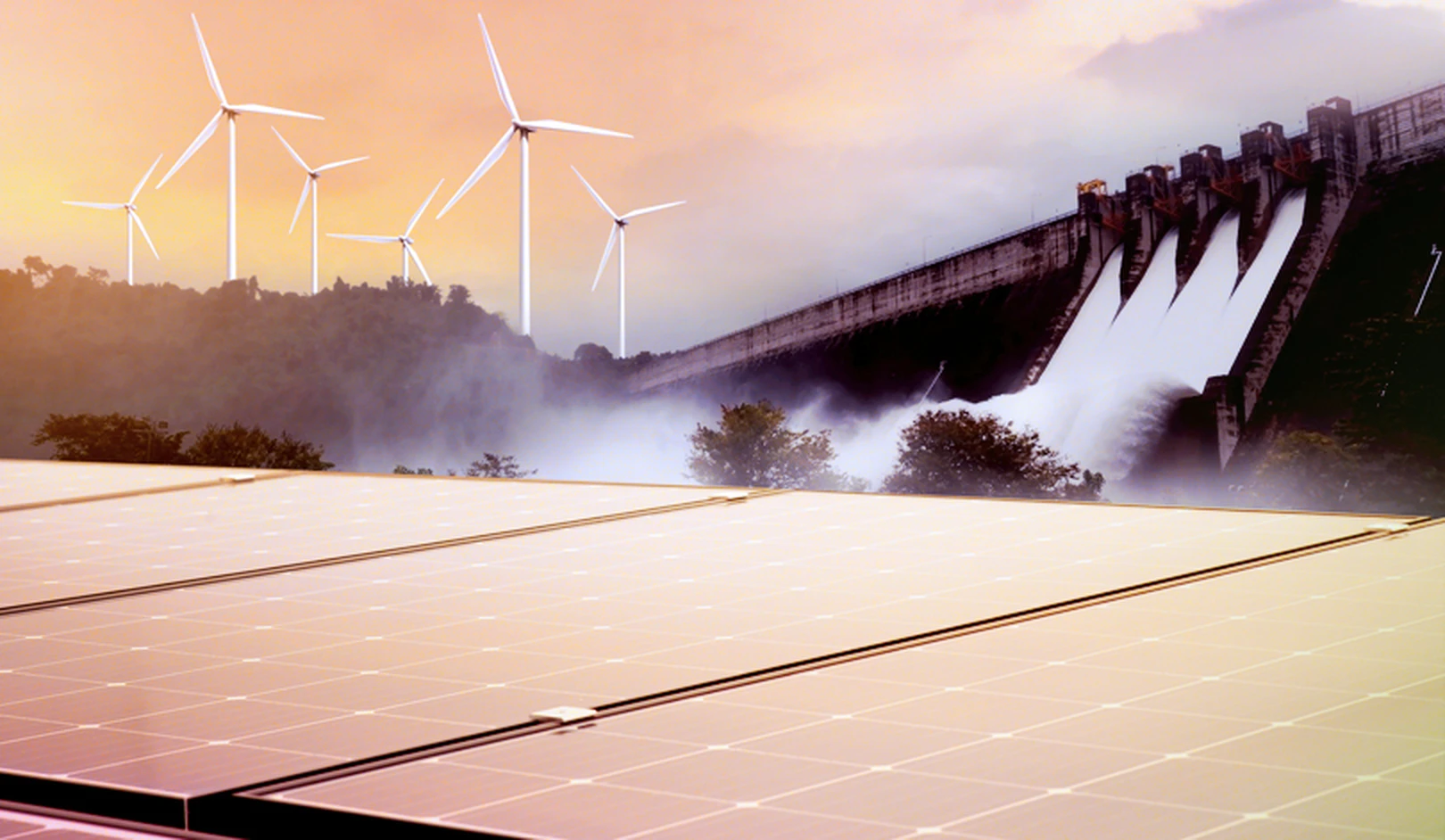
New Delhi: India’s renewable energy landscape is undergoing a strategic transformation. After a decade of record-breaking expansion, the focus is now shifting from the speed of capacity addition to the strength and stability of its clean energy systems. The Ministry of New and Renewable Energy (MNRE) has emphasised that the next chapter of India’s renewable revolution will be defined by system integration, grid resilience, and long-term reliability.
With over 197 GW of renewable energy capacity (excluding large hydro) already installed, up from less than 35 GW in 2014, India’s clean energy growth remains among the fastest in the world. The Ministry notes that the sector has reached a stage where “the focus is shifting from capacity expansion to capacity absorption,” dealing with critical challenges such as grid integration, storage, hybridisation, and market reforms — the true building blocks of a 500 GW-plus non-fossil future.
While the pace of new capacity addition has moderated, MNRE calls this a recalibration rather than a slowdown. The sector is aligning its expansion with stronger grid infrastructure, contractual discipline, and financial sustainability to ensure that renewable energy remains stable, dispatchable, and resilient. Currently, over 40 GW of renewable projects are in advanced stages of securing Power Purchase Agreements (PPAs), Power Sale Agreements (PSAs), or transmission connectivity, reflecting continued investment confidence. The government has identified the enforcement of Renewable Purchase Obligations by states, upgrading transmission infrastructure, and deploying technology for grid integration as top priorities before scaling up new bids. In 2025 alone, central renewable energy implementing agencies have bid 5.6 GW, while state agencies have bid 3.5 MW. In addition, commercial and industrial consumers are expected to add nearly 6 GW of renewable capacity. India continues to add 15–25 GW of renewable energy every year despite global supply-chain challenges and financing constraints.
In recent years, policy efforts have consciously moved from capacity expansion to system design. Renewable power tenders now increasingly include storage and peak supply components, marking the shift toward firm and dispatchable green energy. Battery Energy Storage Systems (BESS) are being integrated at both grid and project levels. The Production-Linked Incentive (PLI) scheme, domestic content requirements, and targeted duty structures are driving self-reliance in solar manufacturing. Adjustments in GST and ALMM policies have been introduced to stabilise costs, enhance reliability, and promote scale efficiencies. According to MNRE, these steps represent “a shift from expansion-led growth to a more resilient, quality-driven, and system-integrated renewable energy architecture.”
Transmission capacity has become the new frontier for India’s clean energy transition. The government’s ₹2.4 lakh crore transmission plan for 500 GW aims to connect renewable-rich states such as Rajasthan, Gujarat, and Ladakh with major demand centres across India. New high-capacity transmission lines, Green Energy Corridors, and HVDC projects are expected to boost inter-regional transmission capacity from 120 GW today to 143 GW by 2027 and 168 GW by 2032. Recent amendments to the CERC General Network Access (GNA) Regulations, 2025, introduce time-segmented access for “solar-hours” and “non-solar-hours,” allowing dynamic sharing of corridors among solar, wind, and storage projects. These reforms also bring greater transparency and flexibility in grid connectivity, addressing key bottlenecks that previously slowed renewable deployment.
Despite near-term delays, India remains a major destination for clean energy investment. Renewable tariffs in the country continue to rank among the lowest globally, ensuring cost competitiveness and investor confidence. International players are not withdrawing but repositioning their portfolios toward integrated and storage-backed projects that offer long-term reliability. The MNRE notes that the real story of India’s renewable sector is one of “evolution, not erosion.” The current phase focuses on integrating renewables with the grid, strengthening financial systems, and advancing market design.
Virtual Power Purchase Agreements (VPPAs) and other market-based tools are being explored to deepen corporate renewable procurement and attract new investments. These mechanisms, supported under the Electricity (Amendment) Bill and CERC regulations, will allow corporates to buy renewable energy virtually, decoupled from physical delivery, while ensuring price certainty for developers.
India’s upcoming renewable growth will be driven by large hybrid and round-the-clock projects in Rajasthan, Gujarat, and Karnataka, the expansion of offshore wind and pumped hydro storage, distributed solar and agrovoltaic projects under PM Suryaghar and PM KUSUM, industrial decarbonisation through the National Green Hydrogen Mission, and the strengthening of the Green Energy Corridor Phase III.
MNRE describes this moment as one of consolidation rather than pause. “India’s clean energy transition is not defined by quarterly numbers but by institutional durability and stickability,” the Ministry noted. After a decade of rapid growth, India’s renewable energy sector is now aligning capacity addition with grid strength, domestic manufacturing, and financial stability. As MNRE puts it, “India’s renewable story has not lost momentum. It has gained maturity.”
BI Bureau