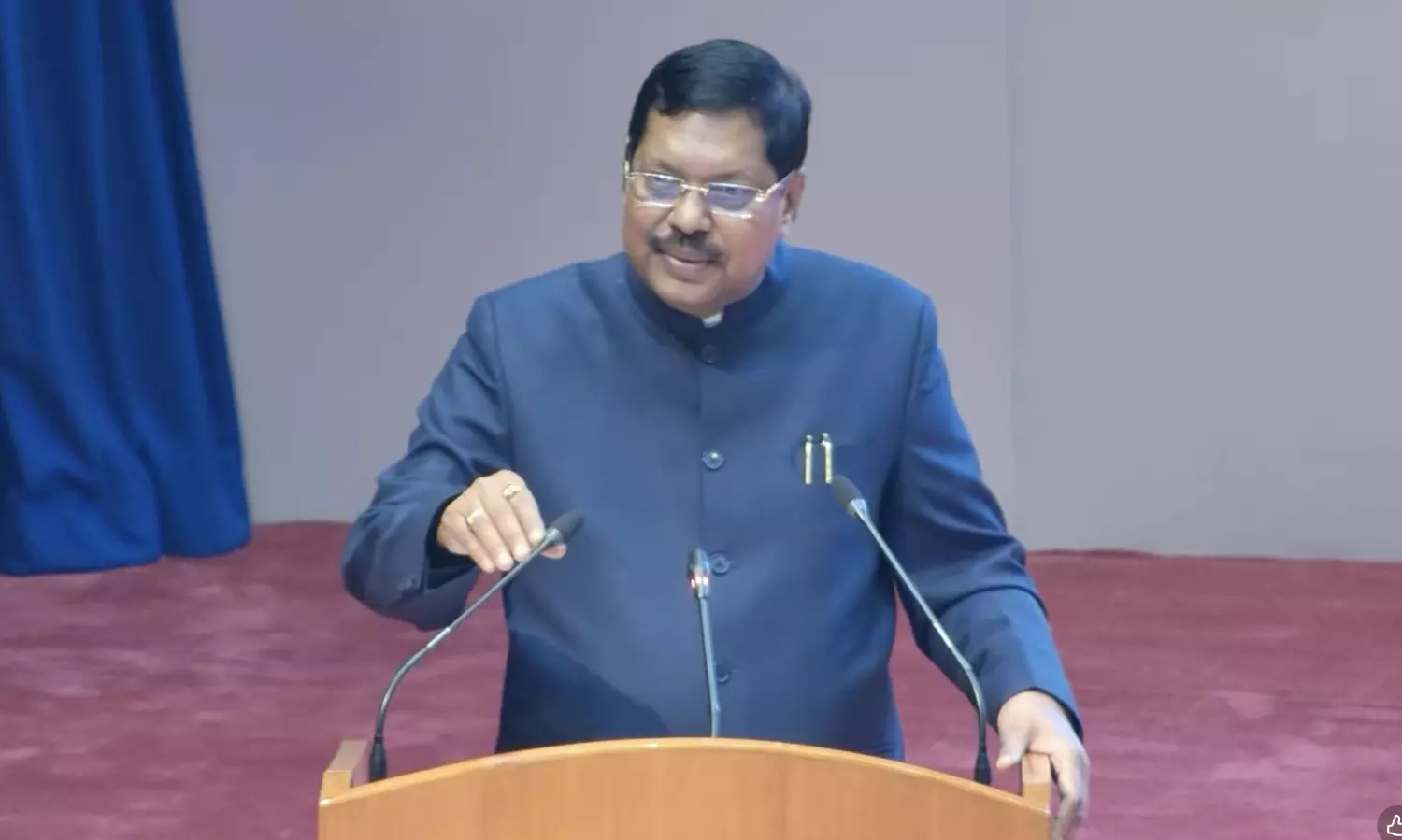
New Delhi: Chief Justice of India B.R. Gavai on Friday stepped down from the Supreme Court after nearly four decades in law, saying he departs “with a full sense of satisfaction and contentment … as a student of justice.”
During a farewell ceremony by the Supreme Court Bar Association, a visibly emotional Gavai paid tribute to his journey from a young lawyer to the CJI. He said he endeavored to serve the country and discharge his constitutional duties “within the four corners of the Constitution,” guided by the values of equality, liberty, justice, and fraternity.
Gavai addressed criticism from within his own community regarding his controversial 2024 judgment, in which he upheld the applicability of the “creamy-layer” concept to Scheduled Castes. He argued that true equality does not mean identical treatment for all, citing the example of a senior IAS officer’s son studying in an elite college and a laborer’s child in a village school. He said persistent political opposition to his verdict, but insisted that judges are not always required to publicly defend their rulings.
He also defended another of his recent rulings that struck down key sections of the 2021 Tribunal Reforms Act, asserting that the independence of tribunals is part of the Constitution’s basic structure.
Reflecting on his life, Gavai recalled his humble roots in Amravati, Maharashtra, acknowledging how his parents, and his admiration for Dr B.R. Ambedkar, shaped his judicial philosophy. He quoted a principle he followed in his judgments: “a judge must not alter the material but may iron out the creases.”
Gavai, the first Buddhist and only the second Dalit to become CJI, urged future jurists to treat public office as a platform for service rather than power.
He will be succeeded by Justice Surya Kant on November 24, following his retirement on November 23.
BI Bureau