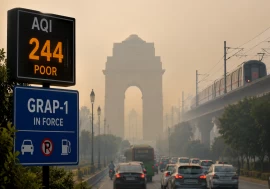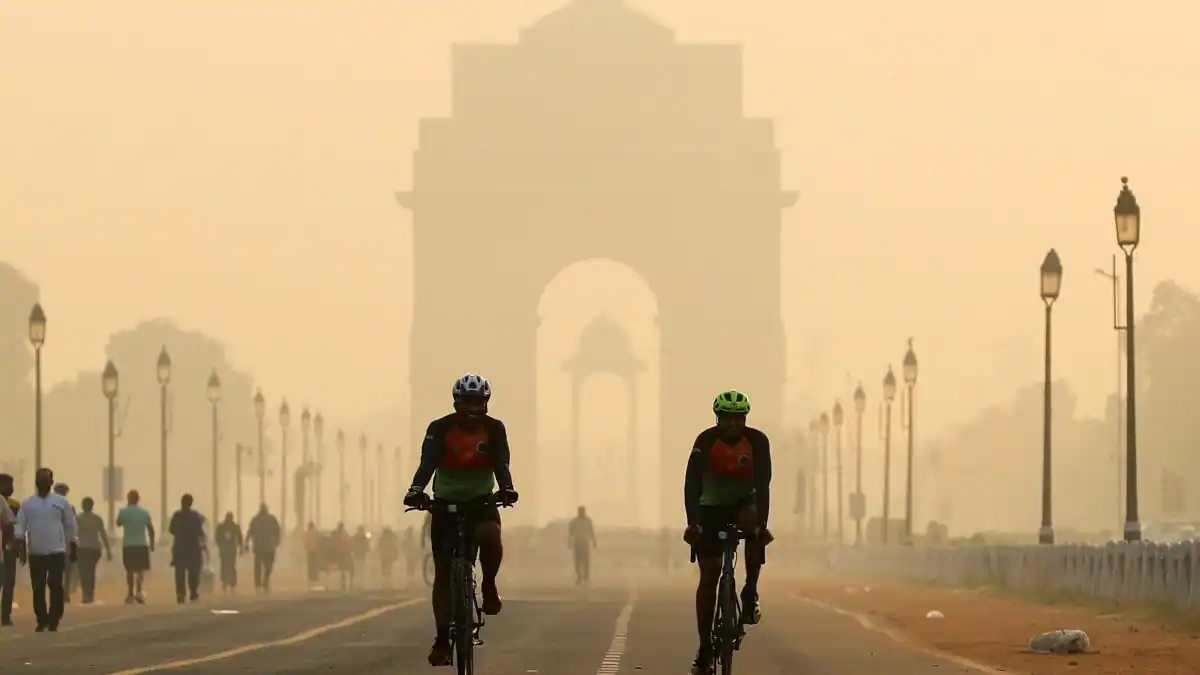
New Delhi: In a pioneering effort to tackle urban air pollution and address water scarcity, Delhi is preparing to make history with its first-ever trial of artificial rain. The city’s Environment Minister, Manjinder Singh Sirsa, announced that the cloud seeding process will take place between July 4 and 11, marking a bold step in pollution mitigation.
'This initiative is a historic moment in the fight against air pollution in Delhi,' said Sirsa, speaking to the media. 'Our aim is to provide Delhiites with clean air, and we are hopeful that this bold step of inducing artificial rain will bring about a meaningful change.'
The trial, which will be conducted by the Indian Institute of Technology (IIT), Kanpur, is being coordinated with the India Meteorological Department (IMD). IIT Kanpur has been entrusted with overseeing the entire project, including the deployment of aircraft, chemical dispersal, scientific modelling, and operational logistics.
The cloud seeding trials, initially scheduled to begin earlier, were postponed due to unfavorable weather conditions. However, a favorable window has now been identified between July 4 and 11 for the experiment. In case of further weather delays, the Delhi government has submitted a proposal to the Directorate General of Civil Aviation (DGCA) to seek an alternative date for the trial.
The project, titled ‘Technology Demonstration and Evaluation of Cloud Seeding as an Alternative for Delhi NCR Pollution Mitigation,’ will see five aircraft sorties conducted over north-west and outer Delhi. The trials are estimated to cost Rs 3.21 crore and are expected to cover around 100 square kilometres per sortie, each lasting approximately 90 minutes.
The aircraft, modified Cessna planes, will release a specially developed seeding mixture that includes silver iodide nanoparticles, iodised salt, and rock salt. These ingredients are designed to catalyze artificial rain by accelerating the formation of water droplets in moisture-laden clouds. The salts work by making the droplets heavier so they can eventually condense and fall as rain.
Delhi’s ambitious cloud seeding initiative represents a significant step in the city’s ongoing battle to address air pollution and water scarcity. The coming days will determine whether this pioneering experiment delivers on its promise of cleaner air and rainfall.
BI Bureau