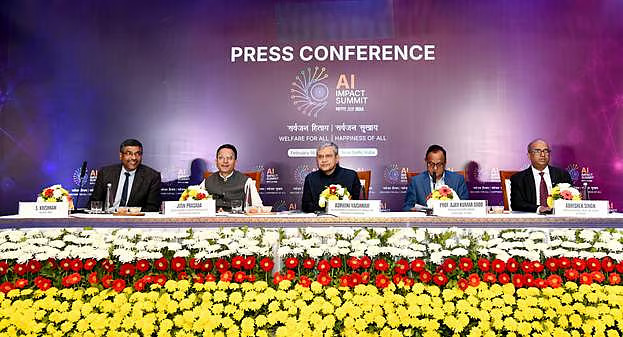
New Delhi: As India hosts the AI Impact Summit 2026 from February 16 to 20 in New Delhi, the country is seizing a unique moment in its technology journey - shifting from being primarily a tech services powerhouse to a global influencer in AI governance, innovation and inclusive development. The summit, positioned as the first major AI conclave in the Global South, reflects New Delhi’s push to make artificial intelligence accessible, impactful and aligned to development priorities rather than dominated solely by regulation talk and Western-centric frameworks.
India’s approach is anchored in the IndiaAI Mission, an ambitious Rs 10,371.92-crore programme designed to expand access to compute, data, skills and indigenous AI tools while showcasing how the technology can be harnessed for public value across health, education, agriculture and governance. The mission’s emphasis on People, Planet and Progress, shaping human capital, sustainable innovation and inclusive growth through AI, sets the backdrop for the summit’s wide-ranging deliberations.
The event has drawn global attention and participation, with a remarkable lineup of top technology and governance figures expected in the capital, underlining India’s growing influence in the global AI conversation. Among the confirmed attendees are Jensen Huang (CEO, NVIDIA), Sundar Pichai (CEO, Google), Sam Altman (CEO, OpenAI), Demis Hassabis (CEO, Google DeepMind), Alexandr Wang (Chief AI Officer, Meta), Dario Amodei (CEO, Anthropic), Bill Gates (Chair, Gates Foundation), Yann LeCun (NYU & AMI Labs), Matthew Prince (CEO, Cloudflare) and Brad Smith (President, Microsoft), along with prominent Indian leaders such as Nandan Nilekani (Infosys), Harshil Mathur (Razorpay) and C Vijayakumar (HCLTech).
Deliberations at the summit are structured across seven thematic “chakras”, including human capital, inclusion, scientific collaboration, safe and trusted AI, resilience, democratising AI resources and using AI for economic and social good, translating broad ideals into practical action areas. These working groups aim to ensure that AI’s potential can be shared broadly and tailored to address specific developmental challenges faced by emerging economies.
For India, the summit is not merely a diplomatic or tech showcase, it represents a strategic push to reshape how AI is governed and deployed worldwide. By emphasising impact, inclusion and access, policymakers here hope to steer global frameworks away from narrow regulatory battles toward measurable public benefit and equitable technology access, particularly for countries in the Global South that have historically had less voice in tech governance.
BI Bureau