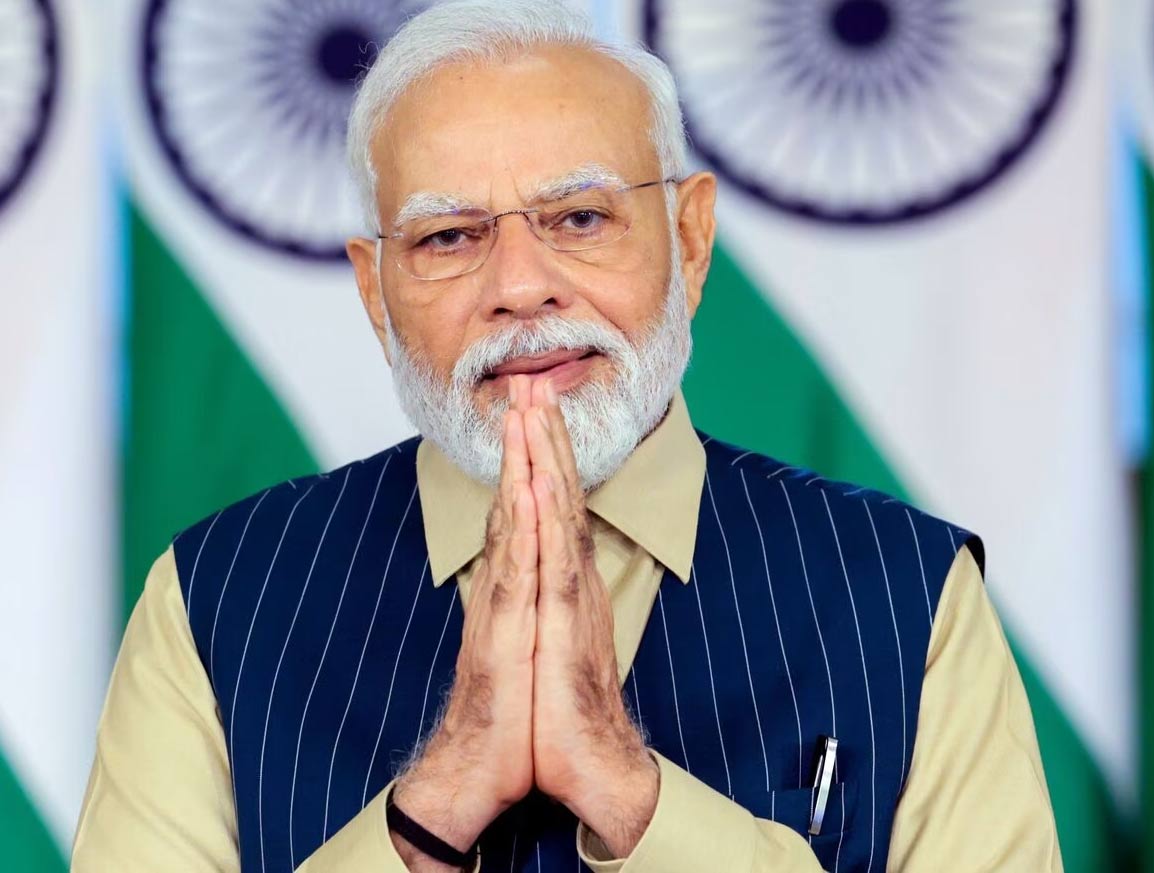
Thiruvananthapuram: Prime Minister Narendra Modi on Tuesday addressed the centenary celebrations of Arya Vaidya Sala Charitable Hospital in Kerala through a video message, highlighting the institution’s role in preserving Ayurveda while adapting it to contemporary healthcare needs.
Speaking at the event, the Prime Minister said Arya Vaidya Sala has made a lasting contribution to Indian healthcare over its 125-year journey. He recalled the vision of its founder P.S. Varier and said the institution has helped establish Ayurveda as a trusted system of treatment rooted in service to society. He described the organisation as a living representation of India’s healing traditions.
Reflecting on the legacy of Ayurveda, the Prime Minister said it has never been limited to a single era or region. “Ayurveda in India has not been confined to any one period or region, throughout the ages, this ancient system of medicine has shown us the way to understand life, to achieve balance and to live in harmony with nature,” he said. He noted that Arya Vaidya Sala today manufactures more than 600 Ayurvedic medicines and treats patients across India and from over 60 countries, earning public trust through consistent care.
Highlighting the charitable hospital’s 100-year journey, the Prime Minister said service has remained central to its functioning. He congratulated the vaidyas, doctors, nursing staff and all those associated with the hospital, and acknowledged Kerala’s long-standing role in preserving and promoting Ayurvedic traditions.
The Prime Minister said India’s approach to traditional medicine has changed significantly over the past decade, moving away from fragmented systems towards integrated healthcare. He spoke about the creation of the Ministry of Ayush and said preventive healthcare has been a key priority. “We have consistently focused on preventive health, the National AYUSH Mission was launched with this vision,” he said. He added that more than 12,000 Ayush Wellness Centres across the country are providing yoga, preventive care and community health services, along with improved access to Ayush medicines.
Referring to the expansion of the AYUSH sector, Modi said manufacturing and exports have grown steadily. He noted that exports of AYUSH and herbal products have increased from around ₹3,000 crore in 2014 to ₹6,500 crore now, benefiting farmers and strengthening India’s global wellness footprint. He also said initiatives such as the AYUSH Visa are helping India emerge as a destination for AYUSH-based medical value travel.
The Prime Minister said Ayurveda is being presented on major global platforms, including BRICS and G20 meetings, as a holistic health system. He highlighted the establishment of the World Health Organization’s Global Traditional Medicine Centre in Jamnagar, Gujarat, and the operational Institute of Teaching and Research in Ayurveda. He also mentioned efforts to promote medicinal farming along the Ganga to meet rising demand for Ayurvedic medicines.
Modi said the recently announced trade agreement with the European Union will provide new opportunities for Indian traditional medicine practitioners. He explained that in EU countries where regulatory frameworks do not exist, AYUSH practitioners will be able to offer services based on qualifications obtained in India. He added that the agreement will also support the establishment of AYUSH wellness centres in Europe.
Addressing challenges faced by Ayurveda, the Prime Minister said the absence of large-scale evidence-based research has often made it necessary to explain its value, both within India and abroad. He welcomed Arya Vaidya Sala’s efforts to test Ayurvedic practices through scientific research and collaborations with institutions such as CSIR and IITs. He noted the institution’s work in drug research, clinical studies and cancer care, and said the establishment of a Centre of Excellence for cancer research with support from the Ministry of Ayush is an important development.
Looking ahead, the Prime Minister stressed the need to align Ayurveda with emerging technologies. “We must adapt to the changing times and increase the use of modern technology and AI in Ayurveda,” he said. He added that technology can help predict diseases and support innovative treatment methods, and said Arya Vaidya Sala has shown how tradition and modern systems can progress together.
He concluded by congratulating Arya Vaidya Sala on completing 100 years of its charitable hospital and expressed hope that the institution will continue to improve lives with the same spirit of service. The Governor of Kerala and other dignitaries were present at the event.
BI Bureau