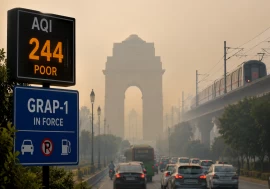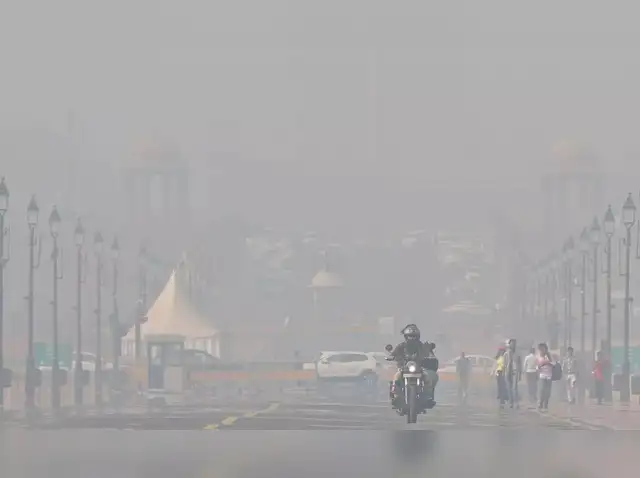
New Delhi: The national capital is once again struggling with toxic air as the day's average air quality index was recorded at 370, in the upper range of 'very poor', the second worst of the season so far after October 30, when the index was at 373.
At one station, the AQI soared above 400, entering the “Hazardous” category, underscoring the urgency of the health threat.
The major pollutant driving the surge is fine particulate matter (PM2.5), with concentrations measuring well over 150 µg/m³ in parts of the city—several times above safe levels.
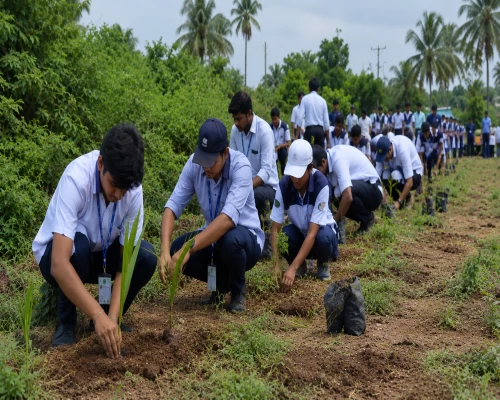
Amid rising concerns, schools across Delhi have suspended outdoor activities, and some are considering shifting to hybrid or fully online classes to protect children. The smog has already led to reduced visibility, heavy adherence to covers and masks, and widespread advice for vulnerable groups—children, the elderly and those with respiratory or cardiac conditions—to remain indoors.
Meteorologists and health experts point out that the timing of this pollution spike is a familiar pattern for Delhi. As winter approaches, cooler winds, lower atmospheric mixing, construction dust, vehicular emissions and stubble-burning in neighbouring states combine to trap pollutants in the city’s air basin. Without swift intervention or favourable weather, these conditions can persist—and even worsen—over several days.
The authorities have not yet triggered the highest alert level under the Graded Response Action Plan (GRAP), which would entail sweeping restrictions on construction, heavy vehicles and outdoor activities in schools. But given the current trajectory and readings surpassing earlier peaks, many believe such a move could become inevitable unless the situation improves quickly.
For the city’s residents and institutions, the days ahead will call for heightened vigilance—monitoring air quality closely, limiting outdoor exposure, and readying plans for educational disruptions and workplace adjustments. With Delhi again enveloped in a thick smog blanket, the health, education and daily-life impacts cannot be ignored.
BI Bureau