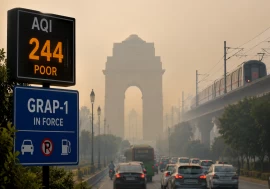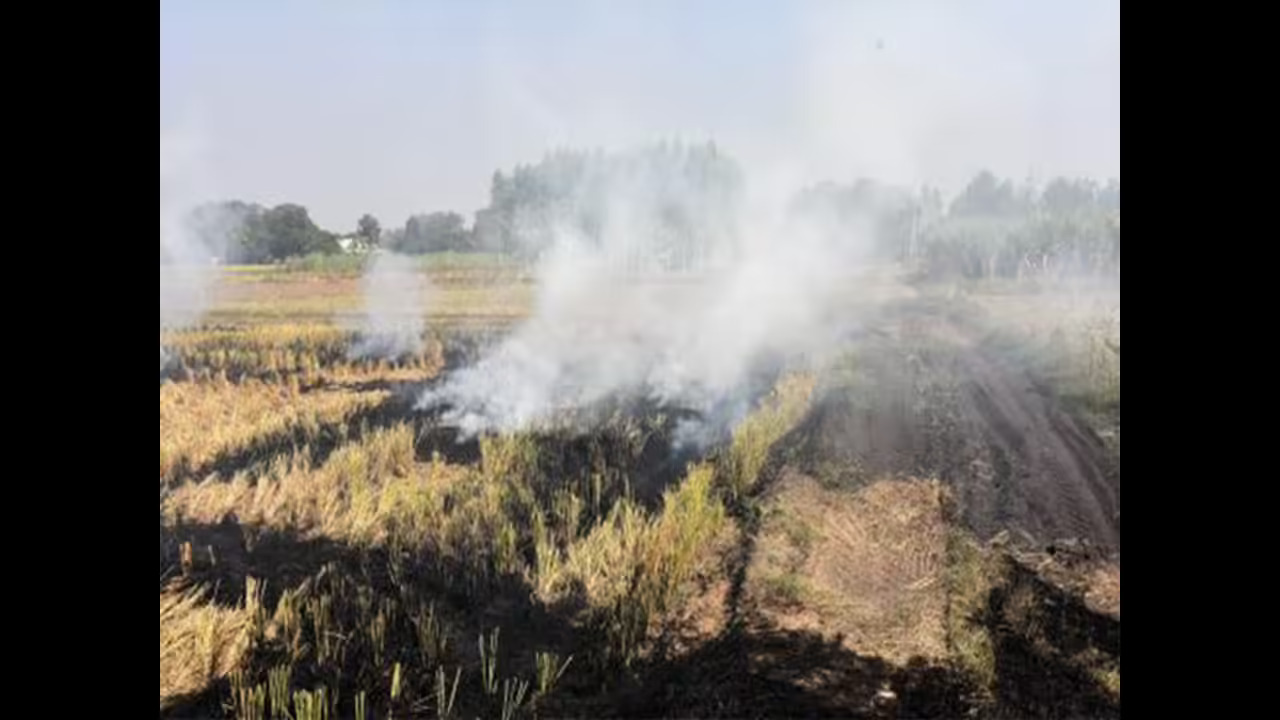
New Delhi: Stubble burning contributed only 3–5% to Delhi’s PM2.5 pollution levels during October–December 2025, even as the capital recorded some of its worst winter air quality in recent years, according to data shared by the Central Pollution Control Board (CPCB) in response to an RTI query.
The figures mark a sharp decline from previous years when farm fires in Punjab and Haryana were blamed for a much larger share of Delhi’s winter smog. Yet the reduced contribution has not translated into cleaner air. Delhi’s average air quality in December remained in the ‘very poor’ to ‘severe’ category, with several days crossing emergency pollution thresholds.
CPCB’s analysis, based on satellite fire counts and weather modelling, suggests that stricter enforcement, penalties and wider adoption of crop residue management practices have significantly lowered the impact of stubble burning.
Thousands of cases have been registered and fines imposed in neighbouring states, contributing to the decline.
Experts say the data shifts the spotlight to local pollution sources. Vehicular emissions, construction and road dust, garbage burning, diesel generators, ageing vehicles and industrial emissions are now estimated to account for nearly 85–90% of Delhi’s PM2.5 load, especially during winter months when low wind speeds and temperature inversion trap pollutants close to the ground.
Environmentalists argue that while seasonal measures against farm fires have shown results, enforcement within Delhi and the NCR remains inconsistent.
Construction norms are frequently violated, open waste burning continues in many areas, and action against high-polluting vehicles and industries is uneven.
Public health experts warn that sustained exposure to high PM2.5 levels increases the risk of respiratory and cardiovascular diseases, particularly among children, the elderly and those with existing health conditions.
The latest data underlines a stark reality for residents: Delhi’s air crisis is no longer driven primarily by smoke from distant fields, but by pollution generated closer to home. Without year-round action on urban emission sources, experts say, cleaner winter air will remain out of reach.
BI Bureau