New Delhi: After more than a decade of disagreement over the sharing and management of Mahanadi waters, Chhattisgarh and Odisha appear to be moving towards a potentially significant breakthrough, with Chhattisgarh Chief Minister Vishnu Deo Sai expressing confidence that the long-pending issue will be resolved “very soon”.
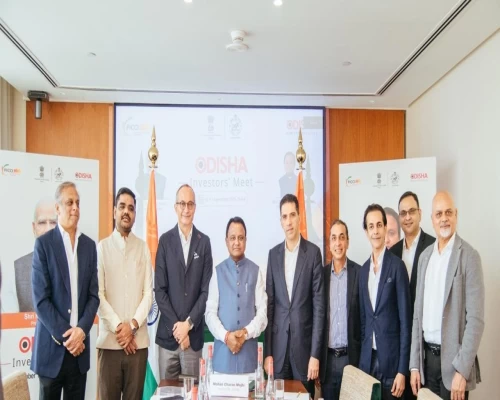
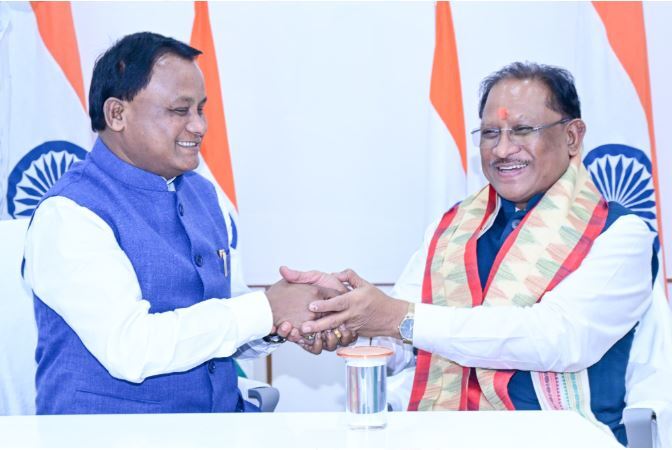
Sai's remarks came after his recent visit to Odisha, where he met Odisha Chief Minister Mohan Charan Majhi. The two leaders discussed the Mahanadi issue as well as broader cooperation between the neighbouring states.
Importantly, Sai said that both states had already discussed the matter at the official level and had agreed to accept the decision of the Central Water Commission (CWC) if it is in the interest of both Chhattisgarh and Odisha.
The statement marks a notable shift in the tone surrounding one of India's longest-running inter-state river water disagreements - from prolonged confrontation towards dialogue, technical assessment and consensus.
The Mahanadi originates in Chhattisgarh and flows through Odisha before entering the Bay of Bengal. Its water is critical to agriculture, drinking water, industry and livelihoods across both states.
The dispute intensified in 2016 when Odisha raised objections to the construction of upstream barrages and other water projects in Chhattisgarh. Odisha has maintained that such structures could affect downstream availability, particularly during the lean season.
Following legal proceedings, the Centre constituted the Mahanadi Water Disputes Tribunal (MWDT) in March 2018 under the Inter-State River Water Disputes Act, 1956. The tribunal subsequently became the principal forum for examining the competing claims of the two states.
After years of proceedings, however, the focus has increasingly shifted towards finding a negotiated settlement.
The current phase gained momentum in July when Union Jal Shakti Minister C. R. Patil brought the two Chief Ministers together in New Delhi to facilitate an amicable settlement.
The July 30 meeting involved senior officials of the Ministry of Jal Shakti, CWC and the governments of both states. The Centre said at the time that both states had demonstrated a willingness to pursue an amicable settlement through mutual cooperation and technical consultations.
The meeting also noted progress made by the Joint Technical Committee, which had reached consensus on several technical issues.
An expanded Technical Committee, chaired by the CWC Chairman and comprising representatives of both states, was constituted to examine the remaining technical questions. Its first meeting was held on July 29.
This technical mechanism is significant because the Mahanadi question involves complex issues relating to water availability, existing utilisation, storage, seasonal flows, future demand and the impact of water infrastructure.
Sai's latest statement that both sides are prepared to accept the CWC's decision represents perhaps the clearest indication yet that the negotiations have moved beyond merely expressing a desire for settlement.
The CWC's role provides a common technical platform for the two states, potentially helping separate questions of water management from political differences.
Recent reports indicate that technical teams from Odisha and Chhattisgarh have already held multiple rounds of discussions under the CWC's supervision. The technical process is examining water availability and utilisation data submitted by both states, along with storage capacities, projected requirements and downstream flows.
The tribunal has also deferred its proceedings amid the continuing settlement efforts, giving the two states further space to pursue reconciliation.
The Mahanadi negotiations could now become an important example of how complex inter-state resource issues can be addressed through cooperative federalism.
The Centre has consistently emphasised that the objective should go beyond settling the immediate disagreement and establish a long-term, equitable and sustainable framework for management of the Mahanadi basin.
That approach is particularly relevant because the Mahanadi is not simply a question of allocation between two governments. It is a shared river system supporting millions of people, farmers, industries and ecosystems across state boundaries.
A durable arrangement would therefore need to account for present and future water requirements, seasonal availability, irrigation and drinking-water needs, environmental considerations and the operation of existing and future projects.
The final terms of a settlement are yet to be announced, and the technical consultations remain important. But the political signals from both sides are increasingly encouraging.
If the ongoing talks succeed, the Mahanadi could move from being a long-standing point of contention between Odisha and Chhattisgarh to becoming an example of dialogue-driven water governance and cooperative federalism.
BI Bureau