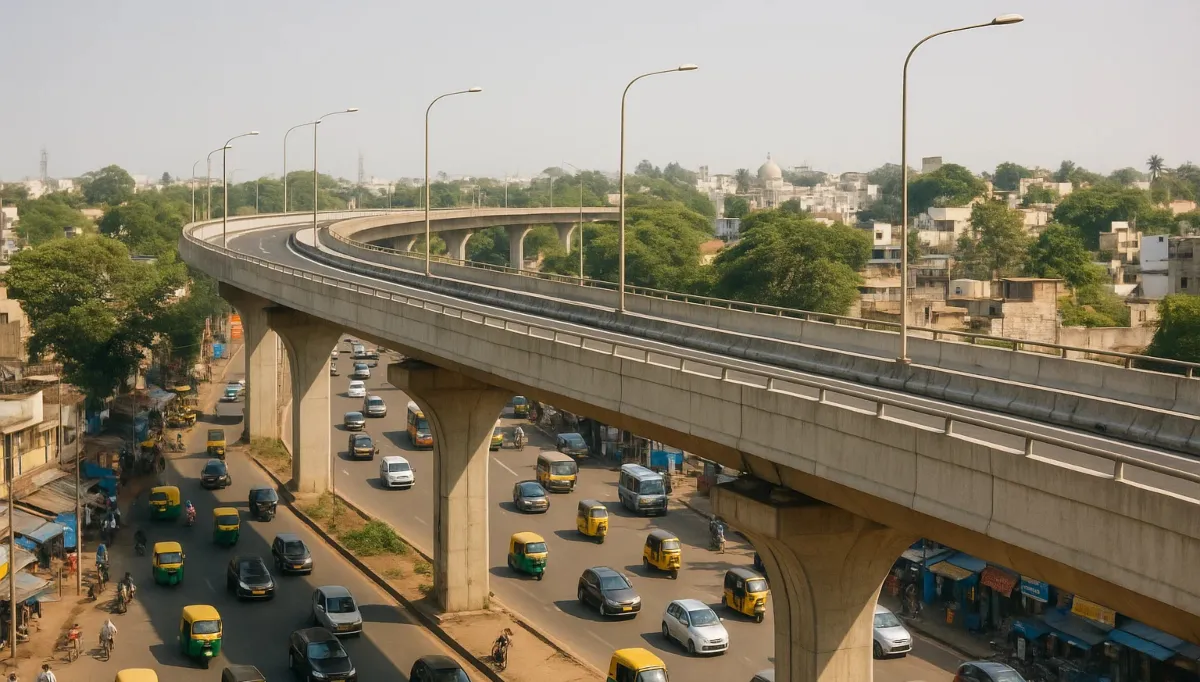
Jaipur: Jaipur, the Pink City, could be on the cusp of a major traffic overhaul, with the Jaipur Development Authority exploring a plan to make the city’s widest arterial roads signal-free, drawing from models used in Delhi and Gurugram.
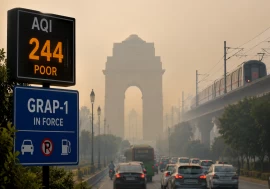
Rising vehicle numbers and persistent congestion, even during non-peak hours, have pushed the JDA to examine alternatives to conventional signal-based intersections. Roads wider than 160 feet, including the high-traffic JLN Marg, are being considered for redesign with uninterrupted traffic movement in mind.
To study how this can be achieved, a multi-disciplinary JDA team has spent two days in Delhi assessing infrastructure projects aimed at easing urban congestion. The delegation includes five executive engineers from the engineering wing, five engineers from the garden branch, and horticulture experts.
During the visit, the engineering team met Anand Prakash Meena, Chief Engineer of the Delhi Development Authority, to understand the planning and execution of underpasses, cloverleaf interchanges and robotic parking systems. They also observed traffic flow patterns in Central Delhi and inspected a robotic parking facility at Iceland Transport Bhavan. Meetings were held with Central Public Works Department officials to gather insights into construction methods and timelines.
The study tour extends beyond Delhi. JDA engineers are scheduled to examine sector roads in Noida and multi-crossing corridors in Dwarka to understand how signal-free movement is managed across different urban layouts.
Parallelly, the garden branch has been assessing Delhi’s landscape design. Officials visited Lodhi Garden to study the use of circles and triangular layouts that allow smooth traffic flow without visual or physical obstruction. Information was also collected on roadside plantations and soil biotechnology treatment plants, indicating that greenery and traffic planning may go hand in hand in Jaipur’s redesign.
At present, Jaipur has only two signal-free intersections, the B2 Bypass and the Laxmi Mandir T-junction, both developed over the last seven years. Earlier plans have seen limited success. A budget announcement in 2021–22 had proposed multiple signal-free junctions and T-intersections, while a 2015 proposal for a flyover connecting Civil Lines to the airport never moved beyond the drawing board.
The pressure points remain unchanged. Rambagh Circle, JDA Circle and the OTS intersection on JLN Marg and Tonk Road witness long queues through the day, with commuters often waiting between four and seven minutes at a single crossing.
JDA officials say groundwork in Jaipur will begin after the Delhi and Gurugram studies are completed. If implemented as planned, the move could reshape how traffic moves across the city’s busiest corridors.
BI Bureau