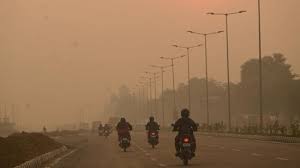
New Delhi: Air quality in Delhi and the National Capital Region showed a marked improvement on Friday, prompting the Commission for Air Quality Management to withdraw all restrictions under Stage-3 of the Graded Response Action Plan with immediate effect.
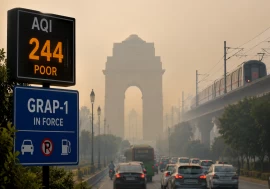
The decision followed a sharp drop in Air Quality Index levels, which fell from 380 on Thursday to 236 by 4 pm on Friday. After reviewing the trend, the CAQM Sub-Committee on GRAP concluded that conditions no longer warranted measures meant for the ‘severe’ category, an official told news agency PTI.
While Stage-3 curbs have been lifted, actions under Stage-1 and Stage-2 of GRAP will continue across Delhi and other parts of the NCR until further orders. Authorities said this would help ensure that air quality gains are maintained.
GRAP, or the Graded Response Action Plan, is a framework that links pollution-control measures to daily AQI levels and short-term forecasts. As air quality worsens, stricter stages are enforced, with each higher stage adding to the measures already in place. According to Central Pollution Control Board standards, an AQI between 0–50 is ‘good’, 51–100 ‘satisfactory’, 101–200 ‘moderate’, 201–300 ‘poor’, 301–400 ‘very poor’ and 401–500 ‘severe’.
Stage-3 comes into force when air quality enters or is expected to enter the ‘severe’ range. It requires agencies to carry out a nine-point action plan aimed at quickly cutting emissions. These measures typically include stopping or limiting construction and demolition work, restricting highly polluting vehicles, regulating emission-heavy industrial activity, and stepping up field enforcement across the NCR.
With Stage-3 now revoked, such emergency restrictions will no longer apply. However, lower-stage measures remain mandatory.
Under Stage-I, agencies have been directed to ensure uninterrupted power supply to reduce the use of diesel generators, manage traffic through better coordination and on-ground deployment, issue public advisories through print and broadcast media, and boost public transport by increasing CNG and electric bus services as well as metro frequency. Adjustments to schedules and fares are also encouraged to spread travel outside peak hours.
Stage-II builds on these steps. Authorities have been asked to stagger office timings for public offices and municipal bodies in Delhi and selected NCR districts, and to consider similar arrangements for central government offices. Daily sprinkling of water and use of dust suppressants on roads, preferably before peak traffic hours, have been mandated, along with higher parking fees to discourage private vehicle use.
CAQM said it would continue to monitor air quality closely and take further action if conditions change.
BI Bureau