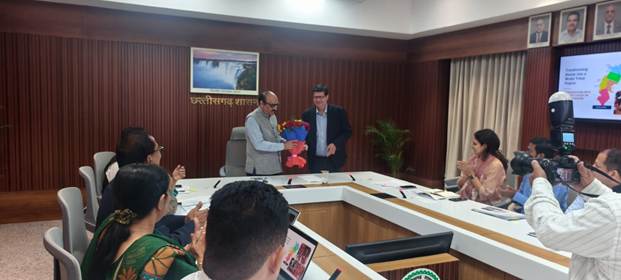
The Government of Chhattisgarh, in coordination with the Ministry of Tribal Affairs, is working on a Comprehensive Development Plan for the Bastar region, covering seven districts with a focus on improving the quality of life of tribal communities. A high-level meeting chaired by Chhattisgarh Chief Secretary Vikas Sheel was held in Raipur on 19 November 2026 to review the proposed interventions and strengthen coordination between Central ministries, State departments and district administrations.
The plan focuses on tribal livelihoods, healthcare, education, infrastructure, forest rights and cultural preservation. Key proposals include a Sickle Cell Disease Centre of Competence at Jagdalpur, mother-tongue-based education, value-addition clusters for tamarind and mahua, community-managed crèches and community-led eco-tourism.
Which areas are covered under the Bastar Development Plan?
The Comprehensive Development Plan covers all seven districts of the Bastar Division in Chhattisgarh:
- Bastar
- Kanker
- Kondagaon
- Narayanpur
- Dantewada
- Bijapur
- Sukma
The plan seeks to address region-specific developmental gaps through coordinated interventions involving Central and State Government schemes, district administrations and institutions such as Integrated Tribal Development Agencies (ITDAs) and Integrated Tribal Development Projects (ITDPs).
What are the major interventions proposed under the plan?
The development plan focuses on multiple sectors that directly affect the livelihoods and well-being of tribal communities.
1. Healthcare and nutrition
Healthcare interventions aim to address diseases and improve access to essential health services in vulnerable tribal areas.
Key proposals include:
- Establishment of a Sickle Cell Disease Centre of Competence at Jagdalpur.
- Targeted interventions for malaria and tuberculosis elimination.
- Community-managed crèches in vulnerable tribal areas.
- Improved healthcare and nutrition support for tribal women and children.
What is Sickle Cell Disease?
Sickle Cell Disease (SCD) is an inherited blood disorder in which red blood cells become crescent-shaped or sickle-shaped instead of their normal round shape.
These abnormal cells can obstruct blood flow, cause anaemia and lead to other serious health complications.
The disease is particularly significant in India because several tribal communities have a high prevalence of the sickle cell gene.
The Government of India launched the National Sickle Cell Anaemia Elimination Mission in 2023 to eliminate sickle cell disease as a public health problem by 2047.
2. Education and literacy
The plan proposes education interventions that recognise the linguistic and cultural diversity of tribal communities.
Key initiatives include:
- Mother-tongue-based multilingual education.
- Adult literacy programmes.
- Digital literacy.
- Financial literacy.
Mother-tongue-based education can help tribal children understand classroom instruction more effectively, particularly during their early years of schooling.
It also supports the preservation of indigenous languages and cultural identity.
3. Tribal livelihoods and economic opportunities
Livelihood generation is an important component of the development plan.
Proposed interventions include:
- Tamarind and mahua value-addition clusters.
- Promotion of agriculture and horticulture.
- Livestock and fisheries development.
- Tribal entrepreneurship.
- Traditional craft clusters.
- A proposed TRIFOOD Park at Jagdalpur.
- Community-led eco-tourism.
These interventions aim to improve the economic value of locally available forest produce and traditional skills by strengthening processing, marketing and enterprise development.
What is TRIFOOD?
TRIFOOD is an initiative associated with the processing and value addition of Minor Forest Produce (MFP), aimed at improving income opportunities for tribal communities.
It seeks to connect forest-based livelihoods with food processing, enterprise development and better market access.
4. Forest rights and cultural heritage
The plan also focuses on protecting tribal rights, traditional knowledge and cultural identity.
Key interventions include:
- Conservation of sacred groves.
- Protection of indigenous medicinal plants.
- Promotion of tribal music and traditional crafts.
- Strengthening of the BADAL Academy.
- Recognition of habitat rights of Particularly Vulnerable Tribal Groups (PVTGs).
- Community Forest Resource management.
These interventions recognise that tribal development must go beyond economic growth and include the protection of community resources, customary rights and cultural heritage.
What are Particularly Vulnerable Tribal Groups (PVTGs)?
Particularly Vulnerable Tribal Groups are a category of tribal communities identified by the Government of India on the basis of specific socio-economic and demographic characteristics.
The criteria used for their identification include:
- Pre-agricultural level of technology.
- Low levels of literacy.
- Economic backwardness.
- Declining or stagnant population growth.
There are 75 PVTGs across 18 States and the Union Territory of Andaman and Nicobar Islands.
The government provides focused development support to these communities to address their specific vulnerabilities.
5. Infrastructure and basic amenities
The development plan also includes proposals for village electrification and improved access to basic amenities.
These interventions aim to improve living conditions, strengthen connectivity with essential services and support economic activities in remote tribal settlements.
What is the role of ITDAs and ITDPs in tribal development?
Integrated Tribal Development Agencies (ITDAs) and Integrated Tribal Development Projects (ITDPs) are institutional mechanisms used to implement and coordinate tribal development programmes in designated tribal areas.
Their responsibilities include:
- Coordinating development schemes for tribal communities.
- Supporting livelihood and infrastructure projects.
- Improving access to education and healthcare.
- Facilitating implementation of welfare programmes.
- Addressing region-specific developmental challenges.
They play an important role in connecting government programmes with local communities and district-level implementation agencies.
Organisations Involved
- Ministry of Tribal Affairs (MoTA): Nodal ministry responsible for policy planning and programmes for the welfare and development of Scheduled Tribes.
- Government of Chhattisgarh: Responsible for coordinating the implementation of development interventions through State departments.
- District Administrations: Support local planning, implementation and monitoring across the seven districts.
- ITDAs/ITDPs: Institutional mechanisms for coordinating tribal development initiatives at the regional and project levels.
Why is this Important for UPSC?
The Bastar Comprehensive Development Plan connects several important areas of the UPSC syllabus.
Social Justice (GS Paper II): Welfare and development of Scheduled Tribes, vulnerable communities and inclusive growth.
Governance (GS Paper II): Centre-State coordination, district-level administration, decentralised planning and community participation.
Health (GS Paper II): Tribal healthcare, sickle cell disease, malaria and tuberculosis elimination.
Indian Economy (GS Paper III): Rural livelihoods, forest-based economy, value addition, entrepreneurship and agricultural diversification.
Environment (GS Paper III): Community forest resource management, biodiversity conservation and protection of indigenous medicinal plants.
Tribal Issues (GS Paper I): Tribal communities, cultural identity, habitat rights and challenges of regional development.
UPSC Prelims Facts
Bastar Division
- Located in southern Chhattisgarh.
- Comprises seven districts: Bastar, Kanker, Kondagaon, Narayanpur, Dantewada, Bijapur and Sukma.
- Has a significant tribal population.
Ministry of Tribal Affairs
- Established in 1999.
- Nodal ministry for the overall policy, planning and coordination of programmes for the development of Scheduled Tribes.
Particularly Vulnerable Tribal Groups (PVTGs)
- 75 PVTGs have been identified in India.
- Identified on the basis of specific socio-economic and demographic criteria.
- Receive focused development interventions.
Forest Rights Act, 2006
- Officially known as the Scheduled Tribes and Other Traditional Forest Dwellers (Recognition of Forest Rights) Act, 2006.
- Recognises individual and community forest rights.
- Provides for Community Forest Resource rights.
- Recognises the rights of eligible forest-dwelling Scheduled Tribes and Other Traditional Forest Dwellers.
National Sickle Cell Anaemia Elimination Mission
- Launched in 2023.
- Aims to eliminate sickle cell disease as a public health problem by 2047.
- Focuses on screening, prevention, treatment and awareness.
Possible UPSC Mains Question
Q. Tribal development in India requires an approach that integrates livelihood generation, access to basic services and protection of cultural and forest rights. Discuss in the context of region-specific development planning.
Key points for an answer
- Tribal development requires interventions suited to local geography, culture and livelihood patterns.
- Access to quality healthcare, nutrition and education is essential for improving human development outcomes.
- Mother-tongue-based education can improve learning outcomes and preserve indigenous languages.
- Value addition to Minor Forest Produce can improve tribal incomes and strengthen local economies.
- Recognition of forest rights and community participation are important for inclusive and sustainable development.
- Conservation of sacred groves and indigenous medicinal plants can support biodiversity and traditional knowledge.
- Coordination between Central ministries, State departments and district administrations improves implementation.
- Development plans must include measurable outcomes, community participation and time-bound monitoring.
- The Bastar initiative highlights the importance of integrating social justice, economic development and environmental sustainability in tribal regions.
Main information source: Press Information Bureau (PIB), 19 November 2026.