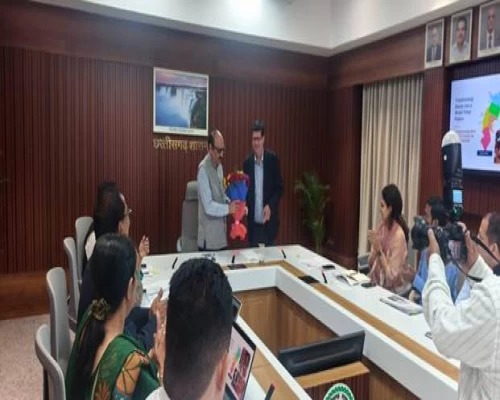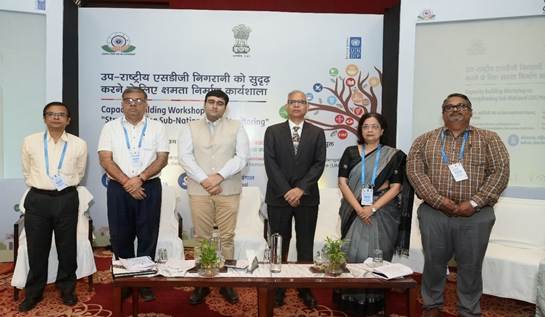
The Ministry of Statistics and Programme Implementation (MoSPI) has showcased India's National Statistical System, its Sustainable Development Goals (SDG) monitoring framework and digital statistical databases to delegates from 26 partner countries under the Indian Technical and Economic Cooperation (ITEC) Programme. The interaction was organised by the National Statistical Systems Training Academy (NSSTA), in collaboration with the National Institute of Labour Economics Research and Development (NILERD), on 17 November 2026.
The engagement highlighted India's efforts to strengthen evidence-based policymaking through reliable statistical information, institutional capacity-building and digital access to official data. A key focus was MoSPI's identification of more than 270 national indicators for monitoring the Sustainable Development Goals.
What is India's National Statistical System?
The National Statistical System (NSS) refers to the institutional framework through which a country collects, processes, analyses and disseminates official statistics.
In India, the system involves the Ministry of Statistics and Programme Implementation, Central Government ministries, State Governments and other statistical agencies.
Its major functions include:
- Collection and compilation of official statistical data.
- Conducting surveys and generating economic and social indicators.
- Measuring economic growth and development.
- Monitoring progress towards national and international development goals.
- Providing reliable data for government planning and policymaking.
A strong statistical system helps governments identify development gaps, allocate resources and evaluate the outcomes of public policies.
What is the Ministry of Statistics and Programme Implementation (MoSPI)?
MoSPI is the nodal ministry responsible for the development and coordination of India's official statistical system.
Its major responsibilities include:
- Developing statistical standards and methodologies.
- Coordinating statistical activities across ministries and government agencies.
- Conducting major national surveys.
- Compiling important economic indicators.
- Monitoring Sustainable Development Goals through statistical frameworks.
- Improving the availability and accessibility of official statistics.
The ministry plays an important role in ensuring that government policies and development programmes are supported by credible data.
What are Sustainable Development Goals (SDGs)?
The Sustainable Development Goals are a set of 17 global development goals adopted by the United Nations in September 2015 under the 2030 Agenda for Sustainable Development.
The goals aim to address major global challenges, including poverty, hunger, healthcare, education, gender equality, climate change and environmental protection.
The 17 SDGs include:
1. No Poverty
2. Zero Hunger
3. Good Health and Well-being
4. Quality Education
5. Gender Equality
6. Clean Water and Sanitation
7. Affordable and Clean Energy
8. Decent Work and Economic Growth
9. Industry, Innovation and Infrastructure
10. Reduced Inequalities
11. Sustainable Cities and Communities
12. Responsible Consumption and Production
13. Climate Action
14. Life Below Water
15. Life on Land
16. Peace, Justice and Strong Institutions
17. Partnerships for the Goals
India monitors its progress towards these goals through national indicators developed by MoSPI.
How does India monitor the SDGs?
During the interaction with international delegates, MoSPI presented its framework for monitoring the Sustainable Development Goals.
The key aspects include:
- More than 270 national indicators have been identified for monitoring SDG progress.
- National indicators are continuously aligned with the Global Indicator Framework.
- Statistical information helps assess India's progress across different development sectors.
- Data supports the identification of gaps and strengthens evidence-based policymaking.
The national indicator framework helps translate global development commitments into measurable targets that can be monitored within the Indian context.
What is the e-Sankhyiki Portal?
The e-Sankhyiki portal is a digital initiative of MoSPI aimed at improving access to official statistical information.
It provides a centralised digital platform for accessing and exploring statistical data.
The initiative seeks to:
- Improve access to official statistical datasets.
- Make statistical information easier to discover and use.
- Strengthen data dissemination and transparency.
- Support researchers, policymakers, students and other data users.
- Promote informed decision-making through accessible information.
The interaction also covered the microdata portal, semantic search and the use of Model Context Protocol (MCP) for accessing micro and macro datasets.
What is Microdata and why is it important?
Microdata refers to information collected at the individual, household or establishment level during surveys and statistical exercises.
Unlike aggregated data, which presents information in summary form, microdata provides more detailed observations that can help researchers understand patterns and differences across population groups.
For example, household-level survey data can help researchers examine differences in income, education, employment and access to public services.
Microdata is important because it:
- Supports detailed socioeconomic research.
- Helps identify regional and demographic inequalities.
- Improves policy evaluation.
- Enables researchers to study development trends at a granular level.
Access to microdata is generally governed by applicable confidentiality, privacy and data-access safeguards.
What is the Indian Technical and Economic Cooperation (ITEC) Programme?
The Indian Technical and Economic Cooperation Programme is a flagship capacity-building initiative of the Ministry of External Affairs, Government of India.
Launched in 1964, the programme facilitates technical cooperation and knowledge-sharing with partner countries.
Its major areas of cooperation include:
- Training and capacity-building.
- Technical assistance.
- Knowledge exchange.
- Institutional cooperation.
- Sharing India's development and governance experiences.
The programme reflects India's commitment to South-South Cooperation and strengthening partnerships with developing countries.
Organisations Involved
- Ministry of Statistics and Programme Implementation (MoSPI): Nodal ministry responsible for India's official statistical system.
- National Statistical Systems Training Academy (NSSTA): Provides training and capacity-building for India's statistical system.
- National Institute of Labour Economics Research and Development (NILERD): Participated in organising the interaction with international delegates.
- Ministry of External Affairs: Implements the ITEC Programme through which partner countries receive technical cooperation and training.
Why is this Important for UPSC?
The initiative connects several important areas of the UPSC syllabus.
Governance (GS Paper II): Evidence-based policymaking, institutional capacity-building, transparency and accountability in governance.
Indian Economy (GS Paper III): National income statistics, economic indicators, data collection and measurement of development.
Science and Technology (GS Paper III): Digital databases, semantic search, data management and emerging technologies in public administration.
International Relations (GS Paper II): India's development partnerships, South-South Cooperation and technical assistance to developing countries.
Sustainable Development (GS Paper III): SDG monitoring, development indicators and India's commitment to the 2030 Agenda.
UPSC Prelims Facts
Ministry of Statistics and Programme Implementation (MoSPI)
- Nodal ministry for India's official statistical system.
- Responsible for coordinating statistical activities and developing statistical standards.
- Plays a key role in monitoring SDGs in India.
Sustainable Development Goals (SDGs)
- 17 goals and 169 targets.
- Adopted by the United Nations in September 2015.
- Part of the 2030 Agenda for Sustainable Development.
- Apply to all countries, irrespective of their level of development.
Indian Technical and Economic Cooperation (ITEC)
- Launched in 1964.
- Flagship technical cooperation programme of the Ministry of External Affairs.
- Promotes capacity-building and knowledge exchange with partner countries.
National Statistical Systems Training Academy (NSSTA)
- Functions under MoSPI.
- Focuses on training and capacity-building in official statistics.
e-Sankhyiki Portal
- Digital statistical initiative of MoSPI.
- Supports access to official statistical information and datasets.
Microdata
- Detailed information collected at the individual, household or establishment level.
- Used for research, statistical analysis and policy evaluation.
Possible UPSC Mains Question
Q. Reliable and timely statistical information is essential for evidence-based policymaking and effective governance. Discuss the role of India's National Statistical System in achieving sustainable development goals.
Key points for an answer
- Reliable statistics help governments identify development gaps and prioritise public expenditure.
- MoSPI coordinates India's official statistical system and develops indicators for monitoring development outcomes.
- National indicators help assess India's progress towards the 17 Sustainable Development Goals.
- Digital platforms such as e-Sankhyiki improve access to official statistical information.
- Microdata supports detailed research and better evaluation of government programmes.
- Institutional capacity-building improves the quality and consistency of statistical systems.
- International cooperation through ITEC enables knowledge-sharing and strengthens statistical institutions across developing countries.
- Challenges such as data quality, timeliness, comparability, privacy and coordination need continued attention.
Main information source: Press Information Bureau (PIB), Ministry of Statistics and Programme Implementation, 19 November