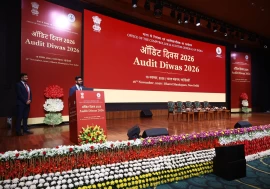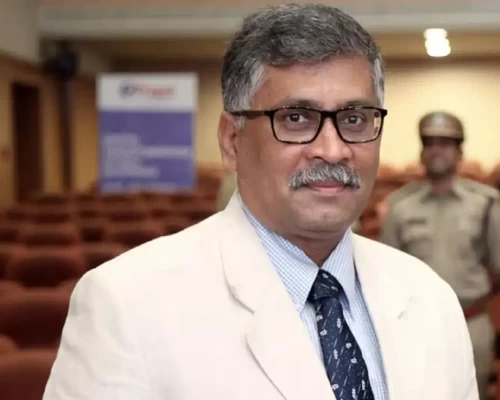
New Delhi: Comptroller and Auditor General of India (CAG) K. Sanjay Murthy recently marked Audit Diwas 2026 on November 16 with a focus on modernising public audit, strengthening institutional accountability and harnessing technology to make auditing more efficient, transparent and responsive to emerging governance challenges.
The Indian Audit and Accounts Department (IA&AD) unveiled a series of digital initiatives aimed at improving administrative efficiency, strengthening audit follow-up, securing sensitive data and expanding access to audit reports. These initiatives reflect a broader shift towards technology-enabled auditing, with data analytics, digital platforms and risk-based assessment increasingly shaping the department’s functioning.
Among the key launches were 21 new modules under CAG HRMS, spanning HRMS, claims, Integrated Financial Management System (IFMS) and Phase III functionalities covering examination, inventory, returns and reports. The enhancements are expected to simplify administrative processes, improve claims management and strengthen budget-related operations.
CAG Connect was further strengthened with live departmental dashboards to monitor auditee responsiveness and the settlement of audit observations. New functionalities for publishing State Audit Reports and facilitating paragraph-wise Action Taken Notes (ATNs) for consideration by Public Accounts Committees (PACs) and Committees on Public Undertakings (COPUs) of state legislatures are expected to improve transparency and audit follow-up.
The department also introduced DURG (Data Under Raksha Griha), a secure data management platform developed by the Centre for Data Management and Analytics (CDMA). Serving more than 75 field audit offices, the platform incorporates encryption, tokenisation, access controls and audit trails to safeguard data entrusted by Union and state government departments.
Other initiatives included the revamped CAG website, designed to improve access to audit reports and institutional information, and PRISM (Procurement Risk Intelligence and Scoring Module), a desktop application that analyses GePNIC and GeM procurement data, assigns risk scores to tenders and supports risk-based audit sampling.
Addressing officers on Audit Diwas, Murthy emphasised the need to move beyond conventional auditing practices and embrace innovation, collaboration, artificial intelligence, data analytics, capacity building and institutional strengthening. He called for breaking departmental silos, strengthening professional expertise and preparing the institution to respond to increasingly complex governance challenges while upholding its constitutional mandate.
The celebrations also featured a keynote address by R. Gopalakrishnan, former senior leader of Hindustan Unilever and Tata Sons, who spoke about institutional leadership, continuous adaptation and the need to balance values with the willingness to change. An interactive session moderated by Deputy CAG K. S. Subramanian explored institutional transformation, accountability, talent development and the role of experimentation and learning in building enduring organisations.
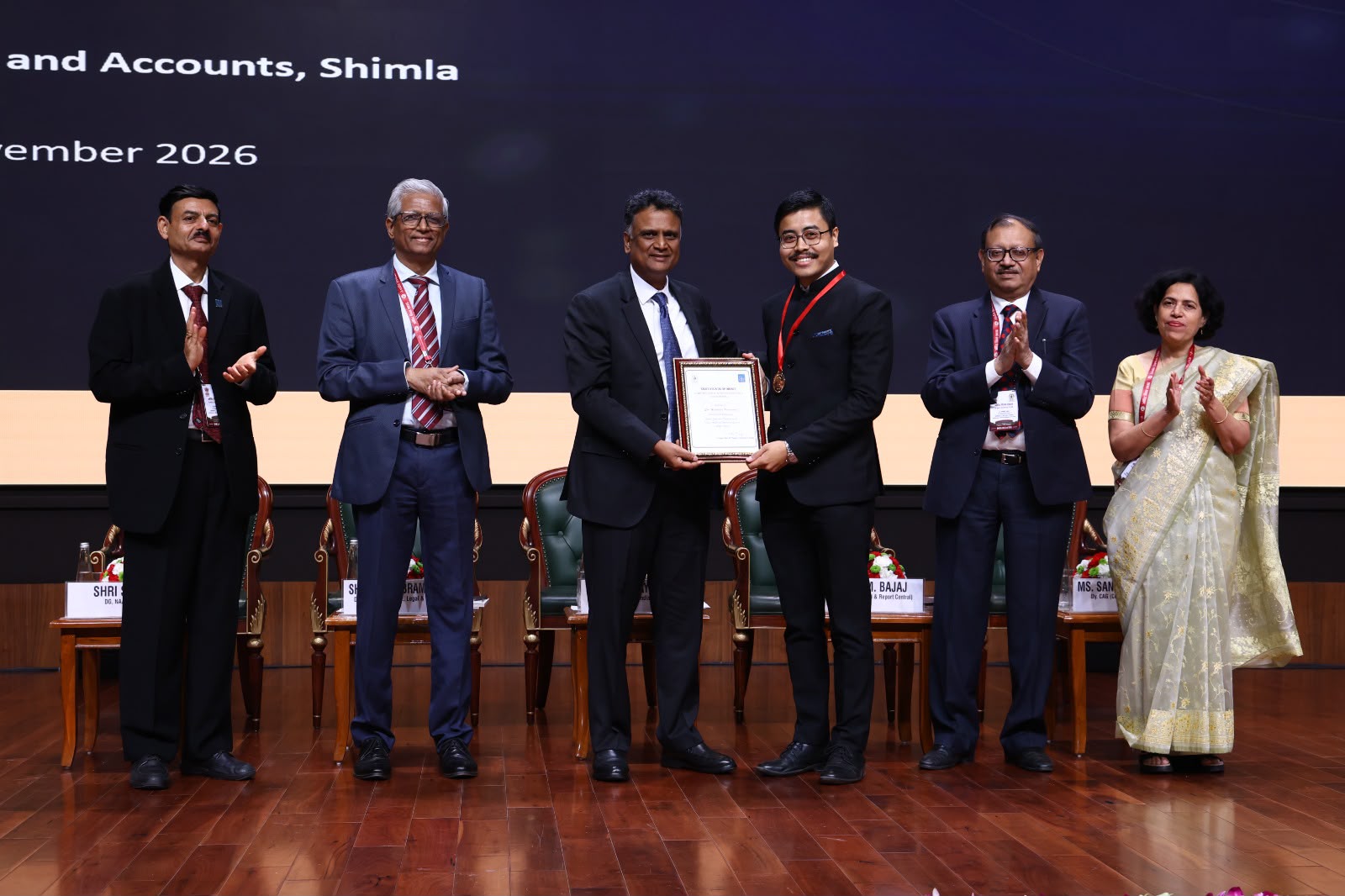
The occasion also saw the valediction of the 2024 batch of IA&AS officer trainees, including two officers from the Royal Audit Authority of Bhutan. Certificates were conferred and four publications from the National Academy of Audit and Accounts were released. Three officer trainees were recognised for their all-round performance, with medals awarded for general proficiency and excellence in academics and extracurricular activities.
With digital systems, data-driven audit tools and a renewed emphasis on professional capabilities, Audit Diwas 2026 underscored IA&AD’s efforts to strengthen public audit as an instrument of accountability, better governance and informed decision-making.
BI Bureau