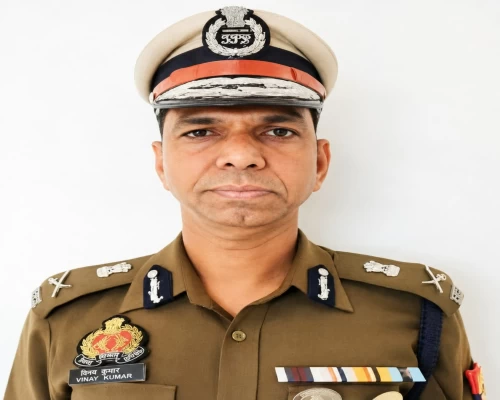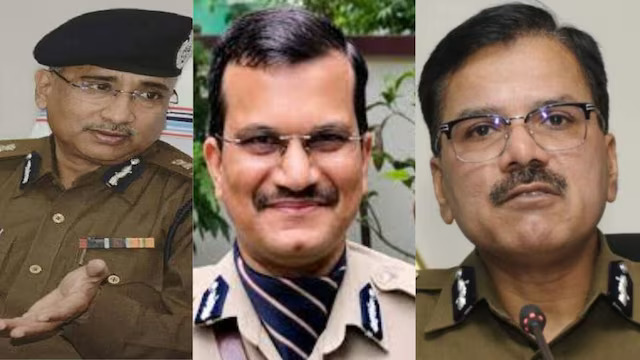
Patna: Bihar's police force is due for a change at the top before the end of 2026, and three senior IPS officers are being discussed in police and administrative circles as possible successors to DGP Vinay Kumar: Jitendra Kumar, Kundan Krishnan and Amit Kumar.
Vinay Kumar, a 1991-batch officer, was appointed on 13 December 2024 with the two-year tenure that Supreme Court directions guarantee to a state police chief. That places the end of his term around December 2026.
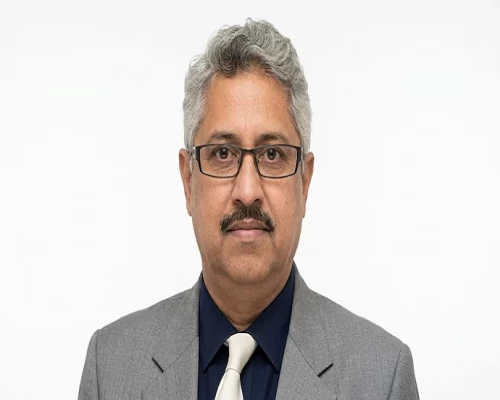
The officers being mentioned include Jitendra Kumar (1993 batch), who is the senior-most of the three by batch. He is currently DG, Special Armed Police, and has held a range of assignments within the state police establishment, including postings in sensitive districts.
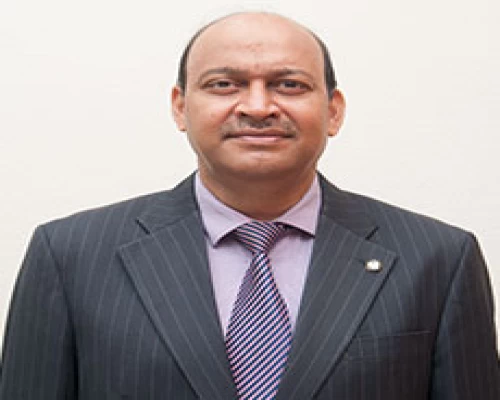
Kundan Krishnan (1994 batch) has served as ADG (Headquarters) and ADG (Operations), and returned to the Bihar cadre from central deputation in late 2024. He was promoted to DG rank with effect from 1 January 2026, and was among the officers named for the Medal for Gallantry in the Republic Day 2026 police honours list. He has also received the President's Police Medal for Distinguished Service.
Amit Kumar (1994 batch) is on central deputation, serving as OSD with the Special Protection Group, an assignment in close-protection and high-security operations rather than state policing.
None of the three has been formally proposed for the post. Their names reflect current commentary rather than any decision, and postings can change before the process begins.
It is pertinent to note that The appointment is not made by the state government alone, and seniority is not the sole criterion.
The framework comes from the Supreme Court's 2006 judgment in Prakash Singh v Union of India, which held that a DGP should be selected through a merit-based, transparent process from among the senior-most officers of the state cadre, and should have a minimum tenure of two years irrespective of the date of superannuation. The directions were intended to insulate police leadership from political turnover.
The court tightened the procedure in an order of 3 July 2018, and clarified it further on 13 March 2019, in an order by a bench of Chief Justice Ranjan Gogoi and Justices L. Nageswara Rao and Sanjiv Khanna. Under that framework the states "shall send their proposals in anticipation of the vacancies to the Union Public Service Commission, well in time at least three months prior to the date of retirement" of the incumbent. The UPSC empanels three officers on the basis of "their length of service, very good record and range of experience," and the state appoints one of the three.
Empanelment is "purely on the basis of merit from officers who have a minimum residual tenure of six months."
The appointee then gets a fixed two-year tenure, which can run past the date s/he would otherwise have retired.
On interim arrangements the court was categorical: "None of the States shall ever conceive of the idea of appointing any person on the post of Director General of Police on acting basis."
However, the compliance has been uneven. Several states legislated their own selection rules routing the choice through in-house committees of state officers instead of the UPSC. In January 2019, according to reports at the time, Punjab, Kerala, West Bengal, Haryana and Bihar asked the court to let them apply their own local laws to DGP selection; the court declined, citing the larger public interest and the need to protect officers from political interference.
Acting appointments have kept the issue alive. As of March 2025, six states — Jharkhand, Uttar Pradesh, West Bengal, Punjab, Telangana and Andhra Pradesh had faced contempt proceedings over officiating police chiefs. On 8 September 2025, a bench headed by Chief Justice B. R. Gavai questioned Tamil Nadu over its acting DGP and directed the UPSC to move quickly on names for a regular appointment.
While Bihar had historically pushed back against judicial overreach, it eventually fell in line with the Supreme Court's mandate by utilising the strict UPSC route. In December 2022, the state submission of eleven names to the Commission yielded a definitive panel of three candidates - Alok Raj, R. S. Bhatti, and Shobha Ohatkar - from which the government ultimately selected Bhatti to lead the force. The bureaucratic equilibrium shifted again in August 2024 when Bhatti departed for a central deputation, leading to senior IPS officer Alok Raj being given temporary, additional charge as the officiating police chief. This stopgap arrangement lasted just 105 days; on December 13, 2024, the state officially appointed Vinay Kumar as the regular, permanent DGP, locking in a rule-compliant two-year tenure and concluding a turbulent period of transitions.
Because the shortlist is prepared by the UPSC rather than the state, the field is not settled by batch seniority or by who currently holds which post. Officers not being discussed now may be empanelled, and officers being discussed now may not be. The variables that matter are the composition of the list Bihar sends, the six-month residual-tenure filter, the Commission's assessment of service record and experience, and the state government's choice from the panel of three.
On the current timeline, the state's proposal would be due with the UPSC anytime now.
BI Bureau Special