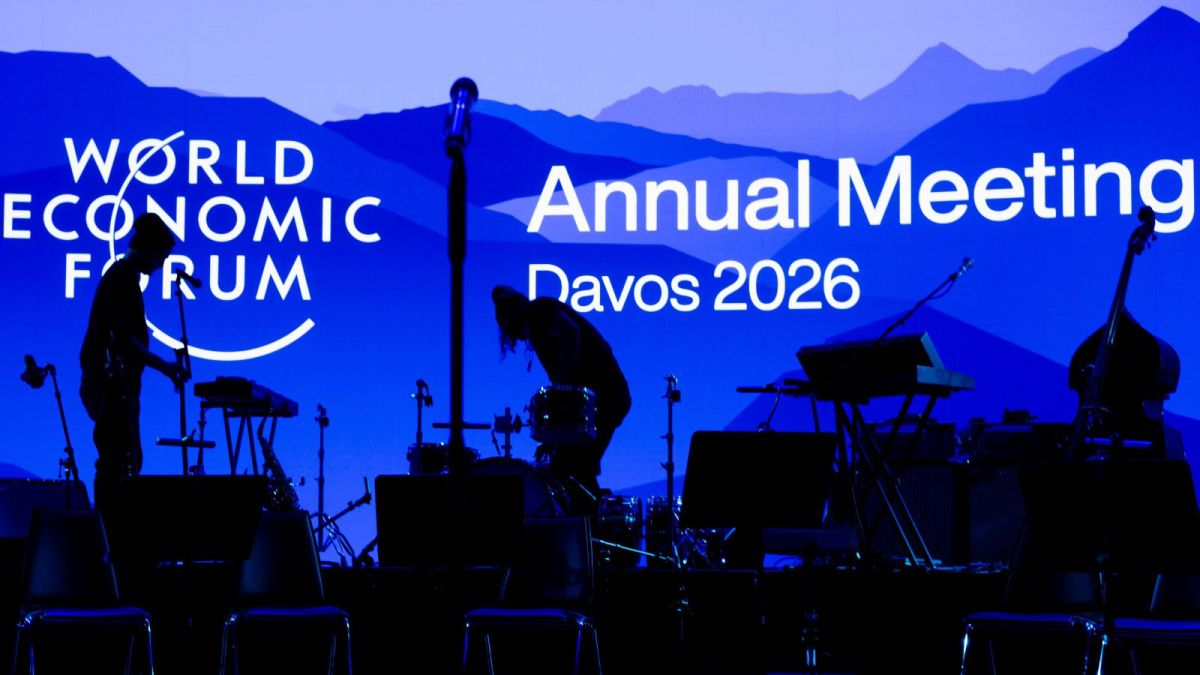
Davos, Switzerland: India opened its Davos engagement with a coordinated, high-visibility push showcasing its states, manufacturing prowess and investment readiness, as one of the country’s largest delegations in recent years began an intensive round of meetings and pitches at the World Economic Forum 2026.
With the global gathering unfolding under the theme “A Spirit of Dialogue”, India’s leadership used the platform to underline the country’s economic resilience, policy stability and expanding opportunities across sectors ranging from manufacturing and infrastructure to digital technology, energy transition and artificial intelligence. Senior Union ministers, chief ministers and over 80 top corporate leaders are participating in the five-day meeting, signalling India’s intent to position itself as a preferred destination for long-term capital at a time when global growth remains fragile.
On Day 1, India’s narrative was led not just by the Centre but by states pitching themselves as execution-ready partners. Officials highlighted the transformation in ease of doing business, faster clearances, land and infrastructure availability and investor-friendly policies that are increasingly being driven at the state level. The focus on manufacturing, logistics and industrial clusters was aimed at reinforcing India’s ambition to emerge as a key node in global value chains.
The Indian delegation features ministers from key portfolios including information technology, railways, renewable energy, agriculture, civil aviation and consumer affairs, alongside chief ministers and senior officials from Maharashtra, Karnataka, Gujarat, Andhra Pradesh and Assam. Several states are using Davos to hold closed-door meetings with multinational companies, sovereign funds and global CEOs, seeking commitments in sectors such as semiconductors, defence manufacturing, renewable energy, electric mobility, tourism and advanced materials.
Chief Minister N Chandrababu Naidu led Andhra Pradesh’s outreach, pitching large-scale infrastructure and industrial projects, while Maharashtra Chief Minister Devendra Fadnavis renewed dialogues with global investors to build on the state’s strong track record at earlier WEF meetings. Gujarat showcased opportunities in defence and high-tech manufacturing, Karnataka highlighted its execution-first approach in technology and industry, and Assam marked its maiden participation with a focus on tourism, agro-processing and connectivity.
Corporate India has mounted an equally strong presence. Leaders from Reliance Industries, Tata Group, JSW, Bajaj Group, Godrej, Infosys, Wipro and several new-age companies are engaging with global peers and policymakers to explore partnerships, capital inflows and technology collaboration. Industry executives said India’s scale, demographic advantage and digital public infrastructure continue to attract sustained interest despite geopolitical uncertainty and slowing growth in parts of the world.
India also used the platform to project its broader strategic message with the “Partner with Bharat” pitch, underlining its aspiration to be a long-term partner in global innovation, AI development and sustainable growth. Delegates stressed India’s balancing act between growth and decarbonisation, pointing to expanding renewable capacity, green hydrogen initiatives and investments in clean mobility.
The Davos agenda this year spans economic resilience, geopolitics, workforce transformation, AI governance and climate action, with more than 3,000 leaders from over 130 countries in attendance. Against this backdrop, India’s multi-layered participation - blending central leadership, state diplomacy and corporate outreach - reflects a calibrated effort to convert global uncertainty into opportunity.
As bilateral meetings, panel discussions and investment pitches continue through the week, officials are hopeful that India’s high-visibility presence will translate into concrete commitments and partnerships, reinforcing its position as one of the world’s fastest-growing large economies and a key anchor in the evolving global order.
BI Bureau