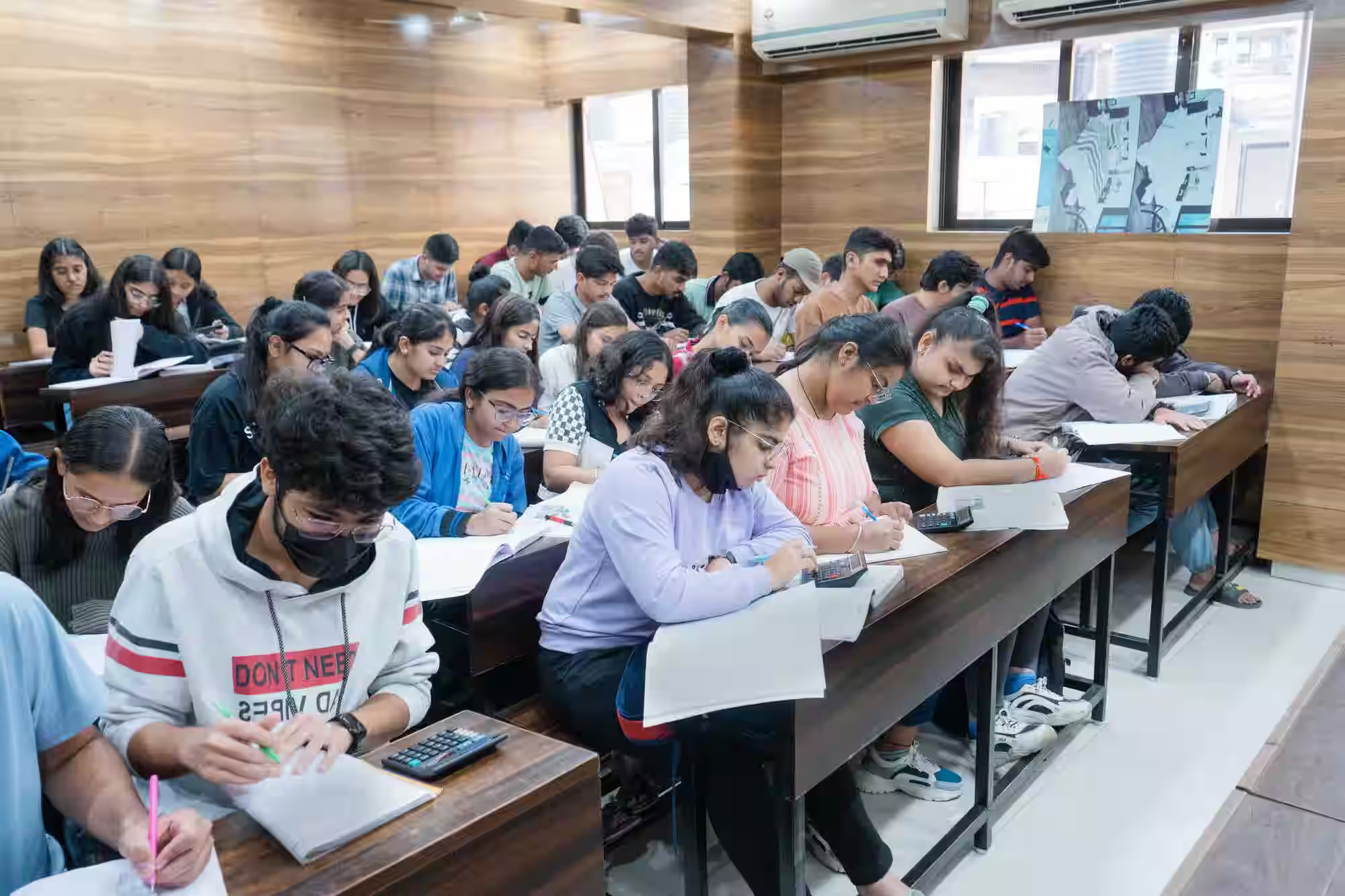
Mumbai: Maharashtra has proposed a sweeping regulatory framework for private coaching centres, with strict provisions targeting integrated coaching arrangements, basement classes, staffing, student welfare, fees and safety standards.
The draft Maharashtra Private Coaching Centers (Registration and Regulation) Bill, 2026, released by the School Education and Sports Department, proposes mandatory registration for coaching centres enrolling more than 25 students. The department has invited suggestions and objections from the public until 6 pm on September 4.
The proposed legislation comes three months after the NEET-UG 2026 paper leak, in which nine of the 13 people arrested were from Maharashtra. Latur and Pune, two of the state’s major coaching hubs, were at the centre of the investigation.
Dummy schools and basement classes in the crosshairs
One of the most significant provisions is an explicit prohibition on the integration of coaching centres with recognised schools. The provision targets the widely used dummy-school model, where students remain formally enrolled in a school but spend most of their academic time at a coaching centre.
If a school is found actively involved in such an arrangement, the Bill provides for a recommendation to the state government for its derecognition.
The draft also proposes an outright ban on operating coaching classes from basements.
Centres with more than 25 students to come under the law
The proposed law would have one of the widest reaches among state-level coaching regulations. It would cover every tuition or coaching centre with more than 25 students, the lowest threshold among the five states with dedicated coaching legislation.
Rajasthan’s law applies to centres with more than 100 students, while Assam’s applies to those with more than 50. This means a coaching centre with 30 students would fall outside the regulatory framework in Rajasthan and Assam but would have to register in Maharashtra.
Existing coaching centres would get six months to register through a state online portal, with registration valid for three years.
Strict conditions for tutors and staff
The draft takes a stringent approach to who can be employed by coaching centres. It bars a centre from hiring anyone against whom a cognizable offence has been registered under the Bharatiya Nyaya Sanhita or the earlier Indian Penal Code.
Rajasthan and Assam, in contrast, bar those convicted of offences involving moral turpitude. Haryana has no comparable provision.
Five-hour teaching cap and mandatory weekly off
The proposed framework lays down detailed requirements for student welfare. Coaching centres would have to provide a weekly day off to students and tutors and would be prohibited from conducting tests on the day immediately following that weekly off.
Teaching would be capped at five hours a day, while centres would also have to schedule leave around major festivals.
Aptitude testing and counselling would also be mandatory.
Centres would have to retain at least one month of CCTV footage and hold fire and building safety certificates.
Fees and refunds to be regulated
The Bill proposes direct regulation of coaching fees. Centres would not be allowed to charge more than the fee declared for a course or increase it during the course.
If a student leaves, the centre would have to refund the unused portion of the fee, including applicable hostel and mess charges, within 10 days.
Centres would also have to publish tutors’ qualifications, fees and refund policies on their websites.
Penalties could go up to Rs 50 lakh
The proposed penalties are among the steepest under state coaching laws.
Minor violations could attract fines ranging from Rs 1 lakh to Rs 5 lakh, rising to Rs 10 lakh for repeat offences.
Major violations, including operating without registration, false advertising and enrolling an underage child, could attract fines ranging from Rs 10 lakh to Rs 50 lakh. A centre could also be suspended, shut or deregistered.
Haryana’s law, by comparison, starts with a fine of Rs 25,000, while Assam provides for a flat fine of Rs 1 lakh.
Enforcement powers extend to searches and sealing
The draft gives inquiry officers powers to enter coaching centres, search and seize records and CCTV footage and seal premises. Every inquiry would be treated as a judicial proceeding.
A coaching centre would also have to act within 24 hours on any complaint under the Protection of Children from Sexual Offences (POCSO) Act or workplace sexual-harassment laws.
One provision is less stringent than the Centre’s guidelines
Despite its otherwise strict approach, the draft sets a lower minimum age for coaching enrolment than the Centre’s 2024 guidelines.
Maharashtra proposes to prohibit enrolment of children below 13 years, while the Centre’s guidelines prescribe a minimum age of 16. Assam’s law follows the central benchmark.
If enacted in its current form, the Maharashtra legislation would be among the strictest and widest-reaching state laws governing the coaching sector, going further than the laws in Rajasthan, Jharkhand, Assam and Haryana on several aspects, including the size of centres covered, staffing restrictions, penalties and enforcement powers.
BI Bureau