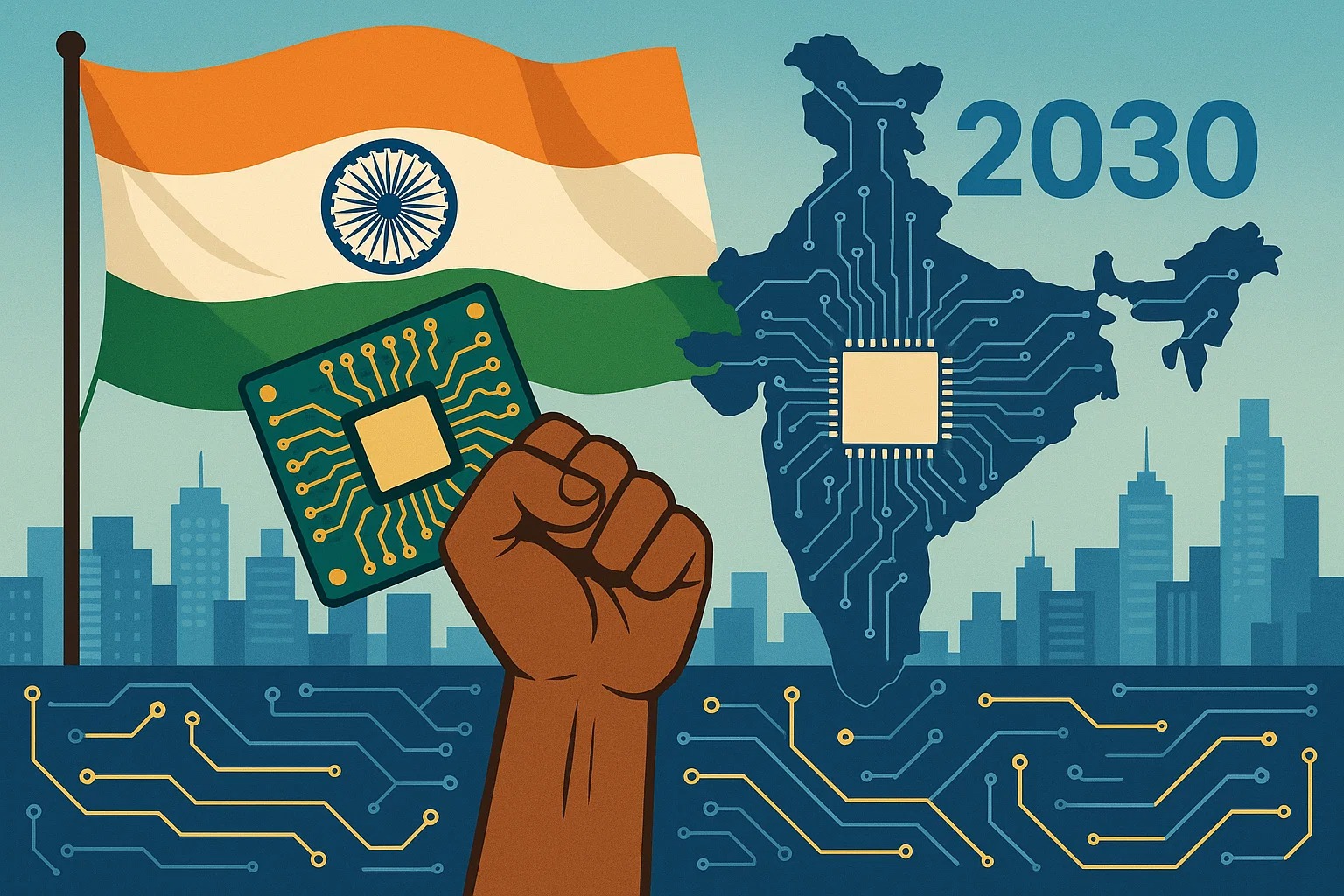
New Delhi: India must build its own sovereign cloud, operating systems, cybersecurity, and AI capabilities by 2030 to reduce its reliance on US technologies, according to a new report by the Global Trade Research Initiative (GTRI). The think tank warned that dependence on American platforms poses both economic and security risks.
The report noted that most Indian phones, computers, defence systems, and government applications currently run on US-controlled platforms. “A US-ordered cutoff could instantly paralyse digital payments, tax filings, and government services nationwide,” the think tank said, as reported by ANI.
More than 500 million smartphones in India currently use Google’s Android, a dependence that GTRI flagged as a major vulnerability. To counter this, it has proposed a phased “Digital Swaraj Mission,” laying out short-, medium-, and long-term targets to strengthen India’s digital sovereignty.
In the short term, spanning one to two years, the plan calls for mandatory sovereign cloud hosting of critical data, launching a national OS programme, and introducing Linux pilots in select ministries. Over the next three to five years, government systems would be expected to fully migrate to Indian software, with public-private cybersecurity consortia in place. By the long term, defined as five to seven years, India should achieve cloud parity, replace foreign operating systems in defence and critical sectors, and build globally competitive open-network platforms.
The report also raised concerns about social media and digital platforms being controlled by US companies, arguing that this exposes Indian democracy to disinformation campaigns. GTRI recommended treating India’s vast data pool as a strategic asset, comparable to oil or rare earth minerals, to strengthen its position in trade and technology negotiations. Measures such as data localisation, digital transaction taxes, and building a domestic AI ecosystem were suggested.
Drawing comparisons with other regions, the think tank pointed out that Europe is building sovereign cloud solutions and has introduced the Digital Markets Act, while China has replaced foreign software in government, defence, and industrial systems. Without similar steps, India risks lagging behind in digital sovereignty, it warned.
GTRI concluded, “Just as UPI and ONDC changed the world of payments and commerce, we can do the same for core digital infrastructure. In an era of tariffs, sanctions, and technology wars, sovereignty will be measured not just by territory or GDP but by ‘who controls the code’.”
The call for digital self-reliance comes as India and the United States continue negotiations on a Bilateral Trade Agreement that began in March 2025. While an interim deal is under discussion, India has pushed back on US demands to open its agricultural and dairy markets, even as Washington has imposed reciprocal tariffs, including a 50 per cent duty on Indian goods.
BI Bureau