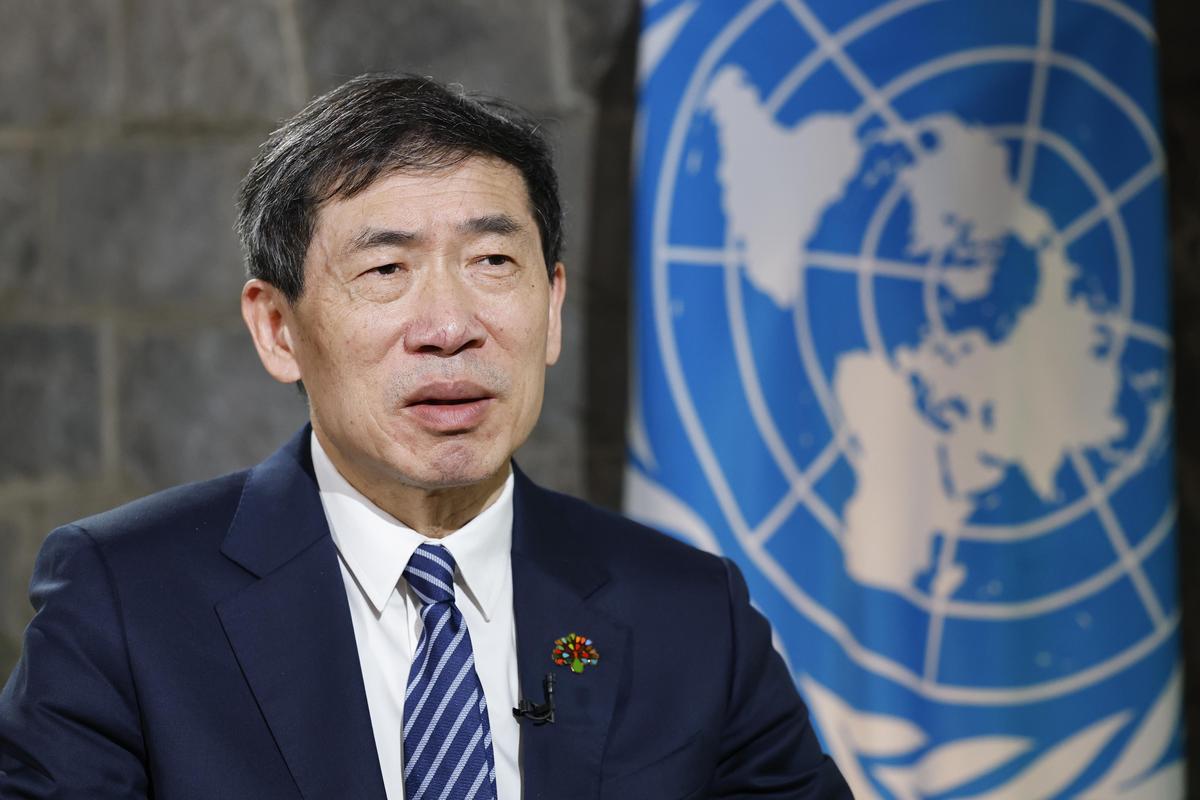
New Delhi: India’s development path is attracting international attention for blending rapid economic growth with inclusive, technology-driven governance, according to UNDP’s Acting Administrator Haoliang Xu. In an interview to PTI during his three-day visit to India, Xu said the country is demonstrating that social inclusion and economic progress can advance together, creating lessons that are now being shared globally.
Xu noted India’s approach to climate adaptation, renewable energy and inclusive digital finance, describing it as a balanced model for sustainable growth. “India continues to shape development pathways that are both economically sound and climate-responsible,” he said.
His visit focused on strengthening cooperation in areas such as digital transformation and climate action. He highlighted that the latest Human Development Index reflects global stagnation, with progress slowing to a 35-year low, even as India has managed to address complex challenges including climate change and poverty.
“The country’s commitment to just transitions, climate adaptation, renewable energy and inclusive digital finance offers a blueprint for balancing growth with sustainability,” Xu said. He added that both sides can work together to improve alignment of development objectives, financing and institutional capacity.
Xu said India has shown that growth can be matched with direct investments in people, particularly communities that have historically been excluded. “As a leading voice of the Global South, India is helping translate local success stories into global lessons through South-South Cooperation, sharing not only its tools and technology but also the frameworks that make them work,” he said.
He pointed to flagship programmes such as MGNREGA and Ayushman Bharat, which link livelihood security with social protection. He also highlighted India’s digital public infrastructure and financial inclusion systems, saying platforms like the Jan Dhan, Aadhaar, Mobile trinity and UPI have enabled transparent and direct delivery of benefits to hundreds of millions.
Initiatives such as the Aspirational Districts Programme, he said, show how data and community participation can reduce regional gaps. Xu added that India’s growing investments in green jobs and climate-resilient livelihoods reflect a model that connects economic opportunity with environmental responsibility.
“The next phase of growth can further expand quality jobs, gender equality and climate resilience to keep development inclusive and sustainable,” he said. “India’s story is not only about growth, it is also about using technology, evidence, and participatory governance to ensure that development objectives are achieved and no one is left behind.”
He said these lessons are shaping conversations globally and that the UNDP is working with India to share them with other developing nations. Xu also praised platforms such as UPI and CoWIN. “UPI made digital payments as simple as sending a text message. CoWIN tracked the administration of over two billion vaccine doses in record time during the COVID-19 pandemic and gave every person a verifiable vaccination record,” he said.
Xu said India’s digital infrastructure is effective because it is built as an open public system, which supports competition and reduces costs. He also referred to U-WIN, describing it as “a cutting-edge digital platform designed to electronically register and monitor the vaccination status of all expectant mothers and children across India,” developed with support from the UNDP.
On climate finance, Xu called for urgent global action. “Today, developing countries require about USD 2.4 trillion each year for climate action by 2030. The current multilateral finance commitment is reflected in the Baku to Belem Roadmap that calls for all actors to work together to scale up finance to USD 1.3 trillion per year by 2025,” he said. He added that accessing climate finance remains slow and complex at a time when developing countries need immediate support.
“The climate crisis is here and now, and developing countries need urgent support to achieve their goals at scale,” he said.
BI Bureau