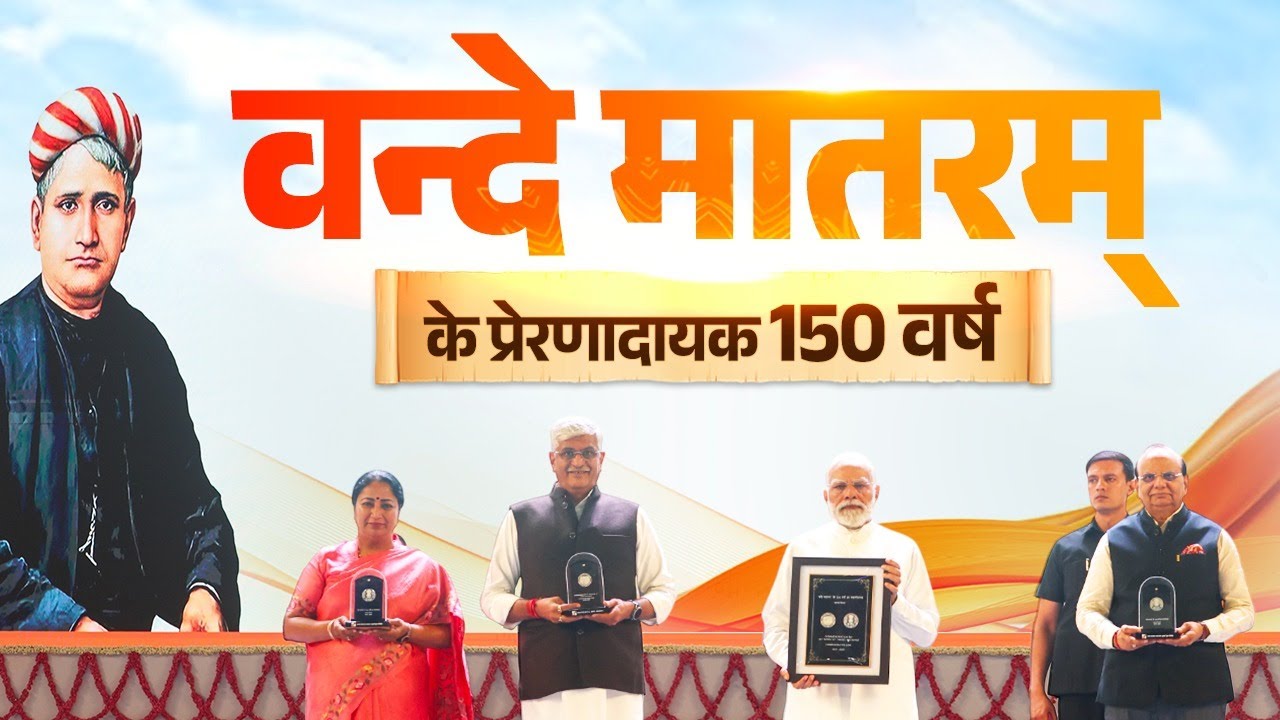
As India marks 150th anniversary of Vande Mataram this year, Parliament has begun a special debate on the national song led by Prime Minister Narendra Modi, a deliberate moment where the House paused to reflect on a cultural legacy that helped shape the nation’s political awakening. The decision to dedicate parliamentary time to such a discussion is not merely symbolic; it signals a deeper national need to revisit foundational ideas that once bound India together.
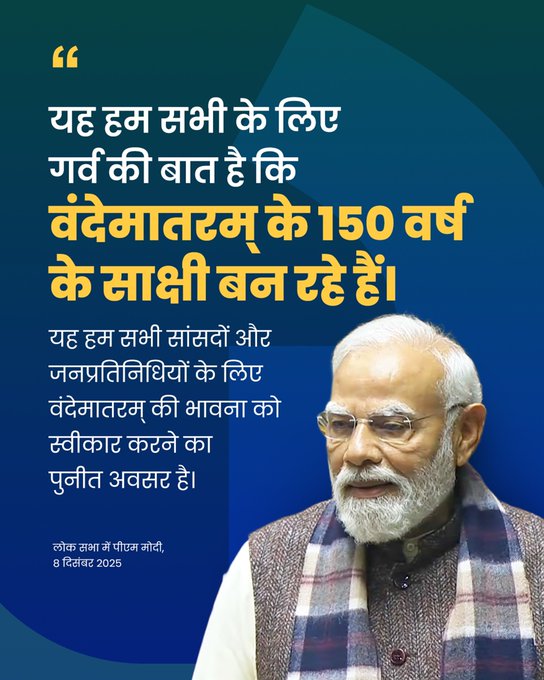
Prime Minister Modi opened the discussion, noting that, "Vande Mataram is not just a song; it is worship of Mother India, an expression of deep reverence for Maa Bharati."
He reminded the House that the mantra of Vande Mataram gave power and inspiration to the entire country during the freedom struggle.
And he reaffirmed India’s collective capability, "There is no resolve we cannot achieve, no goal we cannot attain when we move with one spirit."
His words established both the gravity of the occasion and the enduring role the song played in the imagination of a rising nation.
A song that forged a revolution
Composed by Bankim Chandra Chatterjee in the 1875 and later included in Anandamath, Vande Mataram became the anthem of India’s awakening. It stirred courage in ordinary citizens, echoed through protest marches and inspired countless freedom fighters. When colonial authorities sought to suppress it, its resonance only deepened, becoming inseparable from the country’s struggle for selfhood.
In 1937, a national committee examined the full text and recommended that the opening stanzas, inclusive in spirit and free from specific religious imagery, be adopted for national use. This decision, was later upheld by the Constituent Assembly in 1950. The National Song thus earned a constitutional place equal in dignity to the National Anthem.
Why the debate now; why it by matters
The decision to initiate a parliamentary debate on Vande Mataram at its 150-year mark carries a deeper national significance. In an age when cultural symbols are often interpreted through the lens of present-day politics, the debate offers an opportunity to restore historical context and reaffirm the inclusive intent with which the national song was adopted. It allows the country to revisit a legacy that once united millions, clarify long-standing misconceptions and strengthen constitutional understanding for a new generation. Most importantly, it signals that national identity is not static, rather it requires periodic reflection, renewal and dialogue. By bringing Vande Mataram to the floor of Parliament, the government reinforced that the foundations of India’s civic spirit must be tended to with the same seriousness as its economic or strategic priorities.
PM's call to renew, not just remember
Commemorating 150 years of Vande Mataram is an opportunity to converge history with purpose. For India’s administrative and governance community, it is also a reminder that nation-building rests not only on structures and policies, but on shared emotion, shared memory and shared resolve.
The parliamentary debate is not about imposing conformity but rediscovering meaning. Not about exclusion but about renewal. Not about the past alone, but about the larger civic spirit that continues to guide the Republic.
As the Prime Minister said, Vande Mataram embodies "one rhythm, one emotion, one wave". May that wave continue to guide us; in governance, in public service and in national life.
Vande Mataram!