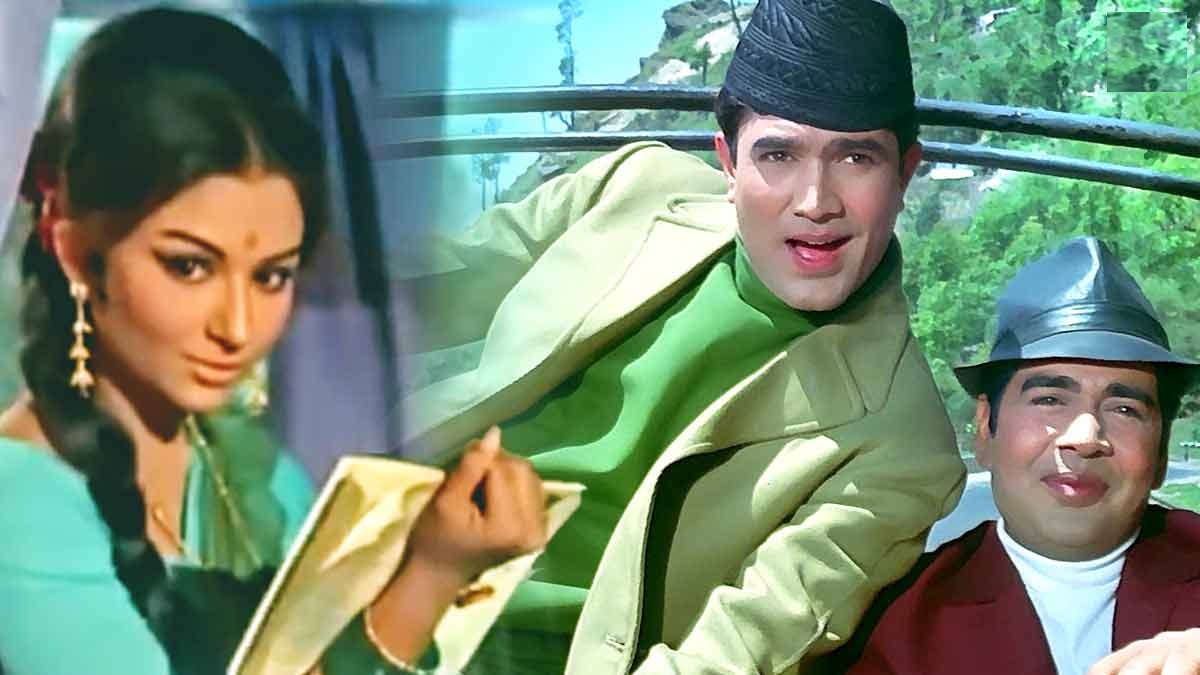
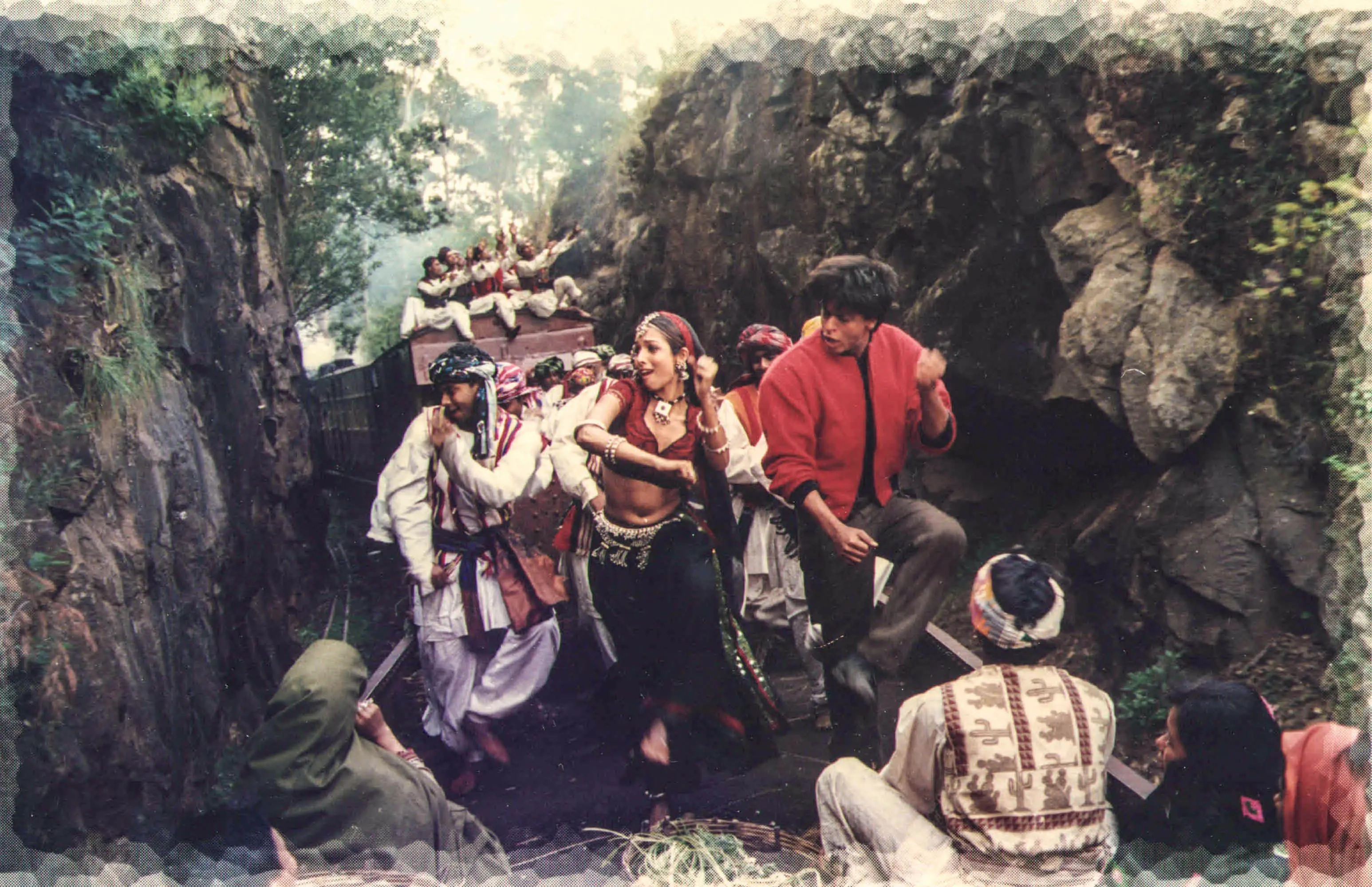
In 1969, Aradhana lit up theatres across India. Rajesh Khanna and Sharmila Tagore in “Mere Sapno Ki Rani” made a moving train more than just a prop; it became a symbol of dreams in motion. Long before that, in 1958 Dev Anand had wooed the heart of Waheeda Rahman on the tracks in Solva Saal with the song “Hai Apna Dil to Awara”. Decades later, in 1998, Shah Rukh Khan and Malaika Arora danced their way into cinema history with “Chhaiya Chhaiya” on top of a train. Bollywood has always known the romance of the railways. Railways are not just tracks of steel; they are woven into our national consciousness.
For three generations, however, the people of Mizoram could only admire these depictions from afar. While enjoying Hindi films quietly in their hill state, they also bore the silent frustration of being cut off from India’s lifeline of the railway network. Despite India’s rail grid extending over 1.35 lakh km, Mizoram’s capital Aizawl remained excluded.
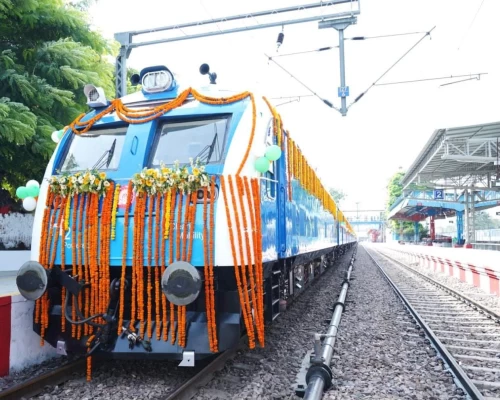
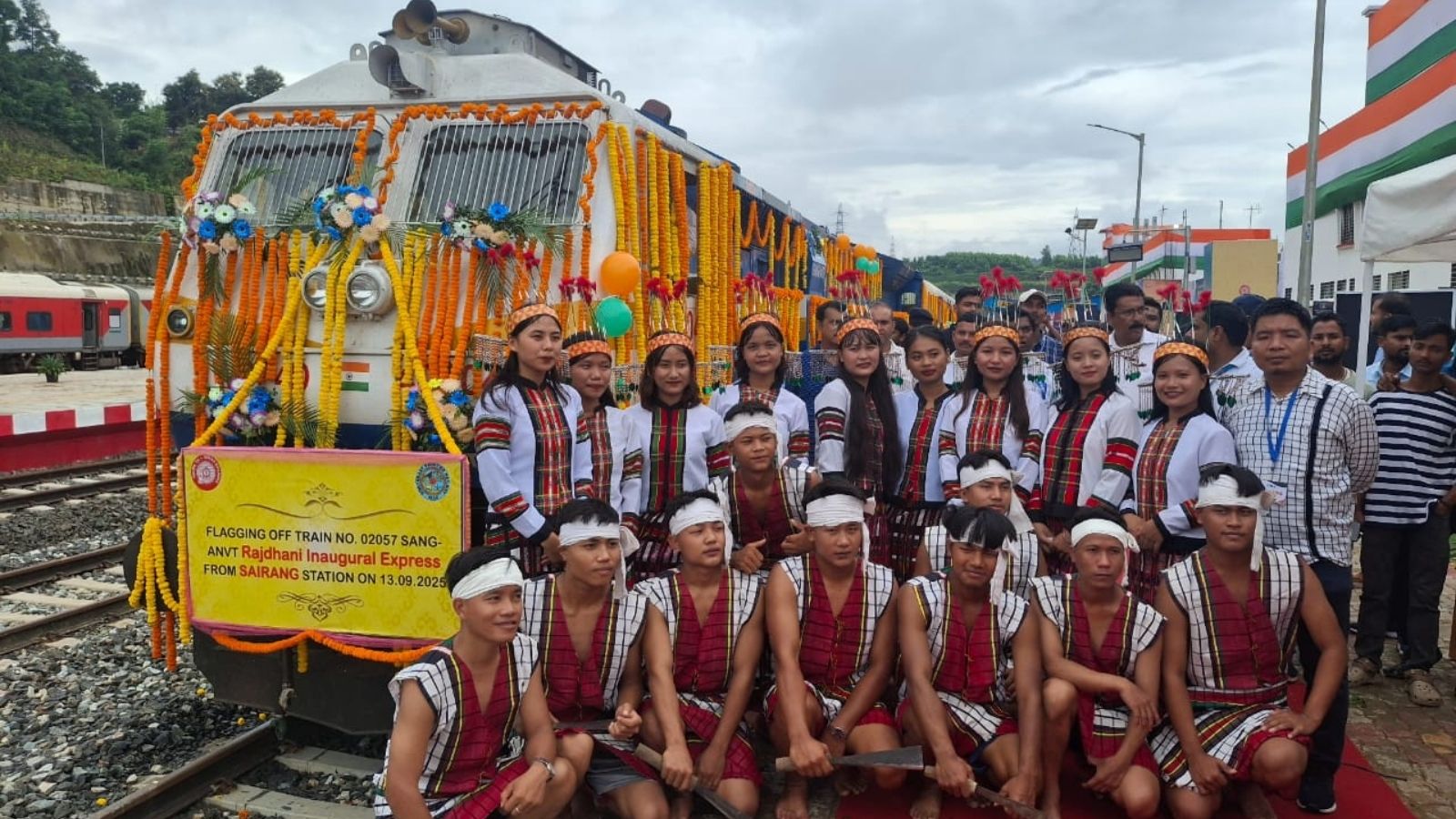
That changed on September 13, when Prime Minister Narendra Modi inaugurated the 51.38 km Bairabi–Sairang railway line and flagged off Mizoram’s first Rajdhani Express to Delhi. He called it a “lifeline of transformation.” For over a million Mizo citizens, it was not just the arrival of a train, but the fulfilment of a generational aspiration. The PM added, “For the first time, Sairang in Mizoram will be connected directly with Delhi by the Rajdhani Express. This is not just a railway connection, but a life-line of transformation. It will revolutionise the lives and livelihoods of the people of Mizoram. Farmers and businesses can reach more markets, people will access more education and healthcare, and tourism, transport, and hospitality will all grow.”
I extend my heartfelt congratulations to you all and welcome Aizawl to the Railway map of India: Hon’ble PM @narendramodi #RailInfra4NorthEast #Rail2Mizoram pic.twitter.com/hXcw3vWaFN
— Ministry of Railways (@RailMinIndia) September 13, 2025
The scale of the project explains why it took so long. Built at a cost of Rs 8,071 crore, the line has 48 tunnels (almost one for every kilometre), 142 bridges, and one structure taller than the Qutub Minar. What once seemed unimaginable was made possible because of political will and persistence.
The excitement on the ground was palpable. Suddenly, Mizoram was not a far-flung outpost but part of India’s moving mainstream. Farmers could dream of reaching new markets, students studying in new cities, and families of better healthcare. Tourism, transport, and hospitality too will gain fresh energy.

Strategically, Mizoram’s inclusion is crucial. With a 722-km international border, shared with Myanmar and Bangladesh; and nestled among Assam, Manipur, and Tripura, the state has immense geopolitical and trade significance. As the PM highlighted, “Mizoram has a major role in both our Act East Policy and the emerging North East Economic Corridor. With the Kaladan Multimodal Transit Transport Project and the Sairang–Hmawngbuchhuah Railway line, Mizoram will be connected to the Bay of Bengal through South East Asia. Trade and tourism will be boosted across North East India and South East Asia.”
Mizoram’s rail debut is not an isolated milestone. Since 2014, the first train has reached Naharlagun in Arunachal Pradesh (2015) and Tripura (2016). Work continues on the Jiribam–Imphal line in Manipur and Dhansiri–Zubza in Nagaland, while Meghalaya’s Byrnihat–Shillong project awaits resolution of local concerns. Each connection chips away at the isolation that once defined the North East.
Union Ministers, from Jyotiraditya Scindia posting breathtaking visuals of the journey to Ashwini Vaishnaw’s viral reel, have amplified the pride and joy this milestone has brought. And rightly so. For Mizoram, the tracks are more than steel and stone — they are a statement of belonging, growth, and opportunity. For the people of Mizoram, Rajdhani is more than just a train. It is a symbol of integration, aspiration, and dignity. For India, it is a reminder that political will, backed by vision, can overcome even the most stubborn barriers of geography.
Train to Aizawl… once the toughest terrain, now the smoothest ride.🚆🇮🇳 pic.twitter.com/aBLTrWOxAo
— Jyotiraditya M. Scindia (@JM_Scindia) September 24, 2025
Bollywood has long celebrated the romance of Indian railways. Perhaps now, it is time for Mizoram’s hills, bridges, and tunnels to become the backdrop for another timeless train sequence — one that mirrors a nation’s promise of inclusion and progress. The 114-metre Kurung Bridge looks ready for its own Chhaiya Chhaiya moment!