Every year on Rashtriya Ekta Diwas, India remembers Sardar Vallabhbhai Patel, the Iron Man who transformed a fragmented land into a united nation. His vision of unity was not limited to the political integration of 560 princely states; it extended to building a cohesive administrative machinery that could hold together the newly independent nation. It was Patel who described the civil services as the “steel frame of India”, an enduring metaphor for a strong, impartial, and disciplined bureaucracy.
In the uncertain years following independence, this steel frame became the backbone of governance. Civil servants ensured administrative continuity during Partition, maintained law and order in turbulent times, and implemented policies that laid the foundations of a modern state. For Patel, the civil service was not merely a government institution, it was an instrument of nation-building, guided by integrity, neutrality, and a deep sense of public duty.
Over the decades, India’s bureaucracy has evolved alongside the nation’s democratic journey. From a rigid colonial structure, it gradually embraced inclusivity and accountability, expanding its role in development, welfare, and crisis management. Yet, challenges persisted—politicisation, red tape, and declining public trust often weakened this once invincible frame.
The transformation gained fresh momentum after 2014, under the leadership of Prime Minister Narendra Modi, whose governance vision echoes Patel’s ideals of unity, service, and integrity. PM Modi has repeatedly invoked Sardar Patel’s principles, urging civil servants to uphold transparency, efficiency, and innovation as pillars of a modern administrative system.
Initiatives such as Mission Karmayogi, the Prime Minister’s Awards for Excellence in Public Administration, and the expansion of Digital India have redefined how governance interacts with citizens. Bureaucracy today operates in an environment of data-driven decision-making, real-time monitoring, and performance-based evaluation, marking a decisive shift from process-oriented administration to outcome-based governance.
This evolution is not just technological—it is philosophical. The bureaucracy is being reoriented from rule enforcers to nation builders; from file pushers to facilitators of transformation. The emphasis is now on citizen-centric service delivery, ease of doing business, and policy implementation that touches lives directly, in line with the Prime Minister’s call for “no village left behind, no family left behind.”
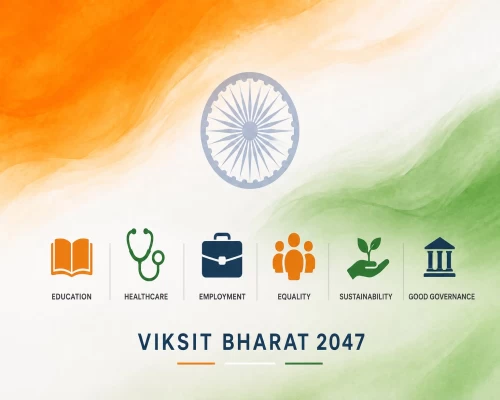
As India charts its path towards Viksit Bharat 2047, the relevance of Patel’s steel frame remains profound. But the steel today is being reforged—tempered with transparency, strengthened by ethics, and shaped by innovation. The Indian civil service stands not merely as a symbol of administrative endurance, but as a dynamic force driving national progress.
Sardar Patel’s dream of a united and efficient India continues to guide the nation. Under the vision of Narendra Modi, the civil service is rediscovering its original purpose—to serve with integrity, to innovate with courage, and to unite with conviction. On this Rashtriya Ekta Diwas, the legacy of the Iron Man lives on—not just in statues and speeches, but in the strengthened resolve of India’s steel frame to build a truly Viksit Bharat.