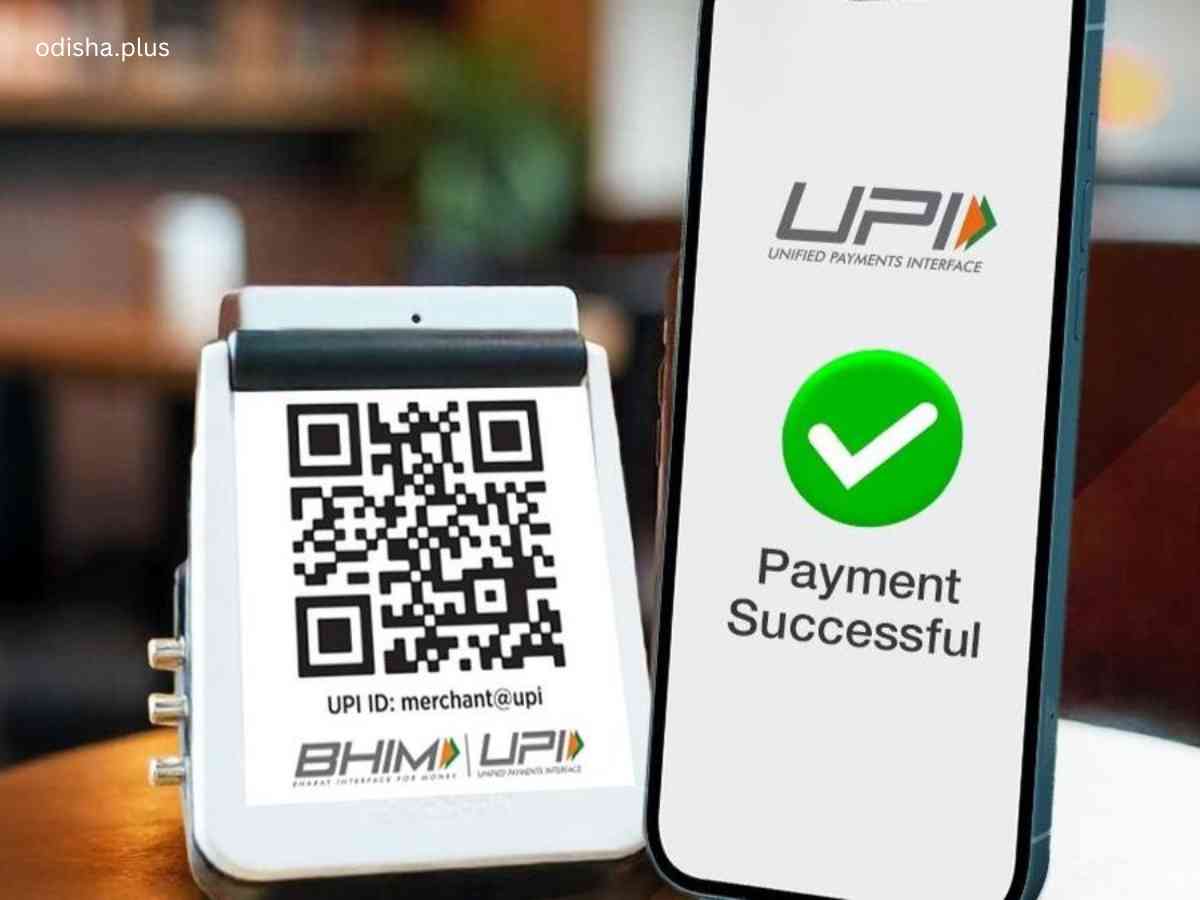
New Delhi: A decade ago, paying for a cup of tea with a phone still felt like a novelty. Today, a QR code at a roadside tea stall can be enough to complete the transaction in seconds. That everyday convenience is perhaps the simplest way to understand the transformation Prime Minister Narendra Modi’s government set in motion with the launch of UPI in 2016.
Ten years on, UPI is no longer just a payment tool. It has become a critical part of India's digital economic infrastructure — changing how people pay, how businesses transact and how money moves across the country.
The numbers are extraordinary. From 1.78 crore transactions in FY2016-17, UPI processed more than 24,162 crore transactions in FY2025-26 - an almost 13,000-fold increase. Transaction value rose from Rs 0.07 lakh crore to around Rs 314 lakh crore, more than 4,000 times the original level.
UPI's biggest success is not simply its scale, but how deeply it has entered everyday life.
A QR code at a neighbourhood shop, vegetable cart or small business has brought digital payments to millions of transactions that were once almost entirely cash-based. Person-to-merchant payments account for 63% of UPI's transaction volume, with 86% of P2M transactions in FY2026 below Rs 500.
At the same time, person-to-person transactions account for 71% of UPI's transaction value, showing how the platform serves everything from a Rs 50 purchase to significantly larger transfers.
In July 2026 alone, UPI processed a record 2,366 crore transactions worth Rs 29.88 lakh crore - equivalent to around 66 crore transactions every day. At this scale, UPI is no longer merely a payments platform. It is economic infrastructure.
The ecosystem has expanded alongside the transaction numbers. From a small group of participating banks at launch, 703 banks were live on UPI by FY2025-26, rising to 741 by July 2026.
The architecture has allowed banks, fintech companies and payment applications to compete while remaining connected to an interoperable common rail.
That has been central to UPI's success. Users are not locked into a single application, while businesses can accept payments from customers across the ecosystem. For millions of small merchants, the QR code has effectively become a low-cost gateway into the digital economy.
UPI's success is no longer confined to India. Notably, it accounted for nearly 49% of global real-time payment transaction volume in 2025, according to government data, and is now operational in 11 countries, including the UAE, France, Singapore, Sri Lanka, Bhutan, Mauritius, Qatar, Cambodia, Greece and the Maldives.
That makes UPI an important part of India's emerging digital public infrastructure story: India is increasingly moving from adopting technology to building platforms that other countries can use.
The real significance of UPI lies in what its scale makes possible. Digital payments create a transaction trail, reduce friction for businesses and consumers, and provide a foundation on which banks and fintech companies can build new financial services.
More importantly, UPI demonstrates what can happen when public digital infrastructure, policy, technology and private innovation work together at population scale. The first decade of UPI was about making digital payments simple and ubiquitous.
The next could be about using that infrastructure to reshape access to credit, financial services, commerce and cross-border payments. From that first QR code at a tea stall to billions of transactions every month, UPI has travelled a remarkable distance.
BI Bureau