New Delhi: Indian Railways is set to adopt the Hybrid Annuity Model, or HAM, for railway infrastructure projects for the first time, as it looks to bring greater private investment into the sector.
The Public Private Partnership Appraisal Committee, or PPPAC, under the Ministry of Finance approved six railway projects earlier in August, covering a combined 647 km along key freight corridors. The projects will now be placed before the Union Cabinet for final approval, following which the bidding process will begin.
The six projects have a total bid project cost of Rs 15,976 crore. Their total capital cost over the concession period of 17 to 19 years is estimated at Rs 40,866 crore.
Four of the proposed railway lines are in Odisha. These include the 49.58-km Balaram-Putgadia-Tentuloi Inner Corridor, the 112.56-km Budhapank-Tentuloi-Luburi Outer Corridor, the 101.26-km Jajpur-Keonjhar Road-Aradi-Dhamara Port line and the 48.96-km Tikiri Station-Waltair Bauxite Mines line.
The other two projects are the 207.80-km Manuguru-Ramagundam railway line in Telangana and the 126.52-km Pakur/Nagarnabi-Godda line in Jharkhand.
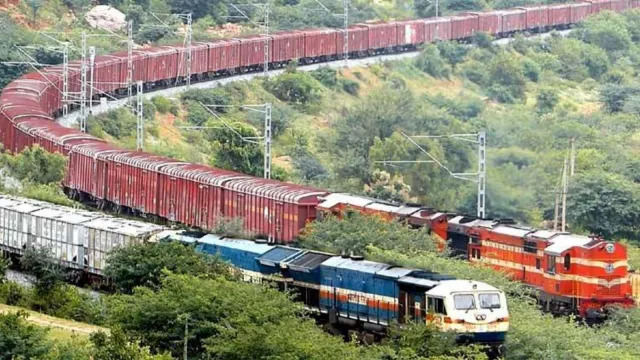
The proposed routes are expected to primarily serve the movement of coal, besides commodities such as iron ore, bauxite, coke, chemical manure, cement and food grains.
The adoption of HAM marks a departure from the earlier Design, Build, Finance, Operate and Transfer, or DBFOT, structure under which the projects had initially received in-principle approval.
Under the new model, Indian Railways will contribute 40 per cent of the bid project cost as a grant during construction, while the private developer will arrange the remaining 60 per cent.
“Subsequently, based on market feedback, the Ministry of Railways (MoR) revisited the project structure and proposed their implementation under the HAM. Under the proposed HAM structure, MoR would bear the traffic and tariff risks and provide 40% of the bid project cost as grant during the construction period,” say the minutes of the meeting held on August 1.
After the projects become operational, Indian Railways will repay the remaining 60 per cent of the project cost through annuity payments, along with interest. It will also make periodic payments to the concessionaire for maintaining stations, railway tracks and other project assets.
Railways will continue to operate the trains and retain the freight revenue. The government will also bear traffic and tariff risks, ensuring that the private developer is not penalised if freight loading or revenue falls below projected levels.
“The RFP (bid document) would specify the applicable conditions including the minimum tenure of the agreement, the roles and responsibilities of the EPC (Engineering, Procurement and Construction) contractor, and the circumstances in which such arrangements would be permitted,” the Indian Railways said.
Construction of all six projects is proposed to begin in April 2028.
A senior railway official said bidding for the projects is likely to take place during the next financial year, 2027-28.
The move is part of a wider plan to increase private participation in railway infrastructure. Indian Railways has another 49 projects in the pipeline for execution through the PPP route, with a combined estimated cost of around Rs 1.80 lakh crore.
So far, 18 railway projects worth Rs 16,686 crore have been completed through the PPP model, while seven projects with an estimated value of Rs 16,362 crore are currently under implementation. These include projects focused on coal movement and port connectivity.
Indian Railways recently included HAM and the Development Partner Model, or DPM, in its participative policy. The shift towards these financing structures is aimed at easing funding constraints and drawing long-term private capital into railway infrastructure.
BI Bureau