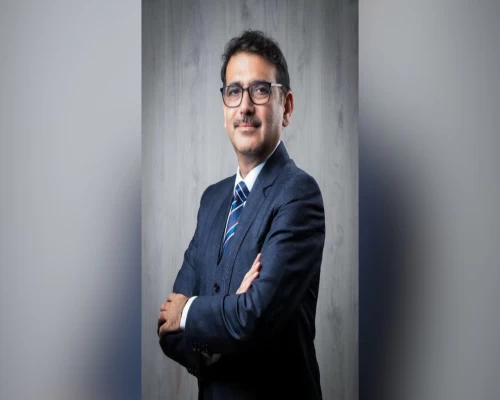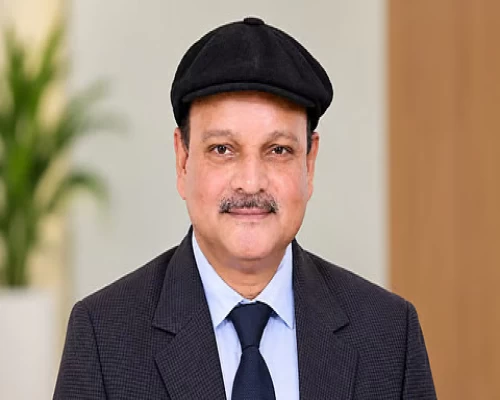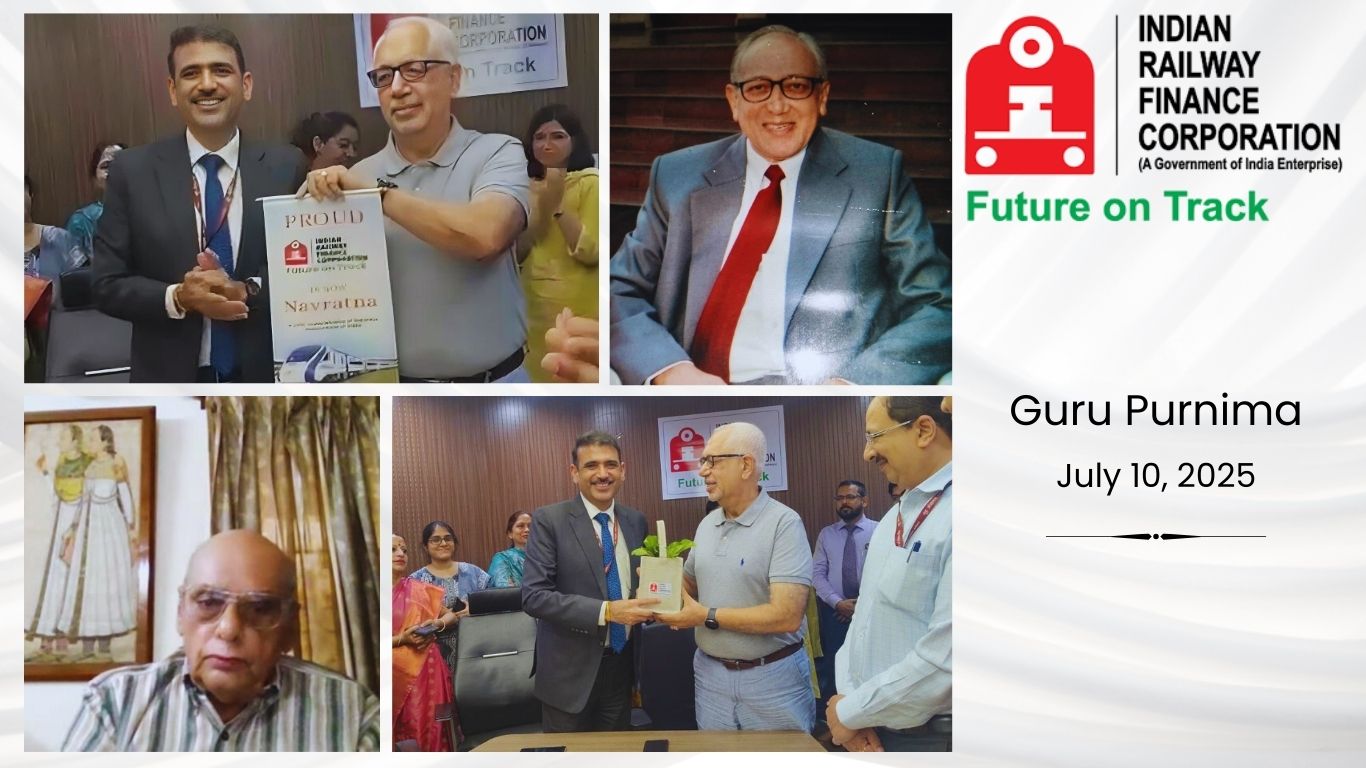
New Delhi: As it moves into a new phase of growth and diversification, the Indian Railway Finance Corporation (IRFC) has chosen to do something not often seen in the public sector: publicly acknowledge and express gratitude to three of its former Chairmen and Managing Directors S. N. Mathur, N. P. Srivastava and Rajiv Dutt on the occasion of Guru Purnima.
The tribute, though understated, marks an important moment for IRFC, reflecting a deliberate effort to connect the organisation’s present direction with the leadership values that defined its formative years. Among central public sector enterprises (CPSEs), such formal gestures of institutional remembrance are relatively uncommon. The unique initiative, conceptualised by current CMD Manoj Kumar Dubey, reflects an emphasis on continuity and culture at a time when IRFC is expanding its role in the infrastructure financing space.
“Institutions are not only shaped by their mandates, but also by the leadership principles that guide them,” said Manoj Kumar Dubey, CMD, IRFC. “On Guru Purnima, we felt it was important to acknowledge the leaders who laid the foundation of the systems and standards we continue to follow today.”
IRFC was set up in 1986 as a specialised financial arm of the Indian Railways. Over the years, it has emerged as a critical institution for railway capital expenditure, helping fund the procurement of rolling stock, expansion of infrastructure, and now, broader connectivity projects. Its consistent financial performance and strong governance model earned it Navratna CPSE status in March 2025, giving it enhanced operational and financial autonomy.
Today, IRFC is expanding its focus. In addition to its core role in financing Indian Railways, the organisation has begun funding projects in the broader railway and logistics ecosystem, including metro rail networks, port connectivity, and coal logistics. This forward-and backward-linkage strategy is expected to help IRFC diversify its portfolio and enter higher-margin, infrastructure-linked opportunities.
“We are now positioned to support projects that align with the larger mission of multimodal connectivity and infrastructure development,” said Dubey, referring to the organisation’s evolving mandate. At the heart of this growth story are institutional values shaped by its early leadership.
S. N. Mathur, one of IRFC’s earliest CMDs, said, “We worked to ensure that IRFC remained professionally managed, aligned with Indian Railways' needs, and financially sound. The systems we put in place were designed for the long term.” Reflecting on his tenure, N. P. Srivastava, who succeeded him, said, “Our focus then was on establishing IRFC’s credibility as a disciplined and trustworthy financial institution, within government and in the market.”
"The foundations of this company were great, and in my approximately 40 years of government service, serving as MD of IRFC was the most fulfilling. Thanks to the quality of the company’s balance sheet, we consistently raised funds at fine rates, often below AAA-rated PSE bonds rates. Even overseas, investors, during roadshows, had few questions because they trusted the impeccable strength of IRFC’s financials," said former Managing Director of IRFC Rajiv Dutt.
By formally recognising these contributions, IRFC has sent a quiet but meaningful signal, that leadership legacies matter, and that institutional continuity can be a strength. While the public sector often struggles with short-termism and leadership churn, IRFC’s gesture offers a different model, one in which past experience is seen not as history, but as context for present choices.
The timing is also significant. With new powers under Navratna status and a wider operational scope, IRFC is set to play a larger role in infrastructure financing. In such a moment, pausing to reflect on its origins may serve not just as a nod to the past, but also as a reminder of the values that have sustained the organisation through change.
BI Bureau