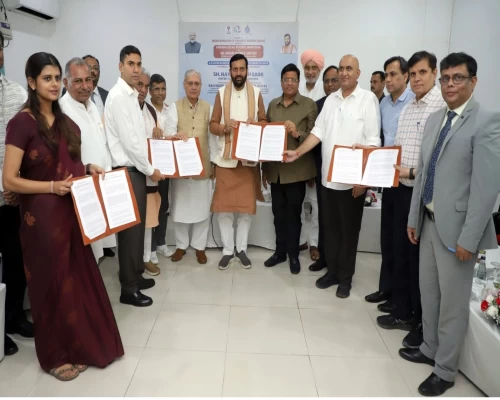
Mumbai: NABARD has entered into a memorandum of understanding with Mahatma Phule Renewable Energy and Infrastructure Technology Limited (MAHAPREIT), a Maharashtra government enterprise, to support the development of green, climate-resilient and sustainable infrastructure in rural India.
The collaboration will initially focus on Maharashtra, with an emphasis on strengthening villages, Panchayati Raj Institutions (PRIs) and community-level infrastructure through climate-friendly development projects.
Under the partnership, NABARD will bring its expertise in rural development, climate finance and green infrastructure funding, while MAHAPREIT will contribute its experience in developing renewable energy and climate-focused infrastructure. The two organisations will work together to identify, structure, develop and finance sustainable projects across rural areas.
“NABARD is committed to working with all like-minded stakeholders in furthering a cleaner and greener rural India,” NABARD Chairman Shaji Krishnan V said. “We see this MoU with MAHAPREIT as a significant step in this direction.”
The organisations have identified several priority areas for collaboration, including green energy projects, decarbonisation of government buildings, strengthening gram panchayat infrastructure, improving facilities at rural public institutions and supporting water pumping schemes.
The partnership will also explore the deployment of clean energy systems in Directorate of Technical Education (DTE) institutions, government hospitals, district hospitals and other public service institutions serving rural communities.
In addition, the two organisations plan to finance projects promoting biogas and bioenergy production from agricultural residues and other forms of biomass. These initiatives are expected to create an additional source of income for farmers while supporting the circular economy. The collaboration will also back solar-powered micro cold storage facilities for village-level bodies to improve rural infrastructure and reduce post-harvest losses.
BI Bureau