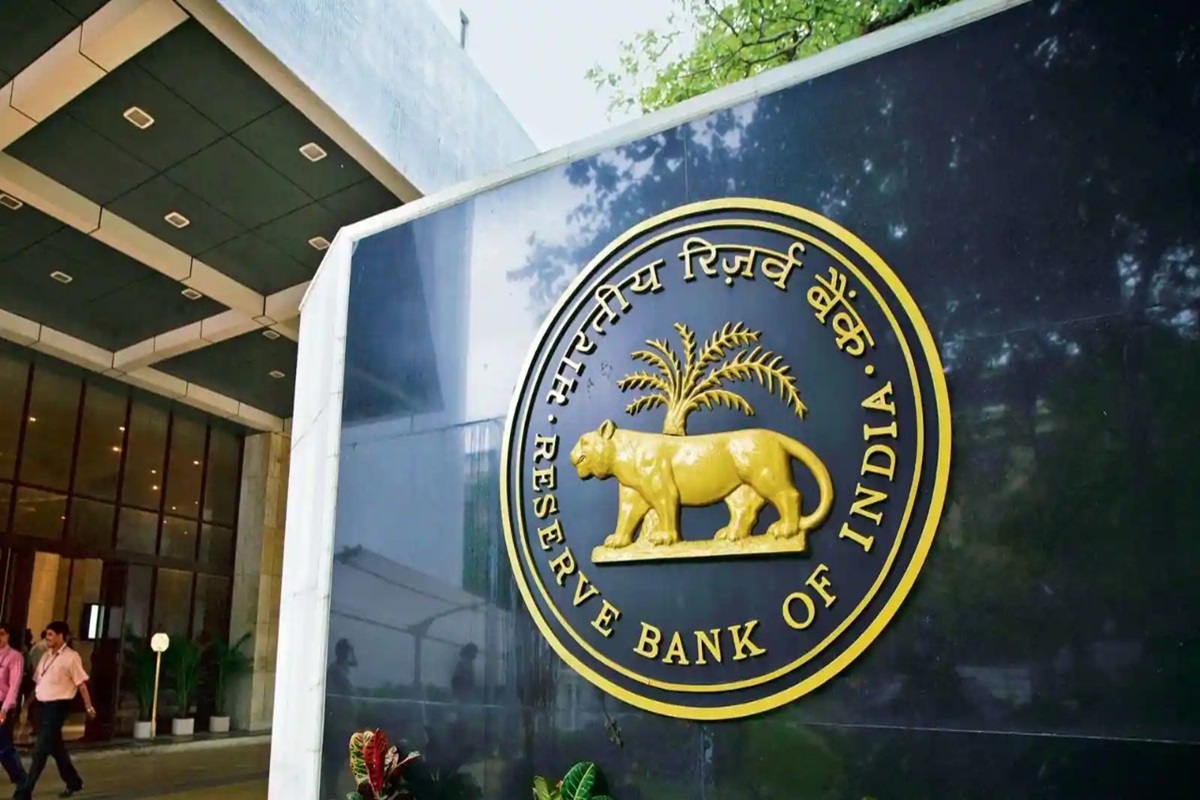
New Delhi: India could soon see a larger number of its lenders feature in the list of the world’s top 100 banks, driven by rapid economic growth and strong balance sheet performance across the banking system. RBI Governor Sanjay Malhotra shared this outlook while interacting with students after delivering the VKRV Rao Memorial Lecture at the Delhi School of Economics.
Malhotra said the central bank does not prescribe how many Indian banks should figure in the global rankings, but expressed confidence in the sector’s growth trajectory. He said, “...there are many banks in the public sector space and in private sector...the pace at which they are growing, I think it is only a matter of time that we will have a number of banks, quite a few banks, in the top hundred banks of the world”.
At present, only State Bank of India and HDFC Bank are part of the global top 100 list, placed at 43 and 73 respectively.
The optimism comes on the back of strong financial performance by public sector banks. Their cumulative profit touched a record Rs 1.78 lakh crore in the financial year ending March 2025, reflecting a 26 per cent rise over the previous year. All 12 public sector banks together had earned Rs 1.41 lakh crore in FY24.
The government has also indicated its intention to develop larger, globally competitive banks. Earlier this month, Finance Minister Nirmala Sitharaman said the country requires big, world-class lenders and that discussions are underway with the Reserve Bank and banks on how to take this forward. She said, “It is not by creating from those which exist today...just by amalgamation that can also be one of the routes, but you need an ecosystem and an environment in which more banks can operate and operate to grow. So, that environment is actually well established in India, but I needed to be more dynamic. So, some work is happening on it”.
India has already undergone two major rounds of bank consolidation. In 2019, the government announced four major mergers that reduced the number of public sector banks from 27 in 2017 to 12. These came into effect in April 2020, combining United Bank of India and Oriental Bank of Commerce with Punjab National Bank, Syndicate Bank with Canara Bank, Allahabad Bank with Indian Bank, and Andhra Bank and Corporation Bank with Union Bank of India.
A year earlier, Dena Bank and Vijaya Bank were merged with Bank of Baroda. In 2017, the five associate banks of the State Bank of India and Bharatiya Mahila Bank were brought into SBI, significantly increasing its scale.
Privatisation efforts have also progressed. In January 2019, the government sold its controlling 51 per cent stake in IDBI Bank to the Life Insurance Corporation of India. A strategic sale of the combined government and LIC stake is in process, with both shareholders having invited expressions of interest in October 2022 for selling a total of 60.72 per cent.
Multiple expressions of interest were received in January 2023, and in August 2025, Sebi approved the reclassification of LIC as a public shareholder from the promoter category, clearing a key hurdle for the strategic divestment.
With sustained profitability, consolidation measures and a stable regulatory environment, India’s banking system appears set for greater representation on the global stage.
BI Bureau