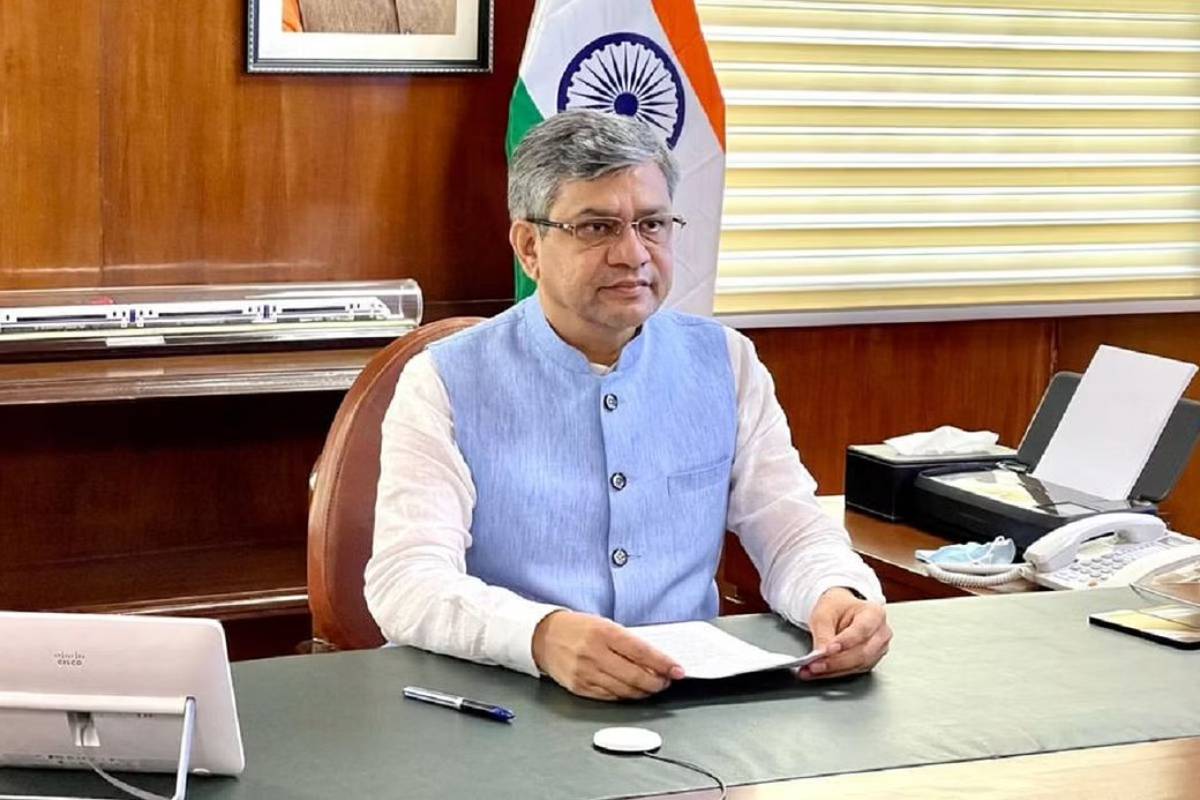
New Delhi: Union Minister of Railways, Electronics and Information Technology, and Information and Broadcasting Ashwini Vaishnaw inaugurated the NIELIT Digital University (NDU) platform, a new initiative designed to democratize access to high-quality digital education across India.
The platform will offer industry-oriented programs in emerging technologies such as Artificial Intelligence, Cybersecurity, Data Science, Semiconductors, and allied fields. Learners will benefit from flexible digital learning modes, virtual labs, and AI-driven tools including career pathways, mentors, interview simulators, and interactive modules.
During the launch, five new NIELIT Centres were virtually inaugurated at Muzaffarpur (Bihar), Balasore (Odisha), Tirupati (Andhra Pradesh), Lunglei (Mizoram), and Daman (Dadra and Nagar Haveli and Daman and Diu), further strengthening NIELIT’s presence across India.
The event also saw the signing of Memoranda of Understanding between NIELIT and Microsoft, Zscaler, CCRYN, Dixon Tech, and Future Crime, aimed at fostering collaboration between the institute and industry.
Ashwini Vaishnaw said, “Three years ago, a decision was taken to establish a Digital University. There were many options on the table, but the best choice was NIELIT. We must prepare a list of 500 industry partners — and they don’t necessarily have to be only from electronics or IT. These technologies are now used across every sector. Wherever electronics and IT are in use, our goal must be to train and prepare students to meet those specific demands. Today, the electronics manufacturing sector alone has grown into an industry worth ₹13 lakh crore. I firmly believe that NIELIT will achieve even greater milestones in the near future.”
On the importance of MoUs, Vaishnaw added, “These MoUs will play a pivotal role in strengthening industry-academia collaboration. NIELIT should engage in talks with the Top 500 Companies and sign MoUs while following the motto ‘YOU DECIDE WHAT TO TEACH’, so as to align NIELIT courses with industry requirements.” He further highlighted the vision of building a digital university closely aligned with industry, similar to Gati Shakti University in the transport sector.
Secretary, MeitY, said the launch of the NDU platform is significant, noting that NIELIT’s Centres operate even in challenging terrains where educational and training institutions are scarce. He added that NIELIT courses are balanced across both design and manufacturing, positioning the institute to play a key role in India’s electronics manufacturing sector in the coming years.
The launch event included participation from MPs and MLAs representing the newly inaugurated Centres, including those from Muzaffarpur, Balasore, Lunglei, Daman, and Tirupati, and over 1,500 students, academicians, and technology experts. Lunglei in Mizoram was highlighted as a digitally connected location, following recent railway connectivity developments.
A panel discussion on “Role of AI in Digitalization of Education” followed the launch, featuring experts from Intel, Infosys, Microsoft, AA2IT, Barco Electronics, and academic institutions. Discussions focused on aligning skilling initiatives with industry and market trends, expanding work-based learning opportunities, and strengthening youth employability pathways.
The NIELIT Digital University platform (ndu.digital) aims to create an inclusive, affordable, and employment-oriented digital learning ecosystem, supporting the objectives of Digital India, NEP 2020, and Skill India. The platform offers NCVET-approved, NSQF-aligned programs, industry-integrated courses, multilingual learning, virtual labs, and verifiable digital certificates, targeting 40 lakh learners by 2030.
National Institute of Electronics & Information Technology (NIELIT), an autonomous society under MeitY, operates 56 Centres, over 750 accredited institutes, and more than 9,000 facilitation centres, and has trained millions of students in emerging E&ICT technologies. NIELIT has been conferred the status of "Deemed to be University" and has its main campus at Ropar, Punjab, along with eleven constituent campuses across India.
BI Bureau