New Delhi: The Tiranga is finding its way into some of India’s most distinctive landscapes and communities this Independence Day, from homes and schools to rivers, mountain regions and the far corners of the Northeast. The fifth edition of Har Ghar Tiranga, being observed from August 9 to 17, is bringing together citizens through rallies, cultural programmes, flag-making initiatives and community events across the country.
Launched in 2022 as part of Azadi Ka Amrit Mahotsav, Har Ghar Tiranga was conceived to encourage citizens to bring the National Flag into their homes and make it a more visible part of Independence Day celebrations. Over the years, the campaign has grown into a nationwide citizen-participation initiative.
The 2026 edition is being held alongside the commemoration of 150 years of Vande Mataram, with the campaign centred on the spirit of the National Song. This year’s programme includes flag-hoisting, Tiranga rallies, exhibitions, cultural events and other community activities.
What stands out this year is the variety of ways in which different parts of India are participating.
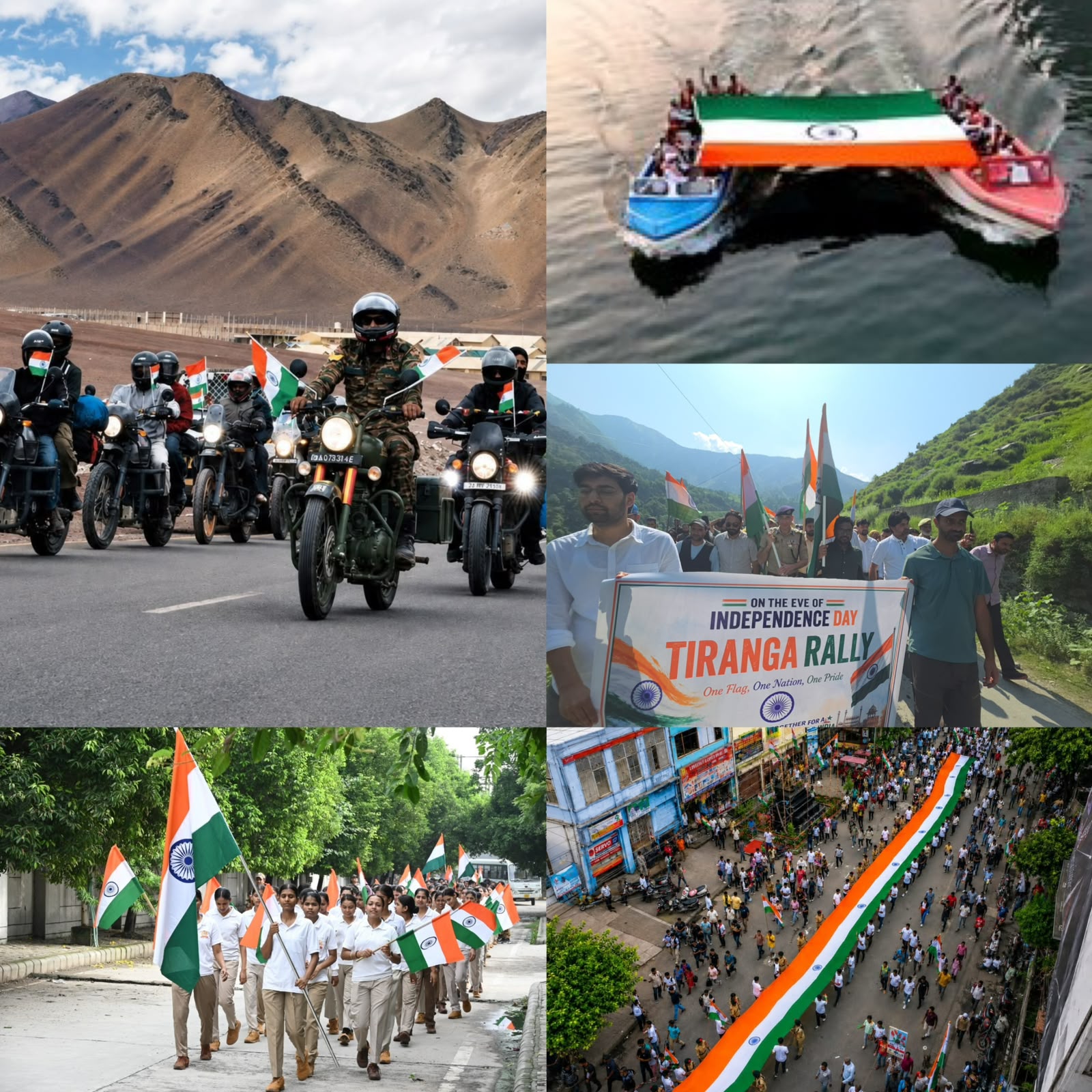
In Shravasti, Uttar Pradesh, the Tiranga has taken to the water. A boat rally was organised on the Rapti River under the Har Ghar Tiranga campaign, giving a distinctly local character to the national celebration.
In Ladakh, the campaign has reached the high-altitude landscape around Pangong Lake, with a Tiranga event organised at Lukung. The setting is markedly different from the crowded streets of India’s cities, but the national flag remains at the centre of the celebration.
The Northeast has also added some striking initiatives. In Itanagar, Arunachal Pradesh, around 1,000 students participated in a rally carrying a 300-foot-long National Flag. In Tripura, a Har Ghar Tiranga rally in Agartala featured bust-sized statues of 45 unsung freedom fighters, including 37 from Tripura and eight from other Northeastern states, connecting the contemporary campaign with the region’s own history of the freedom movement.
In Nagaland, the campaign has included a dedicated Har Ghar Tiranga exhibition in Kohima, while communities in Arunachal Pradesh have also organised bike rallies and other events carrying the flag through their towns and districts.
There is another dimension to the campaign in Odisha, where the flag is being made by the community itself. Mission Shakti self-help groups across the state have prepared 60 lakh National Flags, involving more than 16,000 members from self-help groups, producer groups and federations. The initiative has turned flag-making into a form of community participation, while also creating an opportunity for women involved in the groups to contribute directly to the campaign.
Similar efforts are visible elsewhere. In Prayagraj, around 2,000 women from more than 200 self-help groups are making more than five lakh flags for the campaign. In Delhi, self-help groups have also been involved in the production of flags for distribution across the capital.
The campaign has therefore extended well beyond the conventional Independence Day gathering. Students are carrying the flag in long rallies, women from self-help groups are stitching it, communities are taking it onto rivers, and people in high-altitude border regions are celebrating with it against the backdrop of the Himalayas.
The idea itself dates back to 2022, when Har Ghar Tiranga was launched to encourage citizens to hoist the National Flag at their homes. The first edition recorded more than six crore Tiranga selfies on the campaign portal, while the government reported that the flag had been hoisted at more than 23 crore homes.
The National Flag has, of course, a significance far older than the campaign. The Constituent Assembly adopted the present Tricolour as India’s National Flag on July 22, 1947, less than a month before Independence. The saffron, white and green bands, with the Ashoka Chakra at the centre, have since become one of the country’s most enduring national symbols.
Har Ghar Tiranga has given that symbol a citizen-led expression. Its fifth edition is being marked in different ways across India’s states and communities, reflecting the country’s varied landscapes, occupations and local traditions while retaining a common focus on the National Flag.
BI Bureau