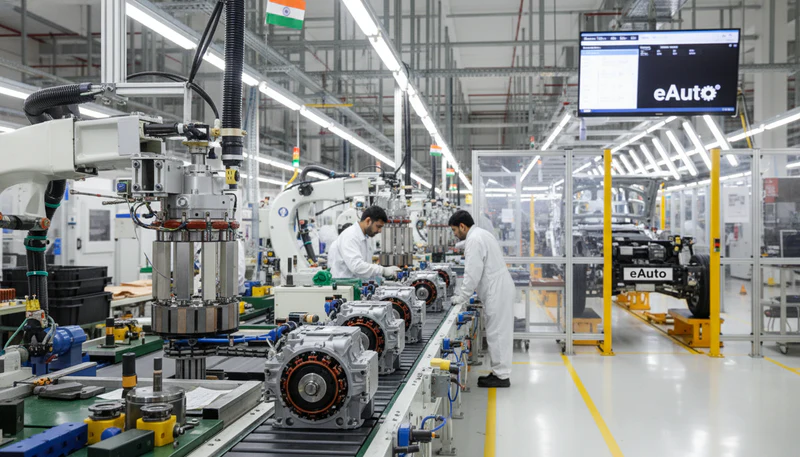
New Delhi: The Union Cabinet has cleared a Rs 7,280-crore plan to establish India’s first integrated ecosystem for producing sintered Rare Earth Permanent Magnets (REPM), marking a major shift towards reducing reliance on imported magnets vital for electric mobility and clean-energy technologies.
According to the government, the scheme “aims to establish 6,000 Metric Tons per Annum (MTPA) of integrated Rare Earth Permanent Magnet (REPM) manufacturing in India, thereby enhancing self-reliance and positioning India as a key player in the global REPM market.”
REPMs, among the strongest permanent magnets, are essential for electric vehicles, renewable energy systems, aerospace, defence, electronics and industrial machinery. India’s requirement for these magnets is expected to grow rapidly, with consumption projected “to double by 2030 from 2025” due to rising demand in EVs, renewable energy and consumer electronics. Currently, most of this demand is met through imports.
The government said the initiative will support fully integrated facilities covering the conversion of rare earth oxides into metals, the transformation of those metals into alloys and the production of finished magnets. “With this initiative, India will establish its first ever integrated REPM manufacturing facilities, generating employment, strengthening self-reliance and advancing the nation's commitment to achieve Net Zero by 2070,” the statement said.
The financial framework includes sales-linked incentives worth Rs 6,450 crore over five years and a capital subsidy of Rs 750 crore, together supporting the creation of an aggregate 6,000 MTPA of manufacturing capacity. The total capacity will be divided among five beneficiaries chosen through global competitive bidding, with each bidder eligible for up to 1,200 MTPA.
The scheme will operate for seven years, including a two-year gestation period for setting up facilities and five years for incentive disbursal.
Calling the initiative a “landmark step,” the government noted that it will strengthen domestic manufacturing and secure critical supply chains while aligning with the broader goals of Atmanirbhar Bharat and Viksit Bharat @2047. It is also expected to support India’s long-term climate commitments by boosting local production of components vital to the clean-energy transition.
BI Bureau