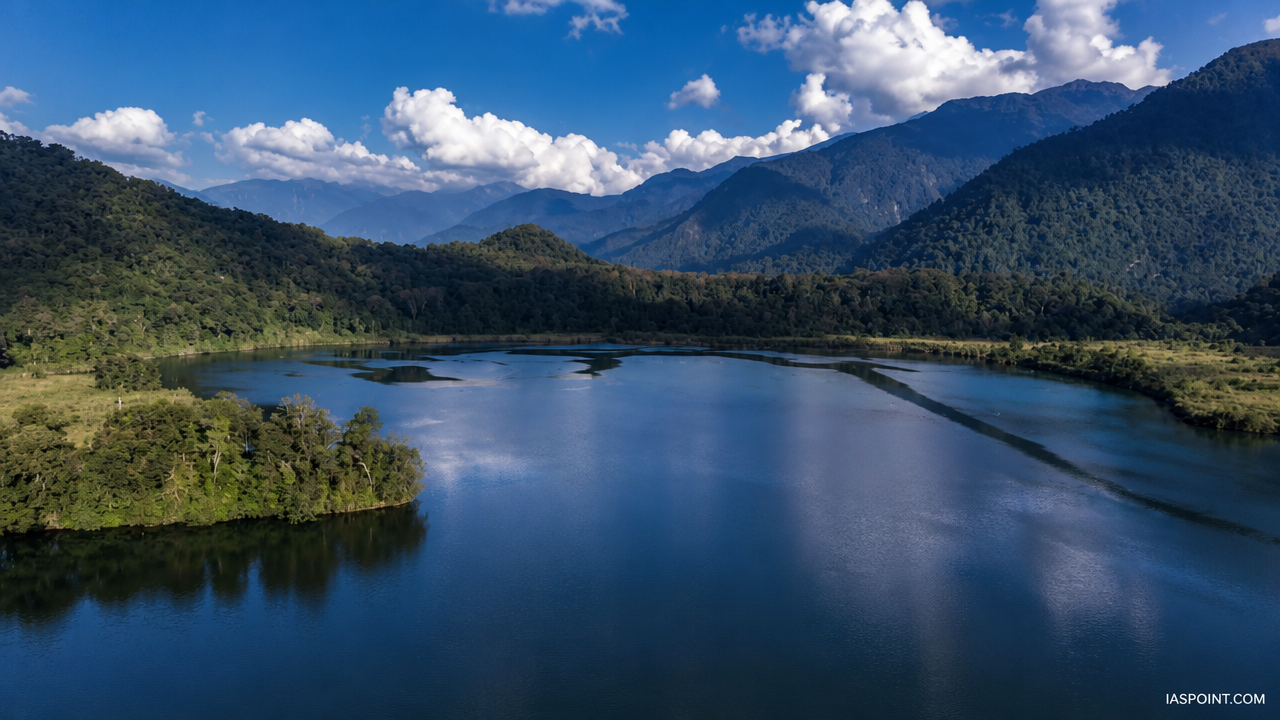
Itanagar: India has added another internationally recognised wetland to its conservation network, with Glaw Lake in Arunachal Pradesh being declared the country's 101st Ramsar Site. The designation is a milestone for the northeastern state, which now has its first wetland on the global list maintained under the Ramsar Convention.
Tucked inside the Kamlang Tiger Reserve and Wildlife Sanctuary in the Eastern Himalayas, Glaw Lake is a freshwater ecosystem sustained by perennial mountain streams. Surrounded by dense forests, the lake and its catchment support rich biodiversity, including more than 150 species of trees and 49 species of orchids. The landscape also provides habitat for a wide range of wildlife found in one of India's most ecologically significant mountain regions.
A Ramsar Site is a wetland recognised as being of international importance under the Ramsar Convention, an international treaty adopted in 1971 for the conservation and wise use of wetlands. The recognition encourages sustainable management of these ecosystems while highlighting their role in supporting biodiversity, water security and local livelihoods.
The addition of Glaw Lake reflects the rapid expansion of India's Ramsar network over the past decade. In 2014, the country had 26 Ramsar Sites. That number has now risen to 101, placing India among the countries with the largest number of Ramsar-designated wetlands in Asia.
India's Ramsar network stretches from the high-altitude wetlands of Ladakh to the mangroves of the Sundarbans, the floodplain lakes of Assam, the backwaters of Kerala, the salt marshes of Gujarat and the coastal lagoons of Odisha. These wetlands support thousands of species of birds, mammals, reptiles, amphibians and fish, besides providing flood control, groundwater recharge, carbon storage and livelihoods for millions of people.
The Ramsar Convention itself takes its name from the Iranian city of Ramsar, where the treaty was adopted in 1971. India became a contracting party to the convention in 1982 and has steadily expanded the number of wetlands receiving international recognition. The inclusion of Glaw Lake not only gives Arunachal Pradesh its first Ramsar Site but also brings global attention to the ecological importance of the Eastern Himalayas, one of the world's richest biodiversity regions.