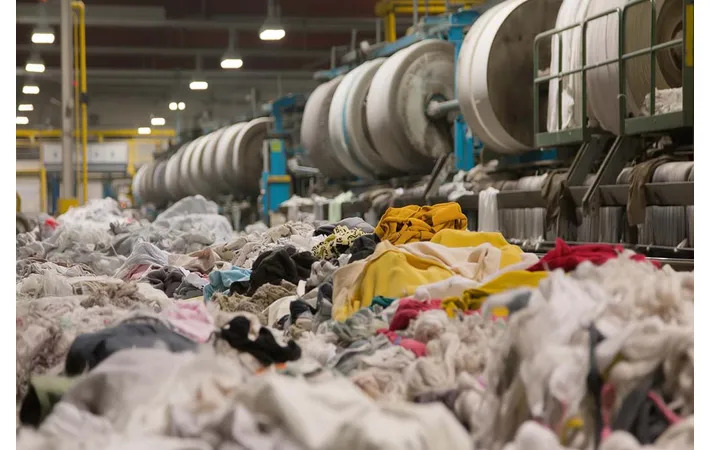
Navi Mumbai, Maharashtra: What happens to a piece of clothing once it is no longer wanted?
In most cases, it becomes waste. But a pilot initiative in Navi Mumbai is showing that discarded textiles can instead become the starting point of a new cycle of value.
Led by the Textiles Committee, Ministry of Textiles, the initiative has created a structured pathway for post-consumer textile waste~ from collection and scientific identification to segregation, upcycling, recycling and, importantly, connecting the resulting products with markets.
The idea is to keep textiles in use for as long as possible and recover value from them when they can no longer be used in their original form.
From households to a recovery facility
The initiative begins at the community level, with dedicated collection drives bringing discarded textiles into the formal recovery system. At the textile recovery facility, the collected material is assessed and segregated according to its composition and condition. An AI-enabled fibre identification technology helps determine textile composition quickly and without destructive testing.
Material that can be reused is channelled towards upcycling, while other textiles can be processed for recycling. In this way, the project seeks to move textile waste away from disposal and towards productive use.
When waste becomes a product
The most visible outcome of the model is perhaps the range of products emerging from discarded textiles. Materials that would otherwise have ended up as waste are being sanitised, redesigned and transformed through stitching and weaving into new products including utility items such as cushion covers and laptop bags.
The project has already created 900+ products across 300+ product categories, demonstrating the possibilities that exist when waste is approached as a resource rather than an end product.
Creating livelihoods along the way
The initiative is also creating an important social and economic link. More than 300 women are being trained in areas including upcycling, weaving, apparel production, digital literacy and product marketing. Through Self-Help Groups (SHGs) and a work-from-home model, the project is turning these skills into livelihood opportunities.
The initiative has generated around 70 direct and 200 indirect livelihood opportunities, creating an ecosystem in which environmental sustainability and economic empowerment move together.
The project connects products made through upcycling with potential markets through exhibitions, showcases and digital platforms. This creates a pathway from collection to creation to commerce. It also demonstrates how local skills, technology and market access can work together to build a viable circular model.
BI Bureau