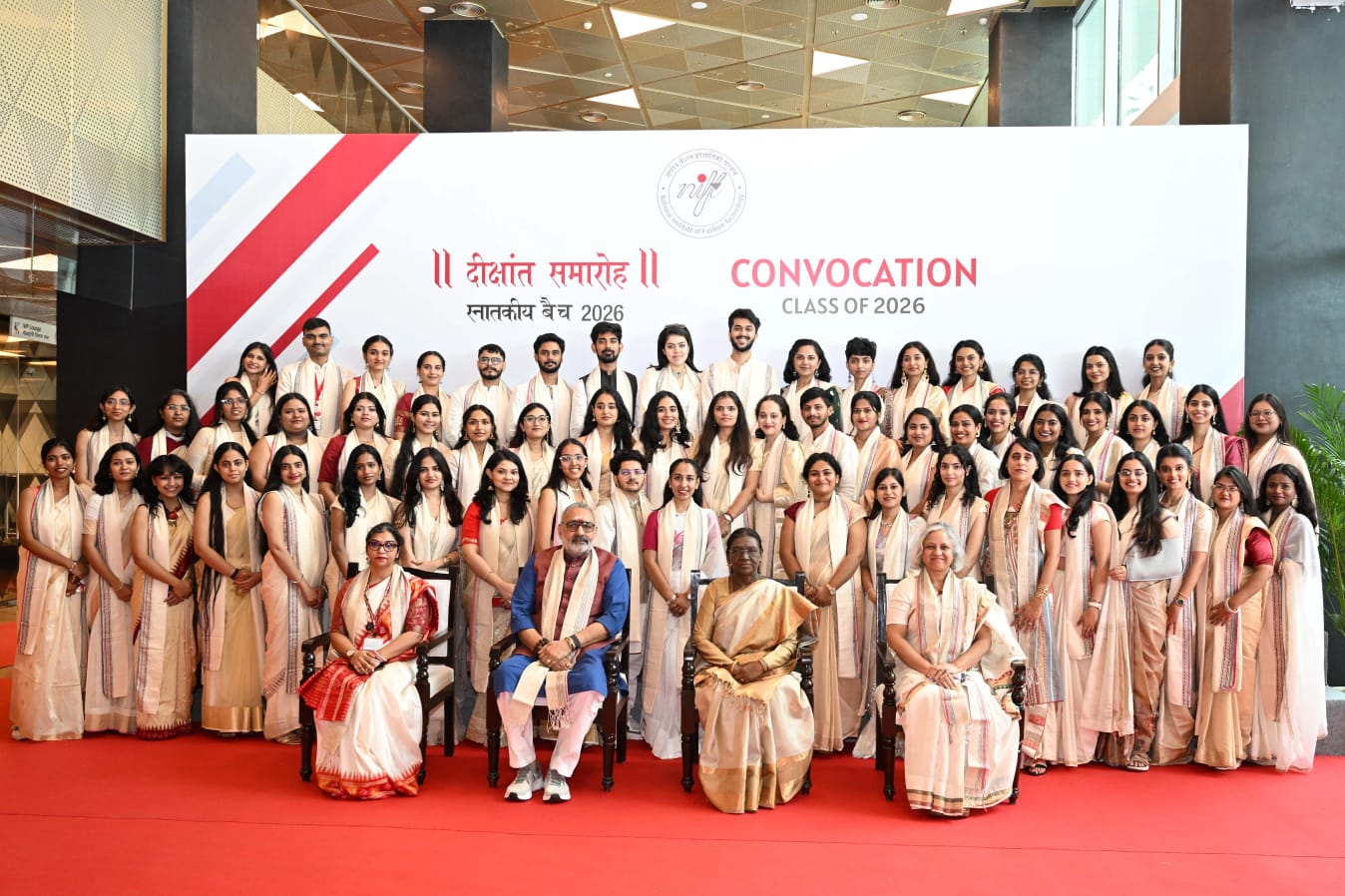
New Delhi: President Droupadi Murmu has encouraged young fashion professionals to build careers with a global perspective while continuing to draw inspiration from India’s rich textile traditions and craftsmanship.
Addressing the NIFT Combined Convocation 2026 in New Delhi on Monday, the President spoke about the opportunities before the new generation of designers as India’s fashion and textile sector expands its presence in international markets. Nearly 4,000 students from 18 NIFT campuses graduated at the ceremony.
She highlighted the close relationship between India’s textile sector and its traditional artisans. Weavers and craftspeople across the country possess skills developed and passed down over generations, and young designers can play an important role in connecting this knowledge with contemporary design and new markets.
The President also drew attention to NIFT’s efforts to connect students with craft communities. Such engagement can help traditional artisans gain exposure to changing consumer preferences and modern design practices while giving students a deeper understanding of India’s craft ecosystem.
Sustainability an important part of fashion’s future
Sustainability was another key focus of the address.
With the fashion industry consuming significant resources and generating waste, President Murmu stressed the importance of environmentally responsible production. She encouraged young professionals to explore local raw materials and create products that can meet international standards without placing unnecessary pressure on the environment.
India’s traditional textile practices already offer useful examples. Techniques such as Kantha embroidery from Bengal and Sujani from Bihar have long demonstrated how leftover fabric can be reused creatively instead of being discarded.
The President also asked graduating students to consider entrepreneurship and create employment opportunities rather than limiting themselves to conventional career paths.
The graduating batch itself reflected the strong presence of women in fashion education, with women accounting for around 85 per cent of the students receiving degrees.
As these graduates enter the professional world, the larger opportunity before them is to combine design, technology, sustainability and traditional craftsmanship.
For India’s fashion sector, this combination could help create products that appeal to global consumers while retaining the distinctive identity of Indian textiles and crafts.
BI Bureau